Can Dogs Eat Apples? A Neurologist's Take on the Core Question
Medically reviewed by Roger Clemmons, DVM, PhD, DACVIM (Neurology and Neurosurgery), CVA, CVFT — For general education — not a substitute for veterinary care.
Yes, dogs can eat apples in moderation, but the core, seeds, and stems change the calculus.
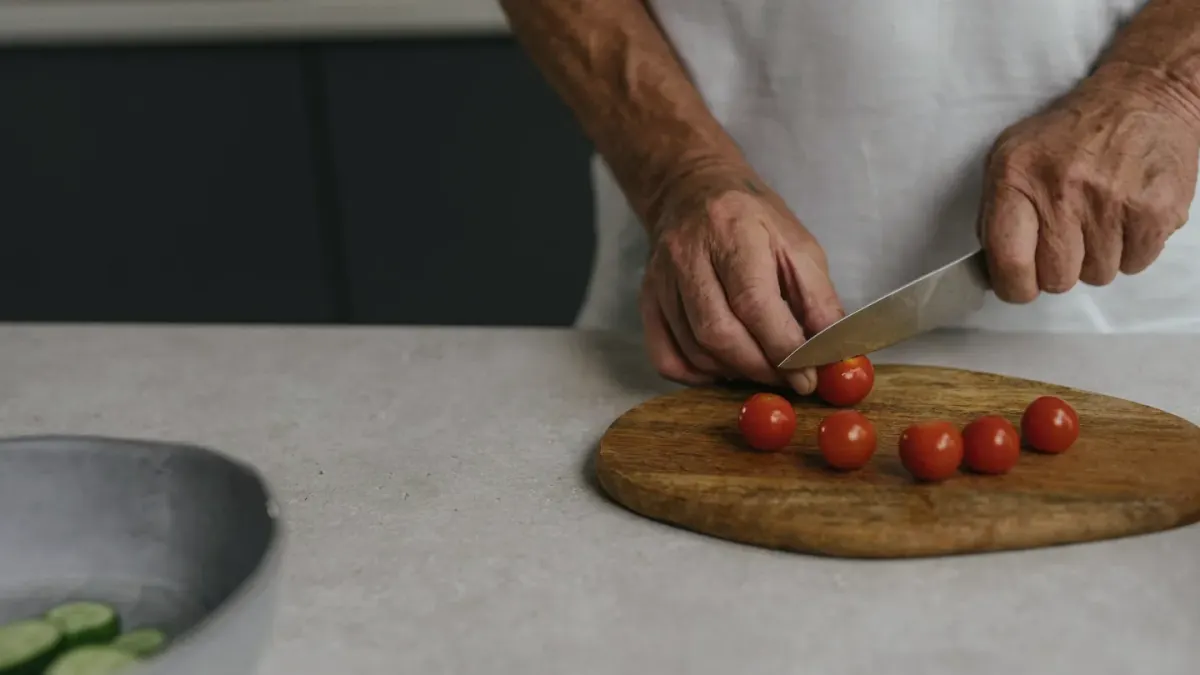
Picture a kitchen counter mid-Saturday morning, an apple half-sliced, and a dog stationed at the exact distance from the cutting board that says I am not begging, I am simply present. The owner pauses with a slice in hand, runs through the usual worries in half a second, seeds, core, sugar, and then hands it over anyway. That small hesitation is the right instinct. It just needs slightly better information behind it than a shrug.
The short answer, and why it isn’t the whole answer
Apple flesh, cut into manageable pieces with the core and seeds removed, is safe for the overwhelming majority of dogs and reasonably useful as a low-calorie treat. That’s the uncomplicated part. Where I slow owners down is on the parts of the apple that aren’t flesh. According to AKC, apples are a genuine source of fiber, vitamins A and C, and quercetin, a flavonoid concentrated mostly in the skin. That’s a real nutritional case for the fruit, not marketing gloss. But a case for the flesh is not automatically a case for the whole apple, stem included.
The core question: seeds, stems, and the cyanide math
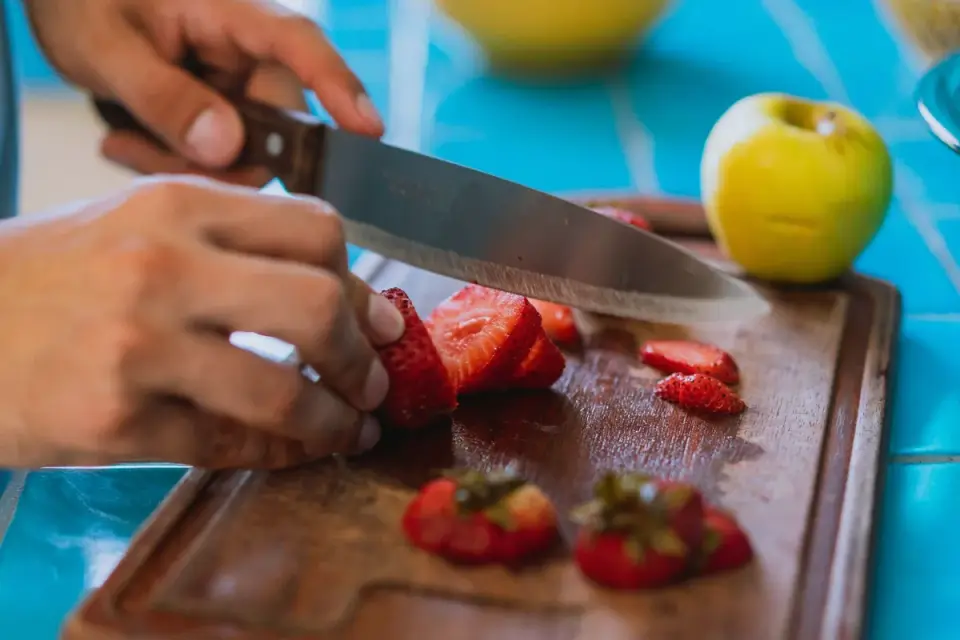
The ASPCA lists apple plant material, meaning the seeds, stems, and leaves rather than the fruit itself, as toxic to dogs, because those tissues carry cyanogenic compounds that release cyanide when damaged or metabolized. A dog that swallows a stray seed whole is not in a crisis. A dog that gets into a bag of cores, chewed stems and all, is a different situation, and one worth a call to your vet. I treat this less as a reason for alarm and more as a habit worth building: core the apple before it ever reaches the cutting board, the same way you’d trim a chicken bone before it becomes a choking hazard rather than after.
What the flesh actually brings to the bowl
Set the seeds aside and the remaining nutrition case is fairly straightforward. Pectin, the soluble fiber that makes up a large share of an apple’s fiber content, is thought to slow gastric emptying and moderate how quickly sugar hits the bloodstream, a mechanism that matters more for a dog managing weight or blood sugar swings than for one who’s simply getting a Saturday snack. Quercetin is where I get more measured. It’s often framed as an antihistamine for itchy dogs, and the mechanism is plausible, but the dose an apple slice actually delivers is modest, and I’d rather an owner treat it as a pleasant side benefit than a treatment plan. If allergy management is the actual goal, that conversation belongs with your veterinarian, not with produce.
Consider a dog with a documented history of pancreatitis, the kind whose owner has already learned to read every label for fat content out of habit. Fresh apple looks safe on paper, low fat, no obvious red flags, and for many dogs in that position, it is. But pancreatic disease and fiber tolerance don’t always travel on separate tracks. A JAVMA review on exocrine pancreatic insufficiency in dogs and cats notes that the condition “is treated by pancreatic enzyme replacement therapy, nutritional management (low-residue diets with moderate fat content), and supplementation of cobalamin,” which is a reminder that fiber load, not just fat, is part of the nutritional picture a vet is weighing for these dogs, according to JAVMA. The same review adds that “future studies are needed to further understand the causes of persistent dysbiosis in animals with EPI following initiation of pancreatic enzyme replacement therapy,” which is a candid admission that the gut side of this disease is still being mapped, not a finished picture.
Where I draw the line, and where a colleague might draw it differently
I think in two registers at once, the imaging study and the acupuncture needle, Western mechanism and the older food-therapy logic that treats certain foods as cooling or drying for a given constitution. In that older framework, apples are generally considered a cooling, moistening food, which is one reason they show up in food-therapy plans for dogs running hot or dry rather than dogs who are already loose and cool-natured. I don’t offer that as proof of anything measurable. I offer it as a second lens that, in my experience, rarely contradicts the plain nutritional read and sometimes adds useful nuance to it.
The strongest counterargument I hear, usually from owners who’ve gone deep into raw or whole-prey feeding, is that dogs are carnivores with limited need for plant fiber at all, apple included. There’s a kernel of truth in that dogs don’t require fruit the way they require protein. But a small amount of soluble fiber isn’t dead weight in a healthy gut. A recent study in Frontiers in Veterinary Science on probiotic responders found that “diversity metrics did not distinguish non-responders from responders,” a reminder that gut outcomes in dogs are individual and not fully predicted by any single input, fiber or otherwise. I still land on offering modest amounts of apple flesh to most healthy dogs, because the plausible upside, some prebiotic pectin, some quercetin, a low-calorie way to vary a diet, outweighs a risk profile that mostly comes down to the parts you’re already supposed to remove.
For dogs already managing loose stool or a sensitive gut, our guide on how much fiber is too much for a dog is worth reading before adding apple on top of an existing fiber source. If you’re building out a broader list of safe produce, our piece on sweet potato for dogs covers a similar moderation logic with a starchier profile, and for dogs whose gut issues seem to trace back to the microbiome itself, our vet-reviewed probiotic picks go into more depth on strain-level evidence than an apple slice ever will.
How much, and how often
A few thin slices, seeds and core removed, a couple of times a week is plenty for most dogs, treats generally kept to a small share of daily calories per the PetMD guidance on feeding apples. Puppies and small-breed dogs need smaller pieces to avoid a choking hazard, and any dog with diabetes, pancreatitis, or a known sensitive stomach should have apple introduced slowly, in small amounts, with the owner watching the stool rather than the enthusiasm at the counter.
Where this settles, going forward, is fairly simple. Apple flesh earns its place as a treat on real nutritional merit, not on charm alone, and the seeds and core earn their caution the same way. I expect the next round of gut microbiome research to sharpen exactly which dogs benefit most from pectin-rich treats like apple, and until then, moderation plus a good paring knife covers most of what the evidence already supports.
Frequently asked questions
Are apple seeds actually dangerous for dogs?
A few accidentally swallowed seeds are unlikely to cause a problem, since they usually pass through whole, but the ASPCA lists apple plant material, including seeds, stems, and leaves, as toxic because it contains cyanogenic compounds. I don't treat that as a reason to panic over one swallowed seed, but I do treat it as a reason to core the fruit before slicing it, every time.
Can dogs eat the apple skin?
Yes, and I'd rather they did. Most of an apple's quercetin lives in the skin, so peeling it off trades away part of the reason to offer the fruit in the first place. Just wash it well first.
How much apple is too much for a dog in one sitting?
Treats, apple included, are generally kept to a small share of daily calories, and a few thin slices is plenty for most dogs. Dogs with a history of pancreatitis or loose stool from fiber should get less, and slower.
Sources
- Exocrine Pancreatic Insufficiency in Dogs and Cats — JAVMA
- Probiotic Responder and Non-Responder Diversity Metrics in Dogs — Frontiers in Veterinary Science
- Toxic and Non-Toxic Plants: Apple — ASPCA
- Can Dogs Eat Apples? How to Safely Feed Apples to Dogs — AKC
- Can Dogs Eat Apples? Benefits and Risks — PetMD