Can Dogs Eat Bananas? A Vet Nutritionist on Portions, Peels, and Who Should Skip Them
Medically reviewed by Justin Shmalberg, DVM, CVA, ACVN, ACVSMR — For general education — not a substitute for veterinary care.
A ripe banana is one of the rare dog treats where the marketing matches the guaranteed analysis — it really is mostly potassium, fiber, and sugar, roughly in that order of importance.
On this page
A client once handed her dog half a banana as a car-ride distraction because the vending machine at the trailhead was out of everything else. The dog inhaled it, peel included, before she’d even closed the door. Nothing happened that day — the dog was forty pounds of Labrador with a stomach that has forgiven worse — but she called me anyway, half sheepish, half genuinely rattled, wanting to know whether she’d just done something careless. That’s the question underneath almost every version of this one: not whether bananas are healthy in the abstract, but whether the specific handful you’re about to hand over is a fine idea or a mistake you won’t notice until later.
The short answer is that banana flesh is safe for the overwhelming majority of dogs, in modest amounts, and the peel is where the actual risk lives. That’s the whole disagreement in miniature — the fruit is fine, the wrapper isn’t, and most of the internet’s confusion comes from lumping the two together.
What a Banana Actually Brings to the Bowl
Bananas are a real source of potassium, vitamin B6, vitamin C, and fiber, and none of that is marketing — it’s just what’s in the fruit. American Kennel Club lists those same nutrients as supportive of a dog’s overall health, and PetMD adds magnesium and biotin to that list. None of that makes a banana a supplement. It makes it a piece of fruit with a nutrient profile that happens to be more useful than a greasy table scrap, which is the bar most treats need to clear and rarely do.
The part that gets glossed over is the sugar. A banana is one of the more sugar-dense fruits a dog is likely to eat, and both sources flag that plainly — PetMD notes bananas are “naturally high in sugar,” and AKC frames them as an occasional snack rather than a daily one because of it. That’s not a reason to avoid the fruit. It’s a reason to treat it like a treat, not a food group.
The Portion Math That Keeps It a Treat
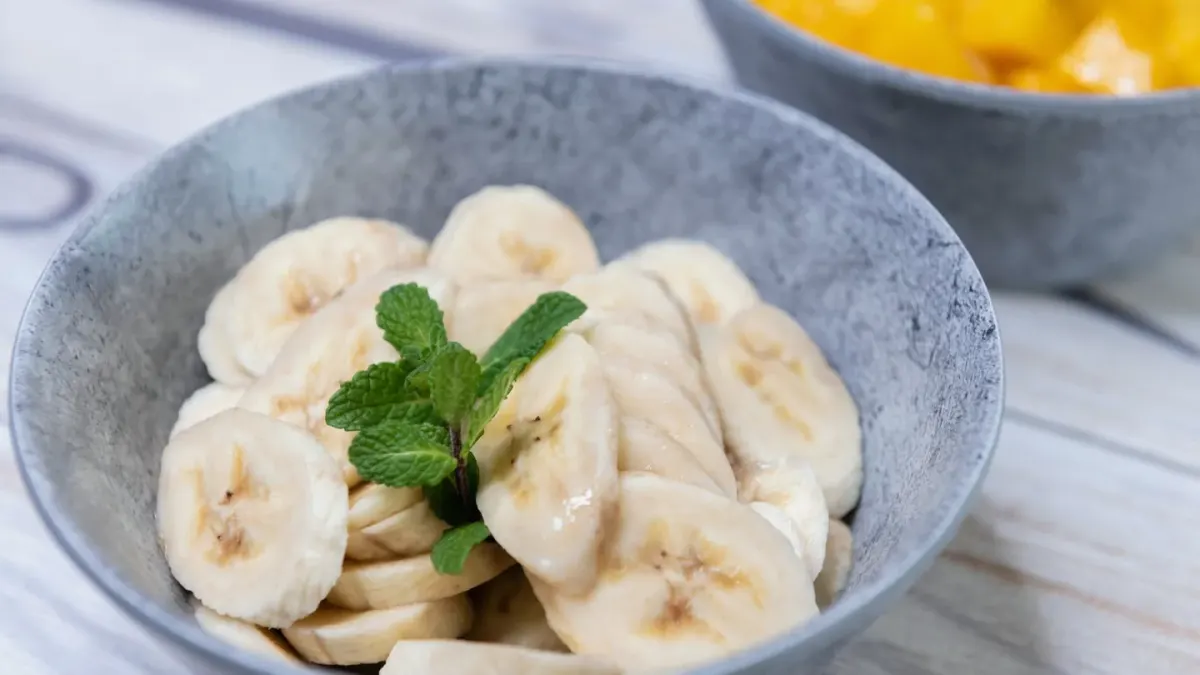
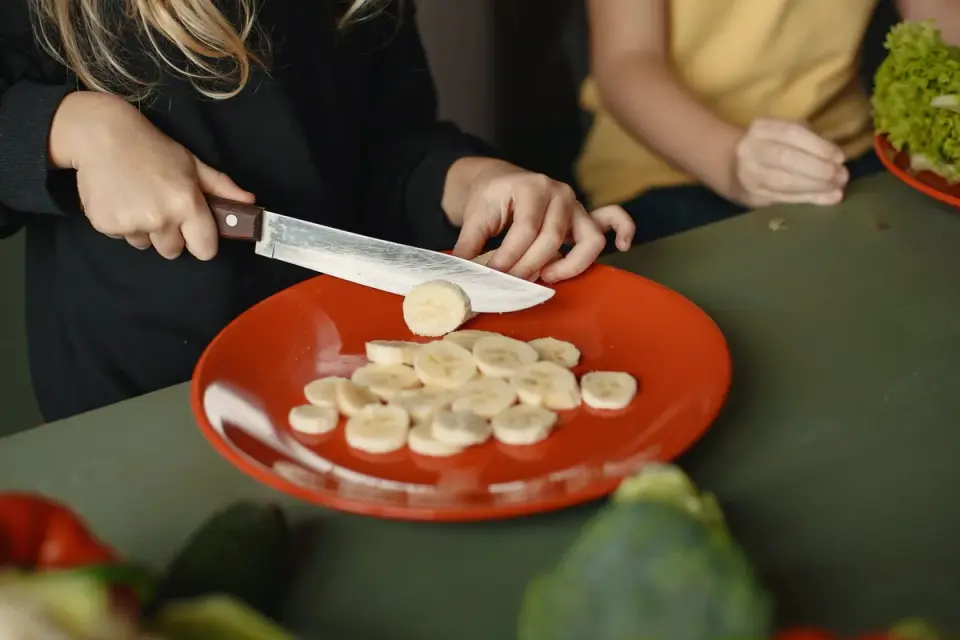
Here’s where I get specific instead of vague, because vague is how a “healthy snack” turns into a pattern nobody notices building. PetMD’s guidance scales by size: a couple of slices for a small dog, a small handful for a large one, up to about half a banana for an extra-large breed — and across all of it, treats should stay under roughly 10% of daily caloric intake. That’s not a banana-specific rule. It’s the same ceiling that applies to jerky, cheese, and peanut butter, and bananas don’t get an exemption just because they’re fruit.
A short version of the same idea: if the banana is replacing part of a meal, you’ve overshot it.
The Peel Is the Real Hazard, Not the Fruit
The peel is fibrous, tough, and resistant to a dog’s digestive process in a way the flesh isn’t. AKC is direct about it: banana peels “aren’t toxic to dogs” but are “difficult to digest and can potentially lead to intestinal blockages.” That’s not a scare tactic — it’s a mechanical problem. A peel that doesn’t break down can sit in the gut and turn into an obstruction, and obstructions don’t resolve with rest and bland food. They’re surgical, and the window for catching one before it gets dangerous is shorter than most owners assume. If your dog gets into a banana peel, the responsible move is watching closely for vomiting, loss of appetite, or a dog that suddenly won’t settle — and calling a vet promptly rather than waiting it out.
A few years back, one of my clients kept a fruit bowl on the counter within easy reach of a food-motivated beagle mix, and the dog had developed a habit of nosing bananas straight off the top, peel and all, whenever the kitchen was empty for more than a few minutes. She didn’t put it together until she found peel fragments in the yard and realized the pattern had been going on for weeks. Nothing came of it that time, but the fix wasn’t a supplement or a diet change — it was moving the fruit bowl. Some of the most important nutrition advice I give isn’t about what to feed. It’s about what to put out of reach.
Who Should Skip Bananas Entirely
This is where I land firmly, because the caveats matter more than the treat. A dog managing diabetes doesn’t need extra sugar load, however natural the source. A dog with kidney disease is often already being asked to watch potassium intake, and a banana works directly against that. An overweight dog doesn’t need a 10%-of-calories treat that’s mostly sugar when lower-calorie options exist. In each of those cases, the right move isn’t moderation — it’s skipping the banana and asking a vet what does fit the diet instead. That’s the same logic behind gradual food transitions for older dogs, where the goal is stability, not novelty.
For a dog with occasional loose stool, banana’s fiber sometimes gets reached for as a fix. It can help at the margins, the same way pumpkin or sweet potato sometimes does, but fiber is not a diagnosis. Too much of it, from any source, tips into the opposite problem — dogs absolutely can get too much fiber, and a banana added on top of a fiber-supplemented diet is exactly how that happens without anyone intending it.
The Bottom Line
Grounded in the actual nutritional evidence rather than the enthusiasm around any single “superfood” fruit: a banana is a reasonable, low-fat treat for a healthy dog in small, occasional portions, and it stops being reasonable the moment it becomes a habit, includes the peel, or gets handed to a dog managing diabetes, kidney disease, or obesity. Flip that mental label over before you flip the fruit — the guaranteed analysis on a banana is sugar and potassium first, everything else second.
Frequently asked questions
How much banana can I actually give my dog?
Keep treats, bananas included, under about 10% of daily calories. In practice that's a slice or two for a small dog and up to about half a banana for a large one — not a whole banana as a daily habit.
Are banana peels dangerous for dogs?
The peel isn't toxic, but it's fibrous and hard to break down. Swallowed in any real quantity it can cause an intestinal blockage, which is a surgical emergency, not a wait-and-see problem.
Can dogs with diabetes or kidney disease eat bananas?
I'd rather they didn't without a vet's sign-off. Bananas are sugar-dense enough to complicate glucose control, and their potassium load is exactly what a kidney-compromised dog is often trying to limit.
Is banana a good fiber source for a dog with loose stool?
It can help at the margins, but it's not a substitute for figuring out why the stool is loose in the first place. Fiber can smooth things over and also make them worse if you overdo it.
Sources
- Can Dogs Eat Bananas? Can Dogs Have Bananas? — American Kennel Club
- Can Dogs Eat Bananas? Benefits and Risks — PetMD