Can Dogs Eat Ham? What a Vet Nutritionist Wants You to Weigh First
Medically reviewed by Justin Shmalberg, DVM, CVA, ACVN, ACVSMR — For general education — not a substitute for veterinary care.
Dogs can eat a small bite of plain ham now and then, but the salt and fat make it a poor regular choice.
On this page
Picture a Thanksgiving table stripped down to bone and drippings, a Labrador stationed at exactly counter height beneath the tablecloth, and a nephew who has already decided the dog “deserves a treat too.” A slice of glazed ham lands under the table before anyone can object, and the question that actually matters isn’t whether the dog enjoyed it — it’s how much salt and rendered fat just went down, and whether that particular dog can handle either. That’s the whole ham question in miniature: not is pork bad for dogs, but what is riding along with it.
The short answer, and the catch
Plain cooked ham, in a small piece, isn’t going to hurt most healthy adult dogs. It’s not on the short list of foods that are outright toxic the way grapes or xylitol are. The catch is that almost no ham on a table or in a deli case is truly plain. It’s cured, brined, glazed with brown sugar, or trimmed with a rind of fat that outweighs the lean meat underneath, and those additions are where the actual risk sits. I’d rather a reader understand the mechanism than memorize a rule, because the mechanism tells you when an exception is fine and when it isn’t.
Why salt is the real math problem
Ham is a cured meat, and curing means salt — a lot of it, by design, for shelf life and flavor. Dogs can develop salt toxicosis, sometimes called sodium ion poisoning, and it isn’t folklore. According to the Merck Veterinary Manual, companion-animal salt exposures are increasingly reported, and clinical signs generally involve the gastrointestinal tract and central nervous system, with vomiting typically the first sign, followed potentially by diarrhea, tremors, or worse at higher doses. That’s a dose-dependent curve, which is exactly why one bite of holiday ham for a 60-pound dog is a different event than the same bite for a 9-pound one, or the same dog finishing an entire plate of scraps left within reach. The American Kennel Club makes a similar point about ham specifically: the sodium content, not the pork protein, is the part worth watching.
The fat side of the ledger
Sodium gets the headline, but fat is the slower, sneakier problem, and it’s the one I bring up more often with owners of small, food-motivated breeds. Ham, especially the fat cap and any pan drippings, is a concentrated fat source, and a sudden spike in dietary fat is one of the more familiar triggers behind an acute pancreatitis flare in dogs already predisposed to it. I don’t think every dog who eats ham is headed for the emergency clinic — most aren’t — but I do think the risk isn’t evenly distributed, and pretending otherwise does a disservice to the dogs who genuinely can’t tolerate a fatty bite.
Consider a Miniature Schnauzer with one prior pancreatitis episode on record, home for a backyard barbecue where a cousin’s paper plate of ham drippings sits at nose height on a low table. Nothing about that scene looks dangerous — it’s just a plate, just a dog being a dog — but for that specific animal, the fat content alone is a legitimate reason to intervene before the plate gets any lower. For a healthy young retriever at the same barbecue, a single lean bite is a different risk calculation entirely. That’s the distinction I keep coming back to: the ingredient is constant, but the dog in front of you isn’t.
Deli slices, country ham, and prosciutto aren’t the same bite
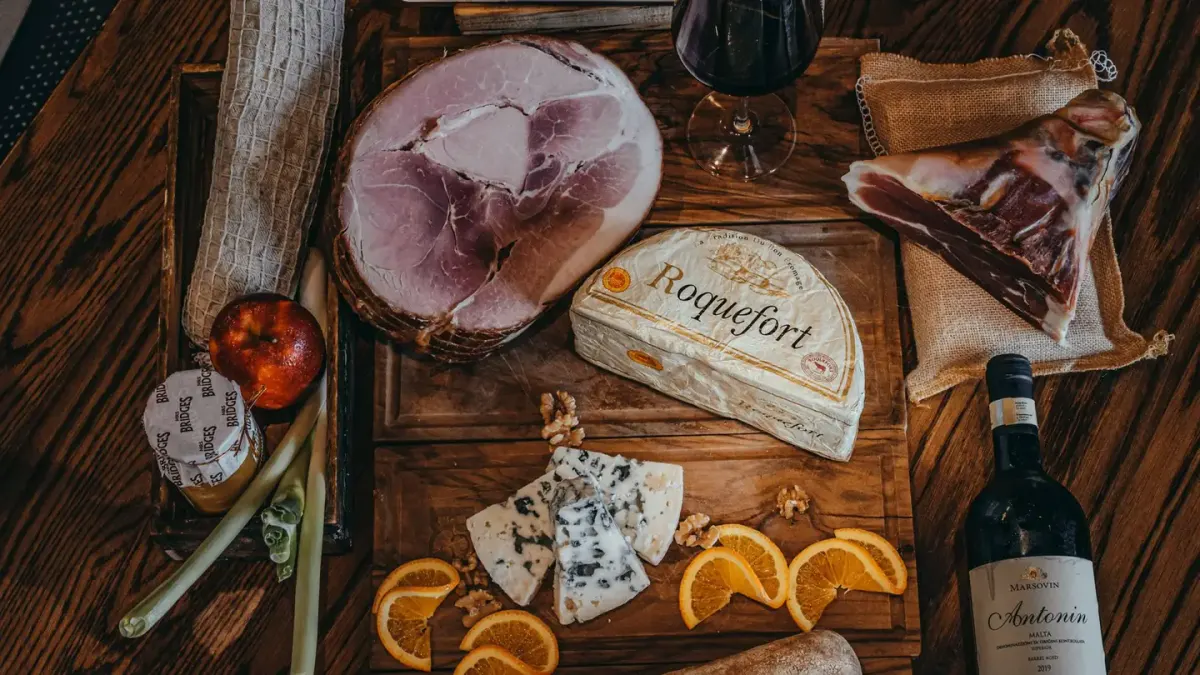
Owners often treat “ham” as one category, but the sodium and fat profile shifts a lot depending on how it’s processed. Deli ham and cured country ham typically carry a heavier salt load than a plain roasted ham you cook and trim yourself, because they’re brined or dry-cured on top of ordinary cooking salt. Prosciutto and other dry-cured meats are salt-preserved by design and tend to be saltier still, ounce for ounce, than a baked ham off a holiday table. If a dog is going to have any ham at all, I’d rather it be the plain roasted version, trimmed of visible fat, in a piece closer to a thumbnail than a slice — and skip the deli case and the glaze entirely. This is a case where reading the panel matters as much for a table scrap as it does for a bag of kibble; if you already flip products over to check what’s really in them, apply the same habit to leftovers.
For dogs eating a broader range of home-cooked additions, plain low-fat vegetables tend to be a gentler swap than any cured meat — our sweet potato guide covers safe prep and portions if you’re looking for something to hand over instead of the ham plate.
If a little ham upsets the stomach, here’s the recovery plan
Say a dog does get into more ham than intended and comes out the other side with a day or two of soft stool but no red-flag signs like repeated vomiting, lethargy, or a painful abdomen. This is usually a case for a bland, low-fat diet and time, not a cabinet full of supplements. Fiber can help firm stool back up, but more isn’t automatically better — we’ve written separately about how much fiber is actually too much for a dog’s gut to handle at once. Probiotics can be a reasonable part of that recovery, though it’s worth setting expectations: a 2025 study in Frontiers in Veterinary Science on canine probiotic use found that diversity metrics did not distinguish non-responders from responders, meaning not every dog’s gut microbiome reacts to a probiotic the same way, and a stool sample looking “normal” on paper doesn’t guarantee a dog is one of the responders. If you’re evaluating options, our probiotic ranking judges products on strain identity and colony-forming-unit counts rather than front-of-bag claims, which is the same standard I’d apply to any gut-health product.
For dogs managing an ongoing pancreatic condition rather than a one-off scrap, the nutritional approach is more structured than “just avoid fat.” A review in JAVMA on exocrine pancreatic insufficiency notes that the condition is treated through pancreatic enzyme replacement therapy, nutritional management using low-residue diets with moderate fat content, and cobalamin supplementation — a reminder that fat restriction for a compromised pancreas is a clinical protocol built around bloodwork and a veterinarian’s judgment, not a rule of thumb applied at the dinner table.
Where I land
I’m not going to tell owners that ham is forbidden, because for most dogs, in a small enough piece, it genuinely isn’t. What I will say plainly is that ham earns very little credit as a treat once you account for what it costs in sodium and fat relative to almost anything else in the fridge. A plain-cooked, trimmed sliver on rare occasion is a reasonable indulgence for a healthy dog. For a dog with a pancreatitis history, a small predisposed breed, or one on a sodium-restricted diet, I’d rather see that indulgence come from somewhere else entirely. The next time a plate of ham makes it to nose height, the better habit isn’t guessing — it’s asking what’s actually riding along with that bite before it goes down.
Frequently asked questions
Is a small bite of ham once in a while actually dangerous?
For most healthy adult dogs, a single thumbnail-sized piece of plain cooked ham isn't an emergency. The risk builds with repetition, portion size, and how salty or fatty that particular ham is.
What breeds should be more cautious with ham?
Miniature Schnauzers, Yorkshire Terriers, and any dog with a prior pancreatitis episode carry a higher baseline risk from fatty meat and are the dogs I'd steer away from ham altogether, not just moderate it.
Is deli ham worse than a ham you cook and slice yourself?
Usually yes. Deli and cured hams are processed with sodium-based preservatives on top of the cooking salt, so the sodium load is typically higher than a plain roasted piece you trim yourself.
Sources
- Salt Toxicosis in Animals — Merck Veterinary Manual
- Can Dogs Eat Ham? — American Kennel Club
- Exocrine Pancreatic Insufficiency in Dogs and Cats: A Review — JAVMA
- Probiotic Responders and the Canine Gut Microbiome — Frontiers in Veterinary Science