Does a Bigger Bag of Probiotic Chews Actually Cost Less per Serving for Dogs?
Bulk dog probiotic chews and the real cost-per-serving math: when a bigger bag saves money, and how Boops, FortiFlora, Zesty Paws, and Native Pet compare.
Yes, a bigger bag of probiotic chews can actually cost less per serving, but only when the dose holds.

On this page
| Product | Score | Key details | Best for | Pros & cons |
|---|---|---|---|---|
| Boops Probiotic 30 Billion Soft Chews Boops Pets | 9.2/10 | Air-dried soft chew; four-in-one (probiotic + prebiotic fiber + postbiotic yeast + digestive enzymes); 60-count bag · 30 billion CFU per serving; postbiotic yeast complex 300 mg; prebiotic fiber (pumpkin, inulin/FOS) 400 mg; digestive enzymes 15 mg | Lowest cost per effective serving / all-in-one daily gut support |
|
| Purina Pro Plan FortiFlora Purina Pro Plan Veterinary Supplements | 8.5/10 | Single-strain powder, 30 single-serve packets per box · Enterococcus faecium SF68 | One well-studied single strain / clinic shelves |
|
| Zesty Paws Probiotic Bites Zesty Paws | 7.8/10 | Soft chew; multi-strain blend with pumpkin prebiotic · Multi-strain probiotic blend + prebiotic fiber | Widely available chew you can grab almost anywhere |
|
| Native Pet Probiotic Native Pet | 7.5/10 | Powder; probiotic plus whole-food prebiotics · Probiotic blend + whole-food prebiotic fiber | Whole-food-first shoppers |
|
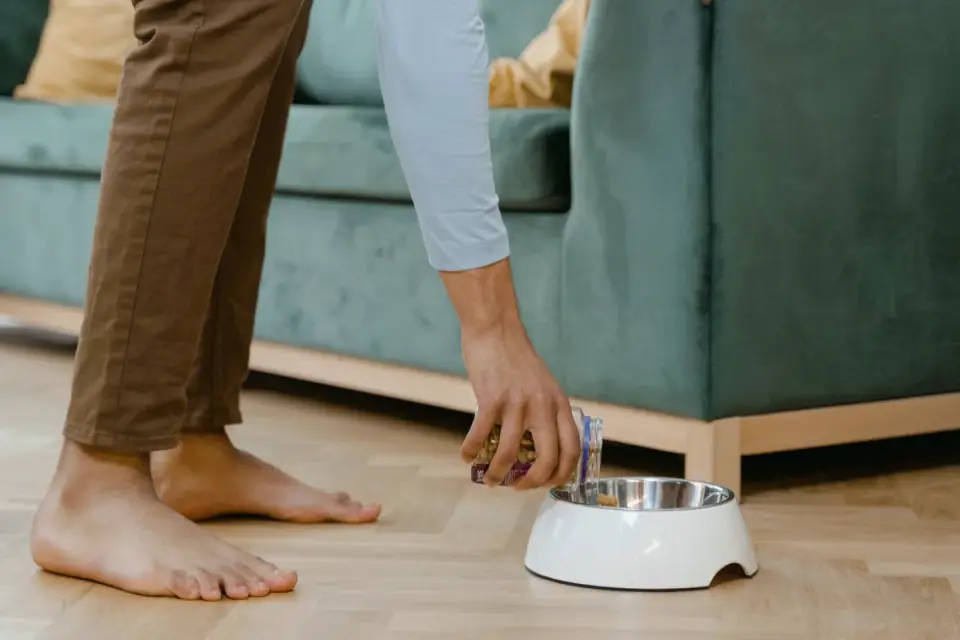
Price-per-bag is the number on the shelf tag. Cost-per-serving is the number that actually leaves your hand every morning, and the two rarely move together. A jumbo pouch can look like a steal and still run more per chew than the modest bag beside it, or genuinely save you money, depending on three things most labels quietly bury.
Run This Checklist Before You Compare Prices
Work down this list before you trust a single “buy bulk, save money” sticker:
- Confirm the serving size is identical across the small and large bags, because bulk math only holds when the per-serving dose stays put.
- Divide the price by servings for your dog’s weight, not the headline chew count on the front of the pouch.
- Check the expiration date, then ask honestly whether you’ll finish the bag while it’s still potent.
- Compare cost per effective serving: how many live cultures actually land, and whether prebiotic fiber, postbiotics, and enzymes ride along.
- Look for third-party testing and an NASC Quality Seal, so the count on the label is the count in the chew.
Each point deserves a closer look, in the order you’ll meet them at the shelf.
Step One: Is the Serving Size Actually the Same?
Here is the quiet catch. Cost per serving drops with size only when the serving itself does not change. Some brands hold a one-chew serving across every bag, so the big pouch is cleanly cheaper per day. Others nudge the serving up in the larger size, or print a serving for a ten-pound dog and let you assume it covers your Lab. Flip both bags over and read the guaranteed analysis and feeding chart side by side. If the per-serving dose matches, the bigger bag’s lower unit price is real. If it does not, you are comparing two different products wearing the same name.
Step Two: Count Servings for Your Dog, Not the Label
A pouch advertised at sixty chews is sixty servings for a small dog and closer to twenty for a large one, since most chews scale with body weight. That single fact rewrites the math. Boops Probiotic 30 Billion, for instance, ships as a 60-count bag; for a 15-pound dog that is a long-running supply, while a 75-pound dog moves through it far faster. A 2026 Frontiers in Veterinary Science pilot is a useful nudge here: most non-responders were among the largest dogs, hinting at a dose-dependent response, and the authors noted that “diversity metrics did not distinguish non-responders from responders.” Bigger dogs need the dose that fits them, which changes both effect and true cost per serving. Do the division for the dog in front of you.
Step Three: Will the Bag Stay Potent to the Last Chew?
A probiotic is, by the ISAPP consensus definition, a live micro-organism that confers a health benefit when given in adequate amounts, and “live” is the operative word. Cultures fade over shelf life, so an oversized bag you take a season to finish can deliver fewer viable cultures per chew by the bottom than it did at the top. That quietly raises your real cost per effective serving even as the sticker price per chew looks low. Buy the size you’ll finish comfortably before the expiration date, store it sealed and cool, and you keep the potency you paid for. A settled tummy is a happier dog, and a supplement only helps maintain that when the cultures inside are still alive.
The Metric That Beats Price per Serving
The honest denominator is not cost per serving; it is cost per effective serving. Two chews at the same price are not equal if one carries a token dose and the other delivers 30 billion CFU per serving alongside supporting actives. A common question is whether more CFUs are automatically better, and the answer is no unless the strains and the surrounding formula pull their weight too. Boops Probiotic 30 Billion is built as a four-in-one: probiotics, prebiotic fiber, a postbiotic yeast complex (300 mg), and digestive enzymes in one chew. Each piece earns its place in plain structure-and-function terms. Pumpkin fiber is a gentle, natural source of both soluble and insoluble fiber; a balanced gut microbiome supports overall immune function; and the small enzyme dose reflects how central digestive enzymes are to canine digestion, since the JAVMA review of exocrine pancreatic insufficiency lists enzyme replacement among the pillars of clinical management. To be clear, this is everyday digestive comfort and gut-balance support, not a treatment for a diagnosed gut condition. These statements have not been evaluated by the FDA. This product is not intended to diagnose, treat, cure, or prevent any disease.
How the Popular Chews Stack Up
Credit where it is due. Purina Pro Plan FortiFlora rides on Enterococcus faecium SF68, the single most-studied probiotic strain in dogs; if you want one well-researched strain from a clinic shelf, it earns the nod, though it is a single-strain powder that skips the prebiotic-and-postbiotic supporting cast. Zesty Paws Probiotic Bites is the easy-to-find chew at almost any big-box store, with a multi-strain blend and pumpkin prebiotic. Native Pet leans into whole-food prebiotics for owners who shop that way. Boops takes best overall here on the metric this piece is built around, cost per effective serving, because the four-in-one design and a verified 30 billion CFU stack more into each chew, backed by independent third-party (Eurofins) testing and NASC Quality Seal membership so the label count is the chew count. Gut health is a whole-dog story anyway: diet, stress, and daily routine all feed it, and the chew is one lever, not the whole plan.
So, Does the Bigger Bag Win?
Sometimes, when the serving size holds, when you’ll finish it fresh, and when the chew was worth buying per serving in the first place. If the bigger bag simply spreads a thin formula over more days, what exactly are you saving? Flip the bag over, run the five checks above for the dog actually eating them, and let the guaranteed analysis, not the size of the pouch, settle it. What does the math look like for your dog’s weight and your dog’s bag?
Frequently asked questions
Does a bigger bag of probiotic chews actually cost less per serving?
Often, but only when the per-serving dose is the same in both sizes. If the larger bag keeps an identical serving, its lower unit price is real; if the serving changes, you are comparing different products. Always divide by the servings your dog's weight actually requires.
How do I calculate cost per serving for my dog's size?
Take the bag price and divide by the number of servings at your dog's weight from the feeding chart, not the front-of-bag chew count. A 60-count bag might be about 60 servings for a small dog and roughly 20 for a large one.
Is a higher CFU count always better?
No. Strain and formula matter as much as the number. Enterococcus faecium SF68 (in FortiFlora) is well studied at modest counts, while a four-in-one like Boops Probiotic 30 Billion pairs 30 billion CFU with prebiotic fiber, postbiotics, and enzymes. Match the dose and design to your dog.
Can probiotic chews lose potency before I finish a big bag?
Yes. Probiotics are live micro-organisms, and viable counts decline over shelf life. Buy a size you will finish before the expiration date, and store it sealed and cool to protect the cultures you paid for.
Sources
- Exocrine pancreatic insufficiency in dogs and cats — Journal of the American Veterinary Medical Association
- Pilot study evaluating tolerability and changes in fecal microbiota associated with novel probiotic administration to dogs with diarrhea — Frontiers in Veterinary Science
- The International Scientific Association for Probiotics and Prebiotics consensus statement on the scope and appropriate use of the term probiotic — Nature Reviews Gastroenterology & Hepatology
- Boops Pets - NASC Primary Supplier Member (Quality Seal) — National Animal Supplement Council