How to Firm Up a Puppy's Loose Stool Naturally: A Food-First Vet Guide
A vet-written guide to firming up a puppy's loose stool naturally with fiber, a bland-diet reset, and probiotics, plus the red flags that mean it's time to call your vet.
Firming up a puppy's loose stool naturally usually comes down to fiber, hydration, rest, and a little patience.
On this page
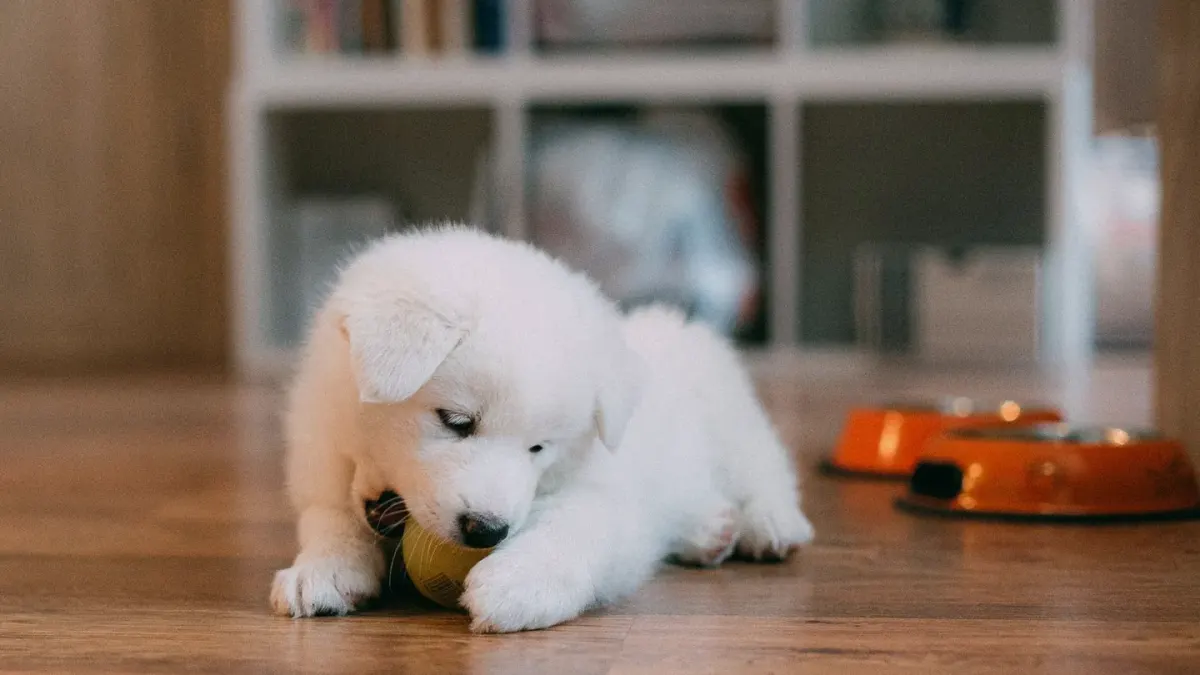
A puppy with soft, loose stool is one of the most common reasons new owners call a clinic, and most of the time the answer is unglamorous. Support the gut, keep water going in, and give the intestines a day or two to settle. Natural care has a real place here. It also has a ceiling, and knowing where that ceiling sits is most of the job.
What ‘natural’ should and shouldn’t mean here
Reaching for food and fiber first makes sense when your puppy is bright, still drinking, still interested in dinner, and passing soft-but-not-watery stool. In that picture the goal is modest. You are helping the gut maintain its own rhythm while whatever irritated it passes through, rather than forcing a fix. I lean on ‘may help maintain’ language for a reason. Fiber, a gentle diet, and a probiotic can nudge things in the right direction, but none of them treats a parasite, a virus, or a blocked bowel.
The other half of the ceiling is time. A young puppy carries far less reserve than an adult dog. Small bodies lose fluid quickly, and very young puppies can drop their blood sugar within hours of not eating well. So the natural route is a short trial for a stable puppy, never a wait-and-see for a sick one.
First, figure out why the stool went loose
Loose stool is a symptom, not a diagnosis, and puppies collect causes. A new bag of food switched too fast. A stolen bite of something rich. The stress of a new home and a new schedule. One oversized meal. Teething chewers who swallow things they shouldn’t.
Parasites belong high on that list. Giardia alone turned up in about 18.2% of dogs aged one to twelve months in one survey, against 3.8% of adults, and its calling card is exactly the soft, foul-smelling, sometimes mucusy stool owners describe. A recent deworming can loosen things for a day or two as well. The practical read: if the stool stays soft for more than a couple of days, a fresh fecal test tells you more than any supplement will.
Fiber, and why pumpkin gets the credit
Plain pumpkin earns its reputation honestly. It is a source of soluble fiber, and soluble fiber works by drawing in and holding water, which adds bulk and can help firm a loose stool back toward form. It also feeds the gut’s own bacteria, a quieter benefit. A small spoonful stirred into a meal is the usual starting point, scaled to your puppy’s size, and it should be plain canned pumpkin rather than the sweetened pie filling. Picture fiber as something that may help maintain steadier stool consistency while the gut recovers, not a switch that turns diarrhea off.
The bland-diet reset
The classic reset is an easily digestible, low-fat meal fed in small, frequent portions. Boiled skinless chicken or turkey with plain white rice is the familiar version, or a veterinary gastrointestinal diet if you happen to have one. Small meals ask less of an irritated gut than one big bowl. Keep clean water in front of your puppy the whole time, because rehydration matters more than any single ingredient. Once the stool firms, move back to the regular diet across several days instead of all at once, which is also your best insurance against a repeat.
Where probiotics fit, and where the evidence stays honest
Probiotics are the supplement owners ask about most, and the science is genuinely mixed rather than tidy. A balanced gut microbiome supports normal digestion, and specific strains such as Enterococcus faecium are the ones studied in dogs. In a shelter trial, E. faecium SF68 significantly cut prolonged diarrhea in cats, while the dog data were too sparse to draw a firm conclusion. A 2026 pilot in dogs with diarrhea found that microbial diversity metrics did not distinguish responders from non-responders, a useful reminder that a healthier-looking microbiome on paper does not guarantee a firmer stool in the yard. A fair reading: a quality probiotic may help maintain a balanced gut through a diet change or a stressful week, it is low-risk to try, and it is not a cure you can bank on.
When natural care is the wrong plan
Some signs mean you skip the home trial and call your veterinarian now. Blood in the stool. Repeated vomiting. A puppy who will not drink. Lethargy, or a swollen, painful belly. Any diarrhea in an unvaccinated puppy, where parvovirus has to be ruled out fast. Giardia and other parasites need a diagnosis and prescription medication, not fiber. And stool that stays greasy, voluminous, and loose despite a good diet can point toward something like exocrine pancreatic insufficiency, which is managed with pancreatic enzyme replacement rather than anything on a supplement shelf. Natural support and veterinary care are not rivals; the skill is reading which one the moment calls for.
The short version
For a bright, hydrated puppy with mildly loose stool, a one-to-two-day trial of a bland diet, a little soluble fiber, plenty of water, and perhaps a probiotic is a sensible first move that may help the gut maintain its footing. Keep it short, watch closely, and let a fecal test and your veterinarian take over the moment blood, vomiting, dehydration, or a stubborn week enters the picture.
Frequently asked questions
How long should I try to firm up my puppy's loose stool at home before calling the vet?
For a bright, hydrated puppy who is still eating, a short trial of one to two days is reasonable. If the stool is still loose after that, or if blood, vomiting, dehydration, or lethargy show up sooner, stop the home trial and call your veterinarian. A fecal test often tells you more than any supplement.
Can I give my puppy pumpkin for loose stool, and how much?
Plain canned pumpkin (not sweetened pie filling) is a source of soluble fiber that may help firm stool by drawing in water and adding bulk. A small spoonful stirred into a meal, scaled to your puppy's size, is the usual starting point. Ask your veterinarian for an amount suited to your specific puppy.
Is it safe to fast a puppy with diarrhea the way you might an adult dog?
No. Young puppies have little reserve and can drop their blood sugar within hours of not eating well, so prolonged fasting is risky. Small, frequent meals of an easily digestible diet are safer than withholding food. When in doubt, check with your veterinarian first.
Do probiotics actually stop puppy diarrhea?
The canine evidence is mixed rather than settled. A quality probiotic may help maintain a balanced gut through a diet change or a stressful week, and it is low-risk to try, but it does not treat a parasite or a virus and is not a guaranteed fix.
Sources
- Effect of the Probiotic Enterococcus faecium SF68 on Presence of Diarrhea in Cats and Dogs Housed in an Animal Shelter — Journal of Veterinary Internal Medicine (Bybee, Scorza, Lappin, 2011)
- Pilot study evaluating tolerability and changes in fecal microbiota associated with novel probiotic administration to dogs with diarrhea — Frontiers in Veterinary Science (Doshier et al., 2026)
- Exocrine pancreatic insufficiency in dogs and cats — Journal of the American Veterinary Medical Association (Cridge, Williams, Barko, 2024;262(2):246-255)
- Giardia: Infection, treatment and prevention — Cornell University College of Veterinary Medicine, Riney Canine Health Center
- Prevalence of Giardia duodenalis in dogs and cats: Age-related predisposition, symptomatic, and asymptomatic cyst shedding — Veterinary World (Kurnosova, Panova, Arisov, 2024;17(2):379-383)