Frozen Toys for Teething Puppies: What Actually Helps (and What Can Crack a Tooth)
Frozen toys can ease a teething puppy's sore gums, but not every frozen treat is safe to chew.
On this page
Get the ice tray out too early, and a seven-week-old puppy just looks confused by it. Get it out too late, in a house of scattered chew toys and a five-month-old who is already grinding through the last of the molars, and you have missed the window when cold actually did the most good. Teething in dogs runs on a fairly predictable calendar, and matching the frozen item to the stage the puppy is actually in — not just “puppy is teething, freeze something” — is most of what separates relief from a trip to the emergency vet for a fractured tooth.
I have sat across the exam table from a lot of frustrated owners holding a half-chewed, rock-hard Kong and a puppy who will not stop mouthing furniture legs. In my practice I once worked with a nine-week-old Cavalier spaniel, barely eleven pounds, whose owner had frozen a filled Kong solid overnight and handed it over first thing in the morning. The puppy gnawed at it for twenty minutes, yelped, and stopped eating on that side of her mouth for the rest of the day. Nothing was fractured — we checked — but the gum over an erupting incisor was inflamed enough that the cold, unyielding rubber had done more harm than good. We backed off to a toy chilled rather than frozen solid, and the puppy was back to normal within a couple of days. That case is the reason I now ask owners how hard the item is before I ask what flavor it is.
Eight to Twelve Weeks: The First Needle-Sharp Teeth
A puppy is born without teeth, and the first set — all 28 of them — is mostly in by six to eight weeks, according to the Puppy Teething Timeline — How Long Does Puppy Teething Last? from the AKC. Those baby teeth are thin, sharp, and sit in gums that are still settling, which is why an eight-week-old will mouth everything from your fingers to the couch corner. This is not yet the stage for anything frozen solid. A cool, damp washcloth — not frozen, just chilled in the fridge for twenty minutes — gives enough sensation to distract a puppy this young without putting real force behind a bite. If you want to introduce texture, a soft rubber teething ring chilled (not frozen) for the same short window is a reasonable next step once the puppy shows real interest in gnawing rather than just mouthing.
Twelve to Sixteen Weeks: When Baby Teeth Start Falling Out
Baby teeth begin loosening and falling out around three and a half to five months, per the same AKC timeline, and this stretch is genuinely uncomfortable — the ligament holding each tooth is actively dissolving. This is where frozen enrichment earns its reputation. Care For Your Teething Puppy With These 4 Tips from PetMD notes that frozen items can soothe sore gums during this window, and in my experience the puppies who benefit most are the ones gnawing at a socially awkward level of intensity — pacing, drooling more than usual, pawing at their own mouth. A washcloth twisted into a rope, dampened, and frozen for real this time works well here because it flexes under bite pressure instead of fighting back. Frozen purees — plain pumpkin, mashed banana, or a thin layer of pureed sweet potato spread in a silicone mold — give the same cold relief with almost no risk to the teeth, since the puppy is licking and gumming rather than crunching. If you are experimenting with produce-based fillings, our guide to Can Dogs Eat Sweet Potato? covers safe prep and portions, and it is worth a look before you start freezing anything new into a puppy’s rotation.
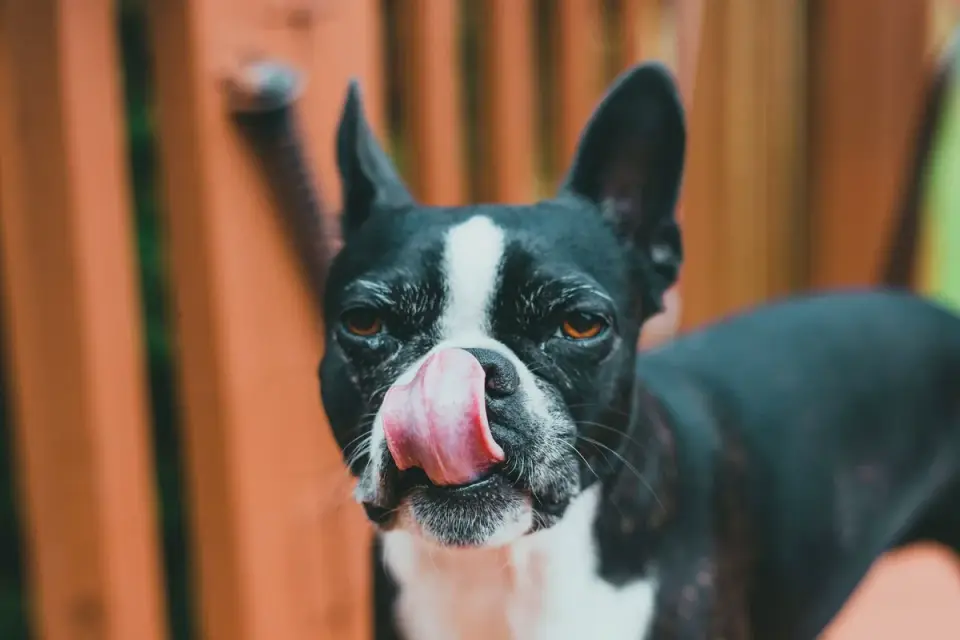
A puppy this age losing teeth erratically, unevenly, or with visible swelling on one side is not automatically abnormal — but it is worth a look. I would rather see a five-month-old for a quick oral exam and, if anything looks retained or asymmetric, a set of dental radiographs than assume every lump under the gum is just a tooth working its way out. Imaging is cheap reassurance next to the alternative, which is a retained baby tooth crowding an adult tooth into a permanent bad angle. That is the same instinct I bring to a limping dog or an odd gait — look before you guess, whether the tool is an X-ray machine or my own hands running along a jawline.
Four to Six Months: Adult Teeth Push Through
By four to six months, most puppies have grown in the bulk of their 42 adult teeth, and this is arguably the roughest patch for chewing behavior even though the baby-tooth pain is largely behind them. Adult teeth are structurally stronger than baby teeth, but the jaw and surrounding tissue are still developing, and this is exactly the stage where I see owners reach for genuinely hard frozen items — antlers, thick rawhide, ice cubes — because the puppy “seems tough enough now.” I would slow down here. Are Ice Cubes Safe For My Dog? from the AKC and a separate rundown of 7 Chew Toys That Can Damage Your Dog’s Teeth from Cherry Hill Animal Hospital both land on the same practical rule: if you cannot dent an item with a thumbnail, and a puppy is chewing it rather than licking it, you are gambling with a slab or crown fracture. Frozen solid ice cubes fall into that category for a determined chewer, even though a puppy licking or crunching one cube occasionally is unlikely to come to harm.
A better frozen option at this stage is a rubber toy with give — chilled hard but not rock-solid — stuffed with a soft filling that keeps the puppy working the surface with tongue and gums rather than jaw force alone. If restlessness ramps up in the evening during this stretch, which is common as adult teeth finish erupting and the puppy is overtired from a day of chewing, it is worth reading Why Your Dog Won’t Settle in the Evening to sort ordinary teething discomfort from something that needs a longer look.
After the Last Adult Tooth Settles
Teething is functionally done by around six months, and the frozen-toy stage of a dog’s life should wind down with it — not because the dog stops liking cold things, but because the specific therapeutic reason for offering them has resolved. I tell owners to keep one or two soft frozen fillables in rotation for hot afternoons and boredom, and to retire anything genuinely hard once the adult set is fully in, since an adult dog’s full bite force against an unyielding frozen object is a different risk calculation than a five-month-old’s. If a dog carries a fiber-rich frozen puree habit into adulthood, it is worth checking that the total added fiber from treats stays reasonable; Yes, You Can Give a Dog Too Much Fiber — Here’s Where the Line Is lays out where that line tends to sit.
The owners I see most often after the teething window has closed are the ones circling back because a habit stuck around past its purpose — a dog still expecting a frozen Kong every evening, chewing it out of routine rather than need. That is not a problem in itself, but it is worth noticing, because a fully adult jaw applying full force to a frozen object several nights a week is exactly the pattern that eventually shows up on my exam table as a slab fracture on a lower fourth premolar. One dog I treated, a four-year-old Labrador who had simply never stopped the puppy habit, needed that tooth extracted after years of nightly frozen Kongs that had graduated in hardness right along with him. Nothing about frozen enrichment is inherently risky for an adult dog — it is the combination of full adult bite force and a genuinely rock-hard object that turns a soothing habit into a dental bill.
Quick Recap
Match the item to the stage: chilled, not frozen, for the earliest baby teeth; soft frozen purees and pliable toys through the losing-teeth stretch; caution with anything ice-hard once adult teeth are in and jaw strength is real. If a puppy stops chewing on one side, drools more than usual, or you notice asymmetry along the jaw, a quick veterinary look — sometimes with imaging — beats waiting it out.
Frequently asked questions
At what age can I start giving my puppy frozen toys?
Wait until the puppy is actively teething and gnawing with intent, usually once the first baby teeth are erupting past eight to nine weeks, and start with items chilled rather than frozen solid. Full-hardness frozen items are better suited to the tooth-losing and adult-eruption stages, roughly three to six months.
Are ice cubes safe for a teething puppy?
An occasional lick or crunch of a single ice cube is unlikely to cause harm, but letting a puppy chew hard and repeatedly on ice risks gum injury and tooth fractures, especially once adult teeth are in. Shaved or crushed ice is a gentler alternative.
How do I know if my puppy's teething is actually a dental problem?
Chewing on only one side, persistent drooling, visible gum swelling, or a baby tooth that has not fallen out by six months are all reasons to have a veterinarian look, and sometimes take a dental radiograph, rather than assuming it will resolve on its own.
Sources
- Puppy Teething Timeline — How Long Does Puppy Teething Last? — AKC
- Are Ice Cubes Safe For My Dog? — AKC
- Care For Your Teething Puppy With These 4 Tips — PetMD
- 7 Chew Toys That Can Damage Your Dog's Teeth — Cherry Hill Animal Hospital