Is Garlic Safe for Dogs in Small Amounts?
A neurologist and integrative vet breaks down why garlic — even in small amounts — carries real toxicity risk for dogs, what the research actually says about dose, and what to watch for.
Is garlic safe for dogs? No amount is proven safe — even small doses can trigger delayed red blood cell damage.
On this page
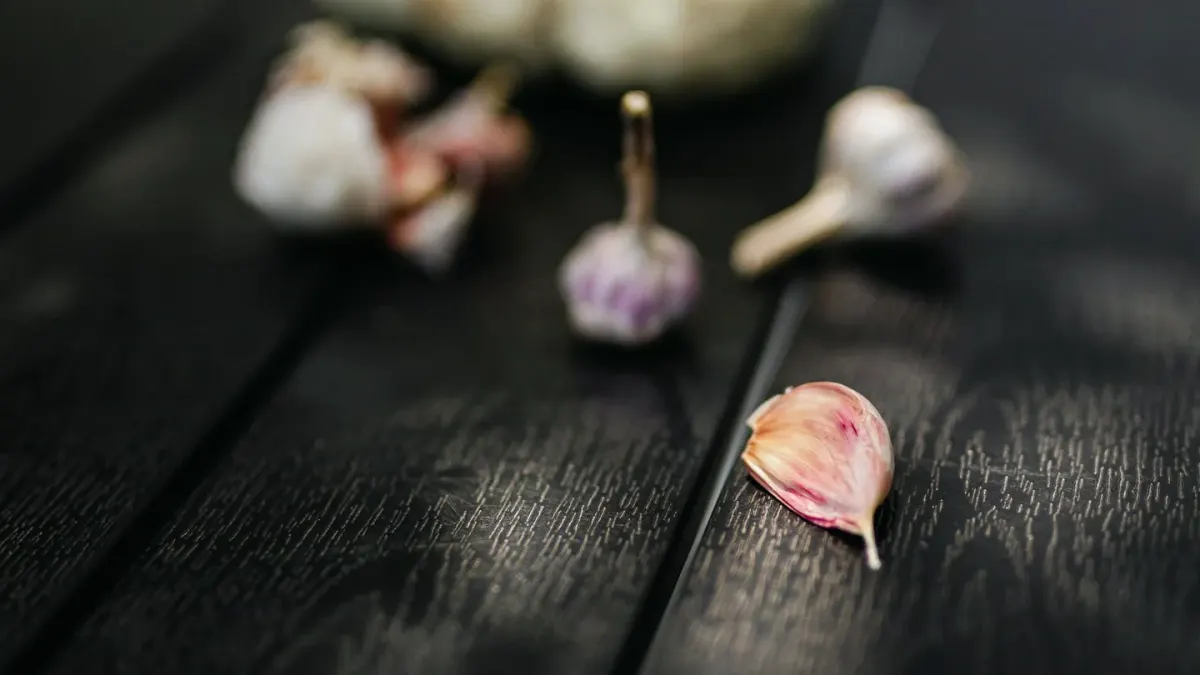
A client of mine once called in a mild panic because her Shiba Inu, Miso, had snuck a whole roasted garlic clove off the counter while she plated dinner. Miso seemed completely normal that evening, bright-eyed and begging for more. By day four, though, his gums had gone pale and he was too tired to finish a walk around the block. That gap between the meal and the symptoms is the entire story of garlic toxicity, and it’s why so many owners genuinely believe garlic is fine until the bloodwork says otherwise.
Is garlic safe for dogs? No amount is proven safe — even small doses can trigger delayed red blood cell damage. That’s not a hedge; it’s the working position of the Merck Veterinary Manual, which classifies garlic alongside onions, leeks, and chives as part of the Allium genus that reliably injures canine red blood cells. As a neurologist who also practices traditional Chinese veterinary medicine, I find that framing useful, because it separates two questions owners tend to blend together: whether garlic is used in food therapy traditions, and whether the isolated compound is metabolically safe for a dog’s blood at any measurable dose. Those are not the same question, and the second one is the one that matters when a clove goes missing from the counter.

What actually makes garlic dangerous
Garlic and onion share thiosulfate and other sulfur-containing compounds that, once metabolized, generate reactive oxygen species inside the red blood cell. Those compounds oxidize hemoglobin into rigid clumps called Heinz bodies, and a red blood cell carrying enough of them becomes stiff enough that the spleen filters it out of circulation early. Do that to enough cells fast enough, and the bone marrow can’t keep pace, which is the mechanism behind the hemolytic anemia the ASPCA and toxicology references describe in dogs that ingest Allium species. Garlic is generally considered several times more concentrated in these compounds than onion gram for gram, which is one reason “just a little garlic” carries more risk than owners expect from something this common in a spice rack.
A recent in vitro study on canine red blood cells reinforces how variable this reaction can be: exposing erythrocytes to different types and concentrations of garlic produced different levels of Heinz body formation, not a single uniform threshold, according to a study indexed on PMC (National Center for Biotechnology Information). That variability is the honest, mechanism-aware answer to “how much is too much” — it depends on the garlic itself, not just the ounce count.
Small amounts versus a truly toxic dose
Here’s where the compare-and-contrast gets uncomfortable for garlic’s reputation as a folk remedy. In integrative practice, garlic shows up historically in small, controlled culinary amounts as part of certain food-therapy traditions, framed as something that may help support a healthy inflammatory response in some contexts. That tradition is not the same as a toxicology finding. Modern veterinary toxicology has not validated a dose of garlic that’s reliably safe for dogs, and severity still depends on the individual dog, their size, and their sensitivity.
One line matters more than the rest: no amount is guaranteed safe.
That’s a hard stop, not a scare tactic. It’s also why breed and individual variation matters so much here — Japanese breeds such as Akitas and Shiba Inus, like Miso, are frequently reported as more sensitive to Allium-related red blood cell injury than the average dog, and smaller dogs absorb a bigger relative dose from the same bite of food.
Symptoms, timing, and what to do
The part that trips owners up most is timing. Heinz bodies and early lab changes can appear within a day of ingestion, but visible anemia symptoms — pale gums, lethargy, rapid breathing, dark urine, reduced appetite — often don’t show up for three to five days, according to the Pet Poison Helpline. A dog that looks fine the night of the incident is not out of the woods. If your dog eats garlic in any meaningful amount, the right move is a same-day call to your veterinarian or a poison hotline, with the form (raw, cooked, powdered) and rough amount ready to report, followed by bloodwork on the timeline your vet recommends rather than a wait-and-see approach.
Steadying the gut after a scare
A garlic incident often comes with a rattled stomach even before anemia is a concern, from the fatty scraps garlic tends to arrive with or from the stress of a vet visit. In that window, plain, gut-gentle support matters more than anything flavorful. If your vet clears your dog to eat, a bland, easily digested diet and time are usually the bridge back to normal; you can read more about gentle carbohydrate options in our guide on Can Dogs Eat Sweet Potato?. Owners rebuilding a senior dog’s diet after any kind of GI disruption may also find our piece on How to Change Food for a Senior Dog useful for pacing the transition. For dogs whose digestion runs sensitive as a baseline, it’s worth understanding what a genuinely well-labeled probiotic looks like before reaching for one, which we cover in Best Probiotic for Dogs (2026).
The bottom line
Garlic’s reputation as a folk remedy for fleas or immunity doesn’t hold up against what toxicology actually shows about canine red blood cells, and the delay between exposure and symptoms is exactly what makes it deceptive rather than reassuring. Treat garlic the way you’d treat any Allium species: keep it out of the bowl, out of the scraps, and out of home remedies, and call your vet quickly if a slip-up happens. As more veterinary toxicology work refines exactly how much garlic of what type triggers Heinz body formation, the guidance may get more precise — but for now, the safest position is also the simplest one: don’t feed it on purpose.
Frequently asked questions
Is a tiny amount of garlic, like a sliver in a sauce, actually dangerous for a dog?
It is unlikely to cause visible illness, but veterinary toxicologists have not identified a dose that is guaranteed safe, and toxicity is cumulative with repeated small exposures. A single incidental lick of sauce is a different risk category than a dog eating a clove or a garlic-heavy dish.
Does cooking garlic make it safer for dogs?
No. The Merck Veterinary Manual notes that raw, cooked, and concentrated forms of garlic and onion have all been linked to Heinz body hemolytic anemia, and garlic powder is actually more concentrated by weight than the fresh bulb.
What should I do if my dog eats garlic?
Call your veterinarian or a pet poison hotline right away and have the amount and form of garlic ready to describe. Because anemia can take days to appear, a vet may want to recheck bloodwork even if your dog looks normal at first.
Are some dogs more sensitive to garlic than others?
Yes. Japanese breeds such as Akitas and Shiba Inus have been reported to be more susceptible to Allium-related red blood cell damage, and smaller dogs face higher risk per bite of garlic relative to their body weight.
Sources
- Garlic and Onion (Allium spp) Toxicosis in Animals — Merck Veterinary Manual
- Toxic and Non-toxic Plants: Garlic — ASPCA
- Garlic Is Toxic To Dogs — Pet Poison Helpline
- The Effect of the Type and Concentration of Garlic (Allium sativum) on Heinz Body Concentrations in Canine Erythrocytes—An In Vitro Study — PMC (National Center for Biotechnology Information)