L-Theanine vs. Melatonin for Dog Anxiety: What Actually Calms a Storm-Phobic Dog
Medically reviewed by Meghan Jaskot, DVM — For general education — not a substitute for veterinary care.
L-theanine and melatonin work on different systems entirely, and the evidence for canine anxiety isn't equally strong for both.
On this page
It’s 4 on a July afternoon and the sky over the parking lot has gone the color of a bruise. In my practice, I know exactly which appointment is about to call — it’s the one where a client texts a photo of their dog pressed flat against the bathtub, panting, before the first thunderclap even lands. I’ve worked with a nine-year-old Weimaraner named Otto whose owner tracked his storm response for two summers running: the drooling started 20 minutes before she could hear anything, then the pacing, then he’d try to wedge himself behind the toilet. She’d tried a pressure wrap, tried closing the blinds, and by the second summer she was standing in my exam room asking whether L-theanine or melatonin was the better place to start before we talked about anything prescription-grade.
That question — theanine or melatonin — comes up constantly, and the honest answer is that they’re not really competing for the same job. One is an amino acid that nudges the brain’s calming neurotransmitters. The other is a hormone that governs the sleep-wake cycle and, almost by accident, has picked up a reputation as an anxiety aid. Knowing which lever you’re actually pulling changes how you use either one.
What L-theanine is doing in the brain
L-theanine is the amino acid that gives green tea its unusual calm-alert quality in people, and the working theory in dogs is similar: it appears to increase GABA, serotonin, and dopamine activity, the same pathways a lot of anti-anxiety medications target, without the sedation. The best dog-specific data comes from an ScienceDirect: open-label prospective study of the use of l-theanine (Anxitane) in storm-sensitive client-owned dogs, which followed 18 dogs through thunderstorm season and found meaningful drops in drooling, pacing, panting, following behavior, and hiding, along with a shorter time to return to baseline once the storm passed.
I want to be straight about what that study is and isn’t. It had no placebo arm, no blinding, and it was funded by the company that makes the product — all fair points raised in a detailed SkeptVet: evidence update on Anxitane for anxiety in dogs, which is worth reading if you want the skeptical counterweight. Caregiver placebo effect is real; owners who are hoping a supplement works often report improvement even when the dog’s underlying physiology hasn’t changed much. That said, the ingredient’s safety margin is wide, dosing in the literature runs in the 2-4 mg/kg range, and it doesn’t carry the drowsiness that makes some owners hesitant with other options. That combination — low risk, plausible mechanism, imperfect but real supporting data — is why I still reach for it first in dogs with generalized or situational anxiety rather than a single sharp trigger.
Where melatonin actually fits
Melatonin’s anxiety reputation is a bit of a secondary use case. It’s fundamentally a sleep hormone, and its calming effect in dogs seems to come from a mild sedative action rather than from directly quieting fear circuitry. PetMD’s overview of melatonin for dogs and the AKC’s guide to melatonin for dogs both describe timing it 30 minutes to two hours before a known trigger — a fireworks show, a car ride, a vet visit — so it’s on board before the dog needs it, which tells you a lot about how it’s actually being used in practice: less as a daily anxiety-management tool and more as an as-needed sedative for a predictable event.
This is where I part ways with owners who want to reach for melatonin as their default. It has a place — I’ve used it as part of a pre-visit protocol for genuinely fearful patients, sometimes alongside other medications a vet has prescribed — but on its own it isn’t built to manage the kind of chronic, low-grade anxiety that shows up as destructive chewing when the owner leaves for work or barking at every delivery truck. The mechanism doesn’t match that job. I’ll defend theanine as the better starting point for that category of dog and save melatonin for the discrete, predictable trigger: the specific storm, the specific car ride, the specific vet visit.
Reading the label either way
Neither ingredient is regulated the way a prescription drug is, which means the guaranteed analysis and the ingredient panel are doing more work than the front of the bag. For theanine, look for the actual milligram dose per serving, not just “contains L-theanine” — a trace amount buried in a multi-ingredient calming chew isn’t doing the job the Anxitane study tested. For melatonin, check whether the product also contains xylitol as a sweetener in a human-formulated capsule, which is a genuine toxicity risk that has nothing to do with the melatonin itself. If you’re weighing format at all — chew versus capsule versus liquid — the practical tradeoffs are covered well in our comparison of chew, powder, and liquid supplement formats, and dogs with predictable noise triggers specifically might also want to read how a pressure garment stacks up against an oral option in our Thundershirt versus oral calming aid piece.
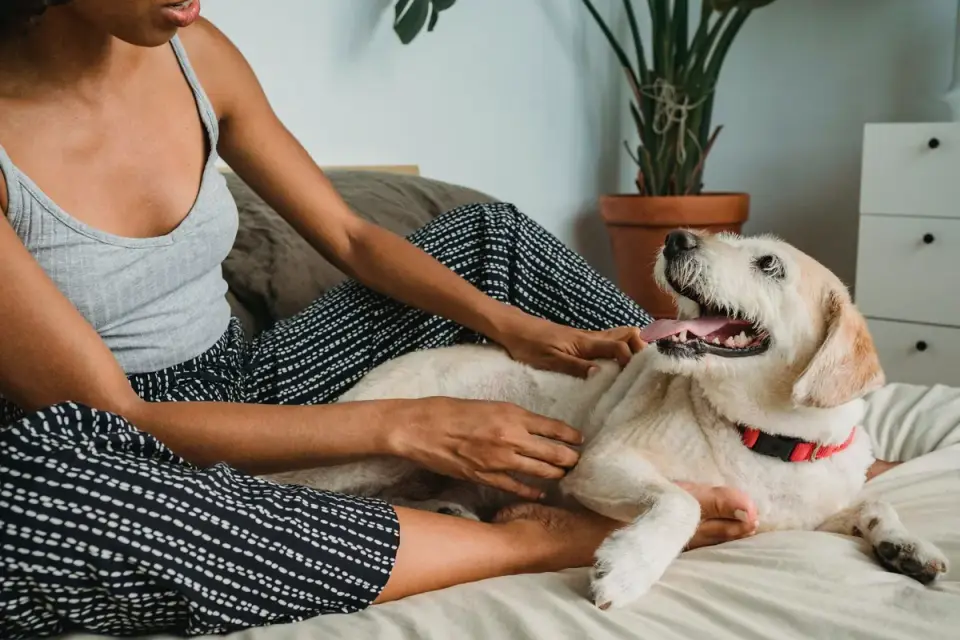
I think back to Otto’s owner standing in my exam room. What we landed on was a daily theanine regimen through storm season, with melatonin held in reserve for the nights the forecast called for something severe enough that she wanted extra coverage — a layered approach rather than a single answer. Two summers later she told me the pacing had dropped off enough that she no longer dreaded the radar app. That’s one dog, not a study, but it’s the pattern I’ve watched repeat with generalized versus event-specific anxiety often enough to trust it as a starting framework.
The counterargument, and where I still land
The fair pushback is that neither ingredient has strong, blinded, placebo-controlled canine data behind it, and an owner could reasonably ask why bother with either one instead of going straight to a veterinary behaviorist and a prescription plan. I take that seriously — for a dog with severe, escalating fear or any aggression component, nutraceuticals are not a substitute for a full behavioral workup, and if you’re also comparing calming aids to a physical intervention like an anxiety wrap, it’s worth reading how that tradeoff plays out for dogs whose anxiety has a strong car-sickness overlap in our ginger versus chamomile piece too, since motion and noise anxiety often travel together. But for mild-to-moderate situational anxiety, where the goal is taking the edge off a predictable trigger or supporting a dog through a stressful season, I don’t think the imperfect evidence is a reason to skip either ingredient — it’s a reason to dose them correctly, track what actually changes, and loop in your vet before layering anything else on top.
What to actually do next
Start with your dog’s pattern, not the supplement aisle. If the anxiety is chronic and diffuse — new person at the door, separation, general fretfulness — L-theanine dosed daily at a labeled amount is the more defensible starting point given the storm-sensitivity data. If it’s a single predictable event — fireworks night, a flight, a groomer visit — melatonin timed ahead of the trigger fits the mechanism better. Either way, write down what you observe for two to three weeks before deciding it isn’t working, and bring that log to your vet if you’re not seeing change, because that’s the point where a prescription option or a referral to a veterinary behaviorist genuinely belongs in the conversation.
Frequently asked questions
Can I give my dog L-theanine and melatonin together?
Some vets do combine them for severe situational anxiety, such as intense storm phobia, but talk to your veterinarian first since combining any calming supplements can compound sedation.
How long does it take for L-theanine to work in dogs?
In the storm-sensitivity study, daily dosing was used throughout the season rather than as a single as-needed dose, so it's better suited to ongoing management than last-minute use.
Is melatonin safe for all dogs?
Most healthy dogs tolerate it well, but avoid any human melatonin product containing xylitol, and check with your vet if your dog has a seizure disorder or is on other medications.