Plant-Based Versus Marine Omega-3 Sources for Dogs: What the Conversion Math Actually Shows
Medically reviewed by Cheryl Chrisman, DVM, MSTCVM, CVA, CVCH, CVTP, CVFT — For general education — not a substitute for veterinary care.
Flax gives a dog ALA; almost none of it becomes the EPA and DHA the nervous system and skin actually use.

Can a dog get by on flaxseed oil alone, the way a vegetarian owner sometimes hopes? I get asked this more than almost any other nutrition question in my neurology practice, usually from an owner standing in the supplement aisle holding two bottles and unsure which one actually does anything.
Here is the checklist I hand owners before they buy either bottle:
- Ask what the label actually contains — “omega-3” alone tells you nothing; you need EPA and DHA milligrams, not just ALA.
- Know that dogs are poor converters — dogs turn less than 10% of dietary ALA into EPA and under 1% into DHA, so flaxseed alone rarely moves the needle.
- Match the source to the goal — skin, joint, and cognitive support studies are built almost entirely on EPA/DHA, not ALA.
- Check for a NASC seal or comparable quality marker on any fish or algal oil product, since oxidized fish oil is worse than no fish oil.
- Consider algal oil if avoiding fish is a real constraint — it delivers EPA and DHA directly without going through the ocean food chain.
A twelve-year-old border collie named Fen came into my practice three winters ago, brought in for hind-limb ataxia that her owner had first noticed as a slight hitch getting up from the kitchen floor after naps. Fen’s owner, a longtime vegetarian, had been giving her flaxseed oil daily for two years, convinced it was doing the same job as fish oil because both bottles said “omega-3” on the front. Her coat had gone dull over that stretch, and she’d started licking her hind paws at night. When we ran an omega-3 index alongside her neurologic workup, her EPA and DHA levels were low-normal at best — consistent with what the flaxseed had actually been able to deliver, which was not much. We didn’t stop the flax; her owner liked feeding it, and it isn’t harmful. But we added a marine EPA/DHA source at a therapeutic dose, and over about eight weeks her coat came back in and the paw-licking eased. That’s one dog, not a trial, but it tracks with why the underlying biochemistry matters more than the marketing on either bottle.
Why the conversion math breaks the plant-based case
The nervous-system argument for marine omega-3s is really an enzyme argument. Converting ALA (the omega-3 found in flaxseed, chia, and hemp) into EPA and then DHA requires delta-6 desaturase, the same rate-limiting enzyme dogs use for several other essential fatty acid pathways, and it is a bottleneck, not a pipe. A comparison study published on PubMed fed dogs either flaxseed cake, fishmeal/oil, or krill meal at matched omega-3 intakes and tracked the change in each dog’s omega-3 index over four weeks. The flaxseed group — despite receiving over 1,400 mg of ALA daily — showed no significant change in omega-3 index, while the fish and krill groups both rose significantly. In practical terms, a supplement that supplies ALA without EPA or DHA is asking a dog’s liver to do a conversion job it is not built to do efficiently, something I keep in the back of my mind any time an owner tells me their dog is “already getting omega-3s” from a plant oil.
A related trial in Veterinary Medicine and Science looked at long-chain versus short-chain omega-3 supplementation and found the same pattern from a different angle: dogs supplemented directly with long-chain EPA and DHA raised their omega-3 index meaningfully more than dogs given a short-chain precursor source, over a comparable timeframe. Set beside the flax data, this is less an argument against plant oils generally than a specific statement about what ALA can and cannot substitute for. I still think flaxseed has a place — it contributes to overall fat intake and coat sheen through mechanisms beyond the omega-3 index — but it should never be the sole answer for a dog whose joints, skin, or neurologic status need EPA and DHA specifically. That’s the mechanism-and-pattern habit I bring from clinic to page: name what the nervous system needs biochemically, then step back and ask what it means for the whole animal in front of you.
Where algal oil changes the picture
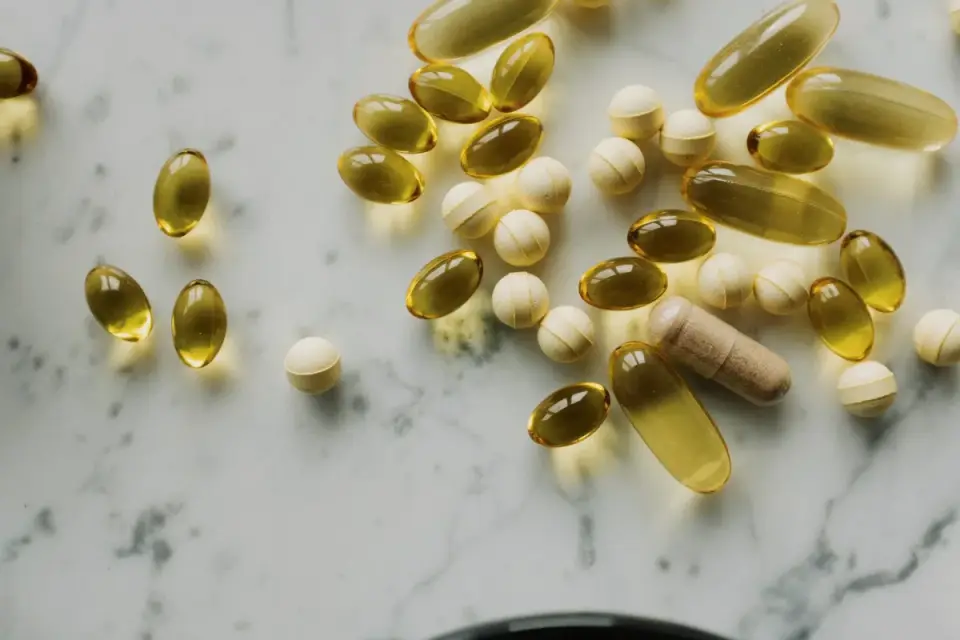
The honest counterargument to “just use fish oil” is that some owners have real reasons to avoid marine sources — allergy history, ethical preference, or concern about ocean contaminants like mercury and PCBs concentrating up the food chain. Algal oil answers that fairly well, because the algae that fish themselves eat to produce EPA and DHA can be cultivated directly and processed into oil without going through a fish at all. It is still a marine-origin fatty acid profile, just sourced earlier in the chain, and it sidesteps both the conversion problem of flaxseed and the sustainability and allergen concerns some owners raise about fish oil. I take this counterargument seriously enough that when an owner truly cannot use fish oil, algal oil is where I steer them rather than flaxseed, because the fatty acid profile is the thing that actually matters, not the word “vegan” or “marine” on the label.
Choosing between a chew, powder, or liquid delivery format for whichever source you land on is its own decision, and the tradeoffs there — pill burden, dosing accuracy, palatability for a picky senior — are covered in our piece on chew, powder, and liquid supplement formats. For dogs where joint stiffness is the driving concern, it’s also worth reading how to tell arthritis apart from normal aging stiffness before assuming omega-3s alone will resolve a mobility change. And if you’re comparing supplement formats more broadly, our look at freeze-dried versus powder formats covers a related stability question worth understanding before you buy in bulk.
Reasonable dosing for combined EPA and DHA in dogs needing skin, coat, or mild inflammatory support commonly runs in the range vets and formulators cite as 40 to 70 mg per kilogram of body weight daily, with some therapeutic protocols going higher under veterinary supervision; whatever number you land on, it should be printed on the label as actual EPA+DHA milligrams, not folded into a vague “omega-3 blend” total. Labels that only disclose total fish oil or total flax oil weight, without breaking out EPA and DHA, make it impossible to know if you’re actually hitting a therapeutic dose, and I flip every bottle over to check before I recommend it to a client.
Years from now I expect more dogs will be started on algal-sourced EPA and DHA by default rather than fish oil, simply because the supply chain is cleaner and the dose is easier to standardize — but the underlying lesson won’t change: the label needs to name EPA and DHA in milligrams, not just gesture at “omega-3,” and a plant-only source without conversion data behind it is not yet a substitute for that.
Frequently asked questions
Can flaxseed oil fully replace fish oil for a dog's omega-3 needs?
Not reliably. Dogs convert less than 10% of flaxseed's ALA into EPA and under 1% into DHA, so a flax-only diet rarely raises omega-3 levels the way a direct EPA/DHA source does.
Is algal oil as effective as fish oil for dogs?
Algal oil supplies EPA and DHA directly, the same fatty acids fish accumulate from algae in the first place, making it a reasonable marine-equivalent option for owners avoiding fish.