Slow Feeder vs Raised Bowl: Which Does Your Dog Need?
One bowl fights speed-eating, the other fights a stiff neck reaching the floor — and picking wrong can do more harm than doing nothing.
On this page
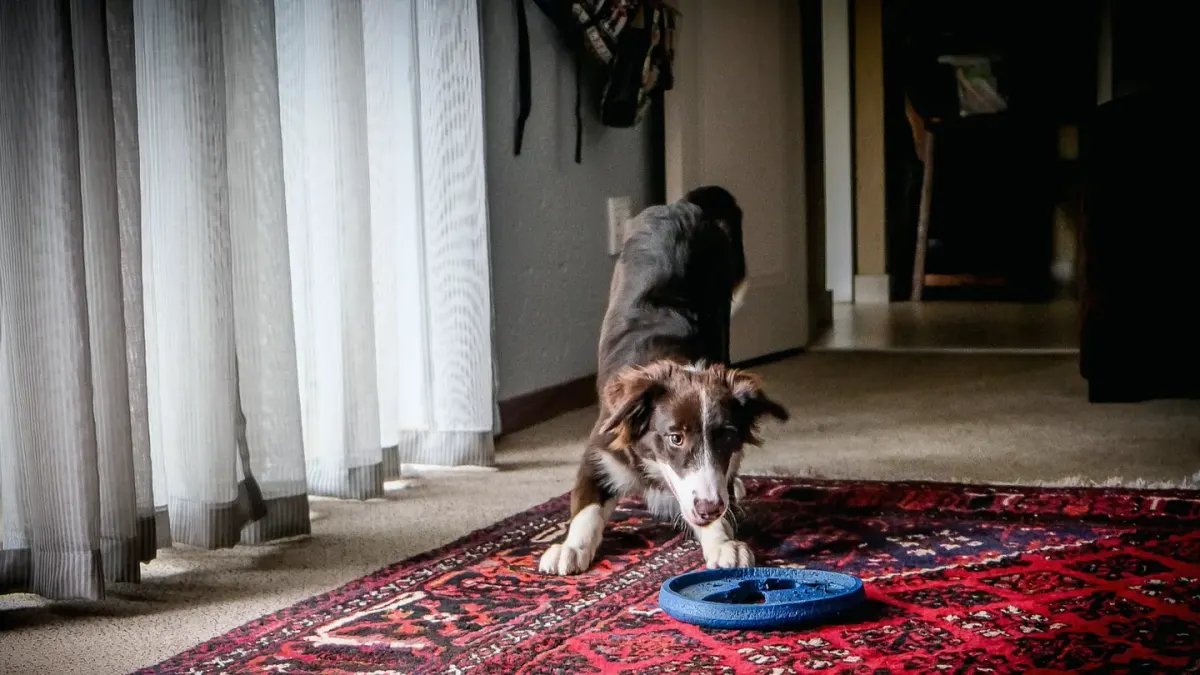
A Labrador named Otis taught me this distinction the hard way. He was seven, sixty-eight pounds, and his owner brought him in because he’d started vomiting a ropey mix of foam and undigested kibble almost every dinner, usually within ten minutes of finishing his bowl. She’d tried switching foods twice. What actually fixed it was watching him eat: he cleared a full bowl in under thirty seconds, barely chewing, and the vomiting stopped almost entirely once she moved him to a bowl with raised ridges that forced him to work around them. That case is why I don’t treat this as a style question. It’s a “what is actually going wrong at mealtime” question, and the two products solve two different problems.
Start here: what problem are you actually solving
Before you buy either one, work through this:
- Does your dog eat in under a minute, gag, or vomit shortly after meals? That’s a speed problem — start with a slow feeder.
- Is your dog older, arthritic, deep-chested, or does it hurt to watch them hunch to reach the floor? That’s a reach and posture problem — a raised bowl may help.
- Is your dog a large or giant breed with a family history of bloat? Talk to your vet before using a raised bowl at all — more on why below.
- Does your dog do both (gulp fast and struggle to bend)? You likely need a slow-feeder insert set into a modestly raised stand, not a full-height raised bowl.
- Is the “problem” really just a messy eater pushing kibble across the floor? That’s neither of these — it’s a mat or tray issue, which I’ll get to.
Most dogs only need one of the two. Very few need both, and a meaningful minority — arthritic, deep-chested, giant-breed dogs — probably shouldn’t get a raised bowl at all.
What a slow feeder is actually for
Slow feeders are bowls with raised ridges, mazes, or interlocking pillars molded into the base so a dog has to nose, lick, or paw around them to get at the kibble. The mechanism is purely physical: it doesn’t change the food, it changes how much a dog can capture in one gulp. For a dog that inhales a meal in under a minute, that alone tends to cut down on the retching and regurgitation owners describe as “he throws up his dinner every night.” Slowing intake also gives satiety signals more time to catch up, which is part of why some owners see slow feeders help with weight management, not just vomiting.
They’re not a fix for genuine anxiety-driven guarding or for a dog in real gastrointestinal distress — if a dog is vomiting undigested food hours after eating, or the vomiting includes bile, blood, or happens with lethargy, that’s a vet visit, not a bowl swap. And a slow feeder does nothing for a dog whose problem is that the floor is too far away.
Where the raised bowl argument gets more complicated
This is the part that surprises a lot of owners, because raised bowls used to be marketed as protective against bloat, and that idea still circulates. It isn’t well supported. A widely cited prospective study published in the Journal of the American Veterinary Medical Association followed roughly 1,600 large and giant breed dogs and found that a raised feeding bowl was one of several factors significantly associated with a higher risk of gastric dilatation-volvulus, along with faster eating speed, increasing age, and a first-degree relative with a GDV history. The same research attributed a meaningful share of GDV cases in large and giant breeds to raised-bowl use.
That’s not the final word, though, and I want to be straight about where the evidence is genuinely mixed rather than settled. A later analysis in Veterinary Evidence reviewed the raised-bowl question specifically and found the picture murkier than the original study alone suggests — some follow-up work hasn’t reproduced the same effect, and bowl height itself seems to interact with breed size in ways that aren’t fully mapped out. Riney Canine Health Center, Cornell University College of Veterinary Medicine: Cornell’s Riney Canine Health Center lists deep, narrow-chested large and giant breeds, rapid eating, and a family history among the recognized GDV risk factors, which is the more actionable takeaway for owners: if your dog already carries two or three of those risk factors, a raised bowl is not the neutral convenience item it looks like on a shelf.
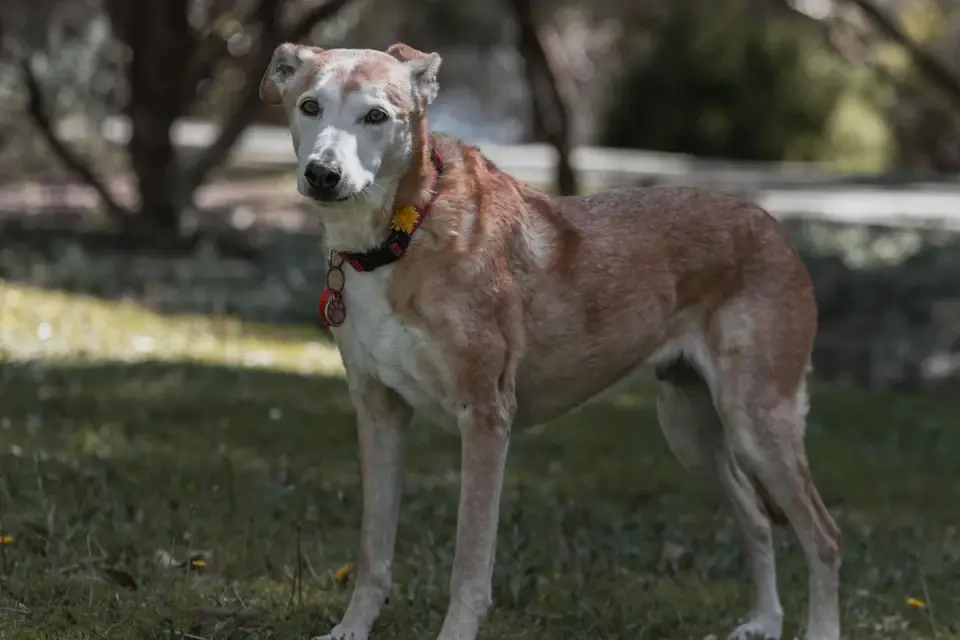
For a small, arthritic terrier with no bloat risk factors, a raised bowl solving a genuine reach problem is a reasonable call. For a deep-chested Great Dane or Weimaraner that already eats fast, I generally steer owners away from it, and toward addressing the eating speed instead.
A scene that’s stuck with me
I’ve had a version of this conversation more times than I can count, but one sticks with me because the owner had already done real homework before she walked in. She had a nine-year-old Doberman, spayed, about sixty pounds, with mild hip arthritis that made her reluctant to lower her head fully to a floor bowl at dinner. The owner had read that raised bowls prevent bloat and had one on order. I had to walk back that assumption in the room — Dobermans are exactly the deep-chested body type the research flags, and this dog also had a littermate with a prior GDV episode, which stacks two risk factors on top of the elevation itself. We ended up compromising on a bowl raised only a few inches, just enough to ease the neck angle without full elevation, paired with a instruction sheet on GDV warning signs to watch for. She still checks in about it at annual visits, and I’d rather have that ongoing conversation than a bowl that quietly raises risk nobody flagged at purchase.
If the real issue is mess, not speed or reach
A fair number of owners land in this comparison because mealtime is chaotic — kibble skidding across the floor, water sloshing over the rim — and neither a slow feeder nor a raised bowl actually addresses that. That’s a containment problem, and our guide on mats and trays for a messy eater’s feeding station walks through what genuinely controls spill versus what just looks tidy in a product photo. Don’t buy a raised stand hoping it’ll also solve a mess problem; it usually won’t, and you’ll have spent money solving the wrong thing.
If mobility is the underlying concern — not just at the food bowl but on stairs and slick floors generally — it’s worth reading that whole picture together. Our piece on non-slip stair treads for a dog that struggles with steps covers the broader mobility-support case that a raised bowl is sometimes just one piece of.
Making the call, and living with it
By the time an owner is standing in an aisle holding both products, the honest answer is usually already visible in how their dog eats. A dog that clears a bowl in a frantic thirty seconds and then heaves foam onto the kitchen floor doesn’t need to reach higher — it needs to be slowed down. A dog that grunts and hesitates before lowering its head, especially an older, arthritic, or short-legged dog with no bloat risk factors stacked against it, is telling you something different. What I keep coming back to with owners is that neither product is risk-free by default, and the raised bowl in particular deserves a specific gut-check for deep-chested, large-breed, or GDV-family-history dogs before it goes anywhere near the kitchen floor.
If you’re still unsure after running through the checklist above, bring it up at your next visit — describing exactly how your dog eats, in real detail, gives your vet more to work with than the product category ever will.
Frequently asked questions
Do slow feeders actually prevent bloat?
They may help indirectly, since faster eating speed is one of several factors linked to higher gastric dilatation-volvulus risk in the research published in the [Journal of the American Veterinary Medical Association](https://avmajournals.avma.org/view/journals/javma/217/10/javma.2000.217.1492.xml). Slow feeders aren't a guaranteed prevention tool, and dogs with other bloat risk factors still need a vet conversation.
Are raised bowls safe for large and giant breed dogs?
The evidence is mixed rather than settled — the original JAVMA study found raised bowls associated with higher GDV risk in large and giant breeds, but a later review in Veterinary Evidence found the picture less clear-cut. If your dog is deep-chested or has a family history of bloat, ask your vet before elevating the bowl.
My dog eats fast and also has arthritis — which one do I buy?
Consider a slow-feeder insert set into a bowl raised only slightly, rather than a full-height stand, so you're addressing the eating speed without maximizing elevation on a dog that may already carry other bloat risk factors.
Sources
- Non-dietary risk factors for gastric dilatation-volvulus in large and giant breed dogs — Journal of the American Veterinary Medical Association
- Are Dogs That Are Fed from a Raised Bowl at an Increased Risk of Gastric Dilation Volvulus Compared with Floor-Fed Dogs? — Veterinary Evidence
- Gastric Dilatation Volvulus (GDV) or Bloat — Riney Canine Health Center, Cornell University College of Veterinary Medicine