7 Reasons Your Dog Follows You Room to Room
Why your dog follows you room to room, what is normal versus anxiety, and how to build calm independence.
Most room-to-room shadowing is normal social behavior, and my baseline is simple — reward calm distance before you worry about clinginess.
On this page
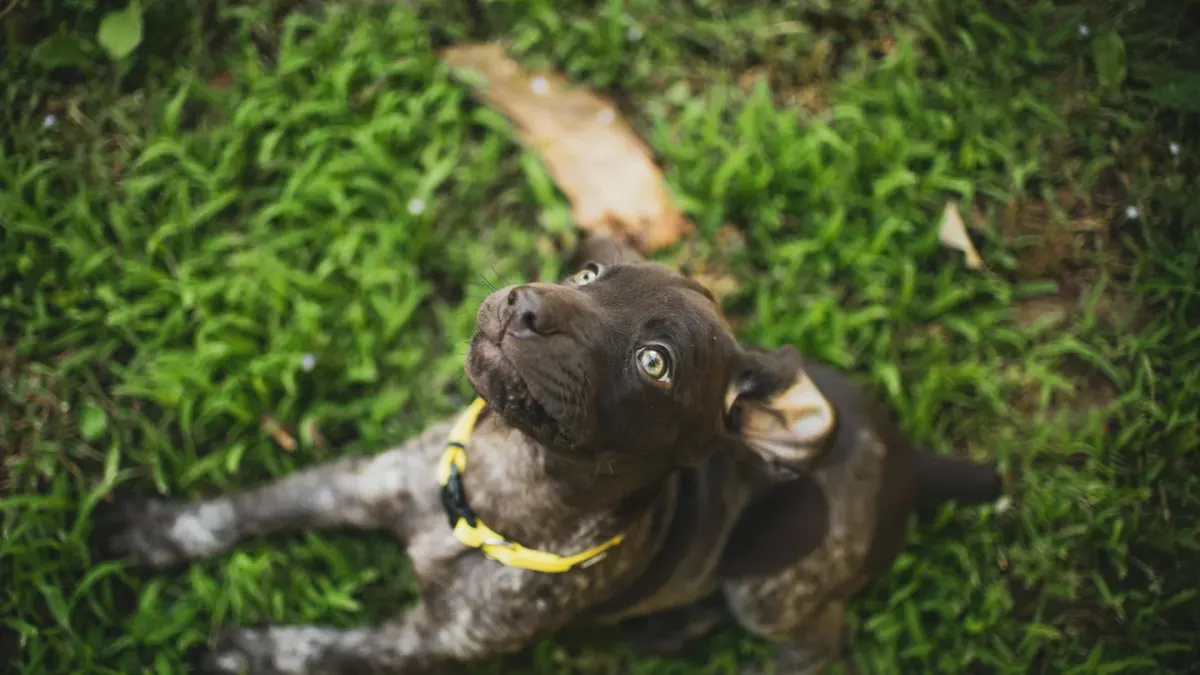
If you stand up to refill your water, your dog stands up too. Bathroom, laundry room, hallway — you have a four-legged shadow with excellent timing.
Vets often see this pattern with healthy, bonded dogs, and it rarely means something is broken. Dogs are social animals selected for thousands of years to watch people. Following pays off with food, play, door-opening, and information about what happens next.
Use this quick checklist first, then read the detail below to decide what your dog needs.
Checklist: normal shadowing vs. need for change
- Relaxed body, soft eyes, settles on a bed nearby within 2-3 minutes — likely companionship
- Follows one person but can settle with others — likely learned habit and reinforcement history
- Paces, whines, pants, or cannot settle when you move — consider anxiety or over-arousal
- New or sudden clinginess in a senior or ill dog, with thirst, appetite, sleep, or house-training changes — schedule a baseline exam
- Destroys doors, vocalizes for 30+ minutes, or injures self when left alone — screen for separation anxiety
Why following feels so good to your dog
Companionship is the simplest answer and the most common one. Many dogs follow because proximity predicts good things, and owners accidentally strengthen it by talking, petting, or feeding every time the dog arrives.
Breed and life stage shape this too. Young puppies follow to stay safe. Adolescents follow because they are still learning how to settle alone. Seniors often follow more as vision, hearing, or memory shifts.
That does not mean you caused a problem by loving your dog. It means following works, so your dog repeats it.
When shadowing points to anxiety, boredom, or discomfort
Compare contrast helps here: a relaxed follower flops with a sigh. An anxious follower cannot turn off.
Watch for lip licking, yawning when not tired, tucked tail, pacing between you and the door, or shadowing that intensifies only around departures. VCA Hospitals describes separation anxiety as distress specifically tied to separation from an attachment figure, not just sociability, with signs like vocalization, destruction at exit points, and house soiling.
Boredom looks different. The bored dog follows, nudges, brings toys, barks to start a game, then settles after a 20-minute sniff walk and a food puzzle. The anxious dog struggles to settle even after exercise.
For owners sorting that overlap, this guide on boredom versus separation anxiety walks through hour-by-hour patterns, and this chewing guide helps separate boredom chewing from anxiety chewing.
Pain and aging deserve a mention. Arthritis, urinary urgency, nausea, vision loss, and cognitive change can all increase checking-in behavior.
Philip noticed this with Mazel, his 9-year-old spayed Cockapoo in Glendale. She had always trailed him to the kitchen, but over three weeks she began standing at the bathroom door at night and asking out twice after midnight. A baseline exam and urinalysis came first, then training for independence. That order matters.
Build calm independence without breaking the bond
You do not need to ignore your dog all day to fix following. You need to make distance boring and rewarding.
Start with management. Place a comfortable bed in the two rooms you use most, toss a treat there when your dog chooses it, and feed at least one meal a day from a puzzle or scatter in grass. Most owners see softer shadowing within 7-10 days once rest and enrichment are consistent.
Then teach a settle.
It is one behavior.
Ask for a down on the bed, reward quiet lying for 5 seconds, then 15, then 60, then release. Practice while you take two steps away, then across the room, then briefly out of sight. Keep sessions under five minutes.
Add departures in tiny slices. Pick up keys, sit back down. Open the door, close it. Step out for 10 seconds, return before barking starts. The Cornell University College of Veterinary Medicine emphasizes gradual desensitization and keeping departures low-key, paired with adequate exercise and mental enrichment.
If your dog growls when asked to move off a resting spot during this work, pause and read body language first with this guide to growling when petted.
Where I land on clinginess aids
I prioritize sleep, pain screening, daily sniffing walks, and a taught settle over any calming chew or additive.
That is my evidence-bounded line: structure first, supplements second.
I concede plainly where the alternative wins. A predictable evening routine plus a long-lasting chew can help a mildly restless dog choose the bed instead of your heels, especially during schedule changes or houseguests.
Where it stops winning is panic. If your dog cannot eat, rest, or stop vocalizing when alone, no treat or tea extract replaces a behavior plan and a veterinary exam. Keep expectations preventive and realistic: independence may help support calmer habits over weeks, not overnight.
Call your veterinarian promptly for sudden behavior change, new vocalizing or restlessness in a senior, house-training regression, appetite or thirst change, or any injury from escape attempts.
Frequently asked questions
Is it normal for my dog to follow me to every room?
Often yes, especially in puppies, newly adopted dogs, and bonded adults. It becomes a concern when your dog cannot settle, shows stress signals, or panics when separated.
Does following mean my dog has separation anxiety?
Not by itself. Separation anxiety involves distress during actual separation, such as prolonged vocalization, destruction at doors, or house soiling. A dog that follows you but rests calmly when you leave the house likely does not meet that pattern.
Should I shut my dog out of rooms to teach independence?
Avoid abrupt isolation, which can increase anxiety. Instead, reward settling on a nearby bed, practice brief out-of-sight absences, and build duration gradually.
Sources
- Separation Anxiety in Dogs — VCA Hospitals