Can Dogs Eat Mushrooms? What's Dinner and What's an ER Call
Medically reviewed by Justin Shmalberg, DVM, CVA, ACVN, ACVSMR — For general education — not a substitute for veterinary care.
Whether dogs can eat mushrooms depends entirely on which mushroom you're holding — some are dinner, some are an ER visit.
On this page
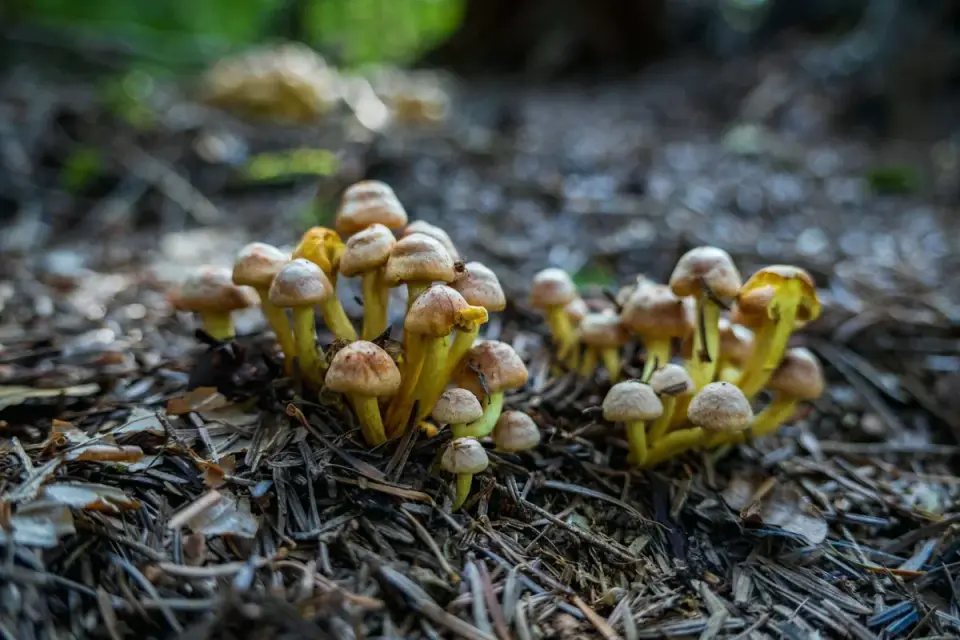
Imagine a dog let out into the backyard on a damp October morning, nose down, working a scent line along the fence — and stopping at a cluster of small brown caps that weren’t there the evening before. Overnight rain does that. Owners who describe finding “a mushroom” almost never mean one; they mean a patch, because fungi that fruit quickly tend to fruit together, and by the time anyone notices, the dog has already had a nose-length of opportunity to grab one. This is the moment that sends people searching for whether dogs can eat mushrooms at all, and the honest answer is that it depends entirely on which mushroom is in the dog’s mouth — a distinction that matters more here than almost anywhere else in the “can my dog eat this” conversation.
The mushroom that shows up overnight
Wild mushrooms are the reason mushroom questions carry more weight than most food questions. Most home cooks can eyeball a strawberry or a grape and know it’s safe; almost no one, including most veterinarians, can reliably identify a wild mushroom species by sight in a yard or on a trail. According to Pet Poison Helpline, the majority of confirmed fatal mushroom toxicities in pets trace back to a short list of genera — Amanita, Galerina, and Lepiota — and those toxins sort into rough categories: hepatotoxic (liver), neurotoxic, gastrointestinal, and nephrotoxic (kidney). Different toxin classes act on different timelines, which is part of what makes wild mushroom exposure so unforgiving to manage at home.
The Amanita genus deserves its reputation. The ASPCA notes that death cap mushrooms — Amanita phalloides — are among the most poisonous fungi known, capable of causing liver failure within roughly 24 hours, with symptoms that can be delayed eight to 24 hours after ingestion. That delay is exactly the kind of quiet window that lets owners assume nothing happened. Early signs — lethargy, reduced appetite, vomiting, diarrhea — can even ease up for a stretch before liver failure sets in, a pattern the UC Davis School of Veterinary Medicine also flags as a reason not to wait out mild GI signs after any unidentified mushroom ingestion. I don’t soften this one: if a dog eats a wild mushroom and you cannot positively identify the species, treat it as a poison-control call, not a wait-and-see.
What’s actually on the cutting board
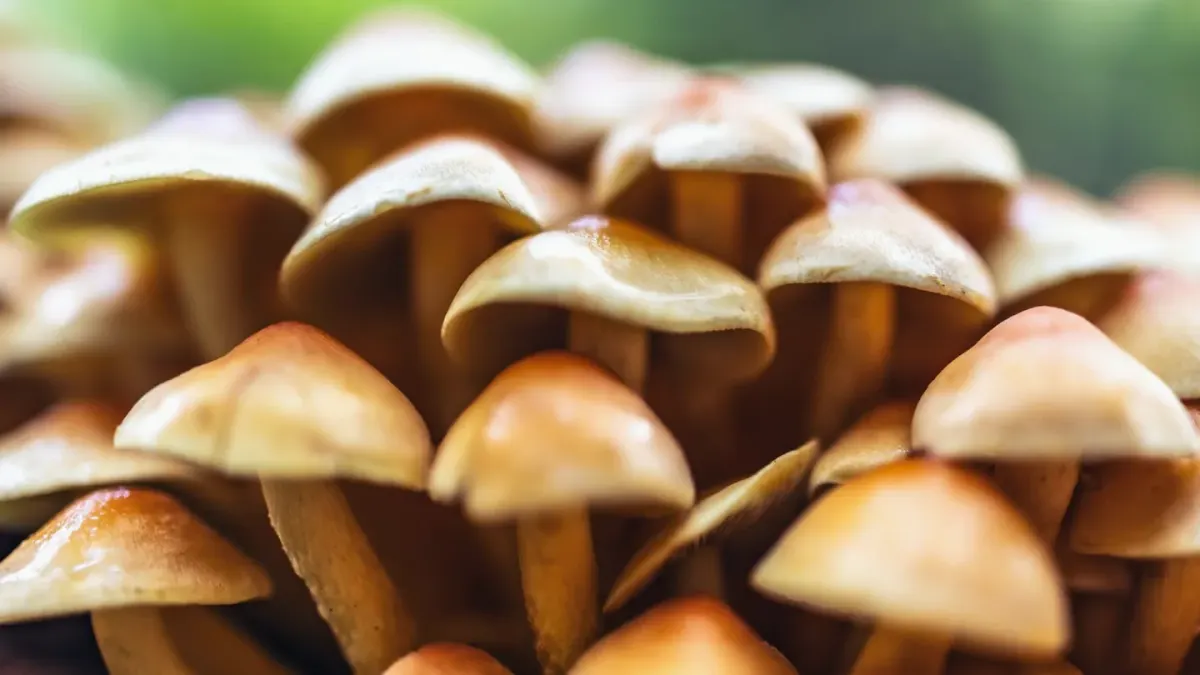
Set the yard aside, and the picture changes considerably. Culinary mushrooms — white button, cremini, portobello, shiitake, oyster — are the ones most likely to end up in a kitchen, and they’re a genuinely different category from wild fungi. Cooked plain mushroom, in small amounts, isn’t the acute threat that a foraged cap can be; the real-world risk with grocery-store mushrooms is less about toxicity and more about preparation. Raw mushrooms can be tougher on a dog’s gut than cooked ones, and any mushroom sautéed with onion, garlic, excess butter, or heavy seasoning carries the seasoning’s risk, not the fungus’s — worth remembering alongside how garlic behaves in small amounts, since garlic riding along on a mushroom skillet is a more common real-world hazard than the mushroom itself.
Consider a kitchen on a weeknight: a home cook sautéing mushrooms in butter and garlic for a stir-fry, a dog stationed at the counter’s edge working the smell, and a single cap that slips off the cutting board before anyone notices. The plain mushroom that hit the floor is probably not the problem. The garlic and the butter it cooked in are the more likely source of an upset stomach that night, and a dog that’s been sneaking seasoned pan drippings for a week is a different, cumulative concern than one bite of plain cremini. That distinction — ingredient versus preparation — is where I’d want an owner’s attention, because it’s the difference between a non-event and a vet call.
Mushrooms also carry meaningful fiber and moisture, which is part of why some commercial diets include them at all. Fiber load is worth tracking if a dog already eats a fiber-forward diet, similar to the ceiling discussed around too much fiber in a dog’s daily bowl, and it’s the same principle as introducing any new plant food — including sweet potato — gradually rather than all at once.
The supplement aisle: turkey tail and what the dose has to say
The word “mushroom” also shows up on a different kind of label now — not a produce bag but a supplement bottle, usually aimed at senior or cancer-affected dogs, and usually featuring turkey tail (Coriolus versicolor). This is where I want to be precise rather than enthusiastic, because the evidence here is real but limited, and it doesn’t generalize to “mushrooms are medicine.”
The most cited data point is a small clinical trial out of the University of Pennsylvania, summarized by VETgirl, in which dogs with hemangiosarcoma received a turkey tail extract (I’m-Yunity) at 25, 50, or 100 mg/kg/day, with the highest-dose group showing the longest median survival in that pilot. That’s a genuinely interesting signal — and also exactly the kind of result that needs a larger follow-up before anyone builds a treatment plan on it. A later, larger trial did not confirm the same survival benefit when I’m-Yunity was compared against chemotherapy. I land somewhere specific on this: turkey tail extract is a reasonable adjunct question to raise with an oncologist for a dog already fighting hemangiosarcoma, named dose and all, but it is not a substitute for staging, surgery, or chemotherapy discussions — and a raw or cooked culinary mushroom from a grocery store isn’t delivering anything close to a therapeutic dose of the compounds that trial used. The strongest counterargument — that “food-grade mushrooms have some of the same beta-glucans” — is true in principle and irrelevant in practice, because the amounts in a dinner-plate portion aren’t in the same range as a dosed extract.
If a dog eats an unidentified mushroom
The sequence matters more than the panic. Remove any remaining mushroom material from the dog’s reach, and if possible, photograph the mushroom — cap top, gills underneath, and the base where it met the soil — before it’s disturbed. That photo is genuinely useful to a poison-control line or an emergency vet, per the documentation approach described by VCA Animal Hospitals. Then call a vet or a pet poison hotline immediately rather than waiting for symptoms. Because some toxins take hours to show themselves, an early call gives the clinical team the option of decontamination while it can still help, instead of managing organ failure after the fact.
Where I land
Store-bought, plainly cooked mushrooms in modest amounts are not the emergency; wild mushrooms of unknown species are, and I don’t think that distinction gets made clearly enough in casual advice. If a dog is already mid-diet-transition, watch fiber load the way you would with any new plant food. If a supplement bottle on a shelf uses the word “mushroom,” ask what compound, what dose, and what study it’s based on before assuming the produce-aisle version does the same job. So the next time a cap turns up in the yard after rain, or a slice slips off the cutting board — which of those two is actually the one worth a phone call?
Frequently asked questions
Can dogs eat raw mushrooms from the grocery store?
Small amounts of plain, raw culinary mushrooms like button or cremini aren't typically an emergency, but cooked mushroom is generally easier on a dog's gut than raw, and any seasoning it was prepared with — onion, garlic, heavy butter — is a bigger real-world risk than the mushroom itself.
What should I do if my dog eats a wild mushroom in the yard?
Remove any remaining mushroom material, photograph the cap, gills, and base if you can do so safely, and call a veterinarian or a pet poison hotline right away rather than waiting for symptoms, since some toxins don't show effects for many hours.
Are mushroom supplements like turkey tail actually helpful for dogs?
Turkey tail extract has one genuinely interesting small clinical trial behind it in dogs with hemangiosarcoma, but a larger follow-up trial didn't confirm the same survival benefit, so it's worth a conversation with an oncologist rather than a stand-alone treatment plan.
Sources
- Not-So-Magic-Mushrooms: Tips to Keep Your Pets Safe — ASPCA
- Mushrooms Is Toxic To Dogs — Pet Poison Helpline
- Mushroom Toxicity in Dogs — UC Davis School of Veterinary Medicine
- Mushroom Toxicity — VCA Animal Hospitals
- Mushroom I'm-Yunity used for the treatment of canine hemangiosarcoma — VETgirl