Can Dogs Eat Bread? What the Crust, the Crumb, and the Dough Bowl Each Mean
Medically reviewed by Justin Shmalberg, DVM, CVA, ACVN, ACVSMR — For general education — not a substitute for veterinary care.
Most dogs can eat a small piece of plain bread now and then, but the ingredients and the dough itself carry the real risk.

On this page
Picture a kitchen island on an ordinary weeknight: a fresh loaf cooling on a rack, a dog stationed underfoot with the patient stare that has moved crumbs before. A heel of crust slips off the cutting board and disappears before anyone reacts. The person standing there, phone already in hand, isn’t really asking whether bread is food a dog can process. They’re asking something narrower and more useful: does anything in this particular loaf, or in how it was made, turn a dropped crust into a reason to call someone. That narrower question is the one worth answering first.
The Short, Correct Answer
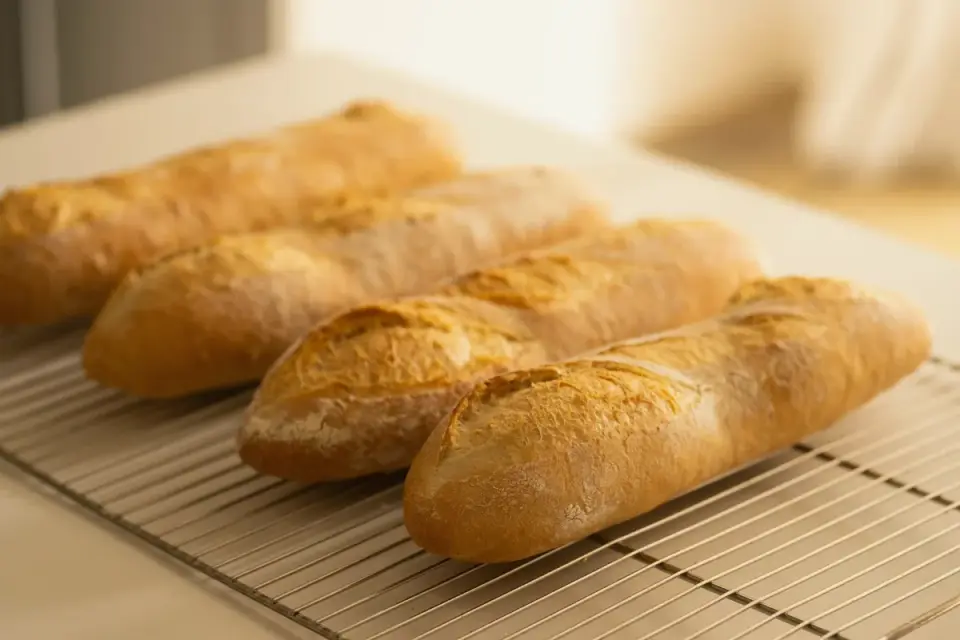
For a healthy adult dog without a wheat sensitivity, a small piece of plain, fully baked white or wheat bread is unlikely to cause harm as an occasional bite, and the American Kennel Club frames it exactly that way — an occasional treat, not a food group. I’d keep the emphasis on occasional. Bread carries a real glycemic and caloric load for very little nutritional return, which matters more for a fifteen-pound dog than for a mastiff, and matters a great deal more for any dog already managing weight or insulin sensitivity.
Where the Ingredient List Does the Real Damage
Plain bread is rarely the problem. What’s baked into it, or spread on it, is. Raisins folded into a cinnamon loaf are a known toxin exposure in dogs. Garlic bread is its own category of risk, since garlic and onion belong to the allium family regardless of how they’re prepared, a distinction covered in more depth in our piece on garlic safety. Sugar-free breads and rolls sweetened with xylitol are the ingredient I’d flag hardest: xylitol triggers a rapid insulin release in dogs that can drop blood sugar precipitously and, at higher exposures, damage the liver, according to PetMD. None of that risk comes from the flour.
The Dough Bowl Is the Actual Emergency
Consider a different scene: a bowl of yeasted dough left covered on the counter to double in size, and a dog left alone with it for twenty unsupervised minutes. That is a materially more urgent situation than a stolen crust, because the dough does not stop working once it’s swallowed. Warm and moist, a dog’s stomach is close to ideal conditions for yeast to keep fermenting, and the Merck Veterinary Manual describes the mechanism plainly: continued rising distends the stomach while the yeast produces ethanol that gets absorbed into the bloodstream. Distension alone can compromise the stomach wall and, in deep-chested breeds, mimic the dynamics of a gastric dilatation-volvulus; the ethanol on top of that produces genuine alcohol intoxication. The ASPCA has flagged rising dough ingestion as common enough around holiday baking season to warrant its own advisory, which tells you this isn’t a rare edge case — it’s a predictable one, especially in households that bake.
A dropped crust and a dropped dough ball are not the same emergency.
What Bread Is Actually Buying Your Dog
Weighed against what a supplement or a whole-food add-in could realistically do for a dog’s diet, plain bread comes up short on every axis except palatability. It isn’t a meaningful fiber source, it isn’t a protein source, and its glycemic profile is exactly what you’d expect from refined flour. If the goal is a low-calorie, high-value bite for training or a topper with actual digestive benefit, plain-cooked pumpkin or sweet potato earns that role far more honestly; our guide to feeding sweet potato safely covers portioning for that trade. And if the appeal of bread is really about bulking up a meal with something fibrous, it’s worth reading where that instinct can overshoot — too much fiber has its own failure mode in the form of loose stools and reduced nutrient absorption.
Where I Land
I don’t think plain bread deserves the alarm some owners bring to it, and I also don’t think it deserves a regular spot in the bowl. The honest counterargument is that a lot of dogs eat crusts their whole lives without incident, and that’s true — most do. But the ingredient panel on that loaf, and whether it ever finished rising, is doing all the real work in that outcome, not the wheat. My baseline advice stays simple: a rare bite of plain, fully baked bread is a low-stakes indulgence; anything with raisins, allium, or xylitol is a call to your veterinarian, not a snack decision; and raw dough left within reach is a kitchen hazard on par with any other counter-surfed toxin, worth treating with the same vigilance you’d apply to chocolate or grapes.
Frequently asked questions
Is plain white or wheat bread safe for dogs?
For most dogs without a wheat allergy, a small piece of plain, fully baked white or wheat bread is unlikely to cause harm as an occasional treat, according to the American Kennel Club. It should stay occasional given how calorie-dense it is relative to what it contributes nutritionally.
What makes raw bread dough so much more dangerous than baked bread?
Raw yeast dough keeps rising once swallowed, distending the stomach, and the fermenting yeast produces ethanol that is absorbed into the bloodstream, per the Merck Veterinary Manual. That combination of gastric distension and ethanol toxicity is why unbaked dough is treated as an emergency rather than a snack mishap.
Which bread ingredients are actually dangerous, not just unhealthy?
Raisins hidden in a loaf, xylitol used in some sugar-free baked goods, and any garlic or onion content are the ones that turn bread from a low-value treat into a genuine toxin exposure, since xylitol can trigger a rapid insulin surge according to PetMD.
Does bread offer a dog any real nutritional benefit?
Not meaningfully. Bread is mostly refined carbohydrate and calories without the fiber, protein, or micronutrient density that foods like plain pumpkin or sweet potato can offer for the same bite.
Sources
- Can Dogs Eat Bread? — American Kennel Club
- Bread Dough Toxicosis in Animals — Merck Veterinary Manual
- Holiday Baking Advisory Concerning Your Pets: The Dangers of Dough — ASPCA
- Xylitol Poisoning in Dogs: Signs, Treatment, and Prevention — PetMD