Can Dogs Eat Turkey? A Vet Nutritionist's Checklist Before You Share the Plate
Medically reviewed by Justin Shmalberg, DVM, CVA, ACVN, ACVSMR — For general education — not a substitute for veterinary care.
Yes, dogs can eat turkey — plain, boneless, and skinless — but the seasoned, fatty holiday version is a different animal entirely.
On this page
Before you fork over a slice, run this list:
- Plain meat only — no skin, no gravy, no stuffing mixed in
- No bones, cooked or raw, on the plate that reaches the floor
- No onion, garlic, or sage-heavy seasoning anywhere near the portion
- A few bites, not a meal — treats stay under roughly 10% of the day’s calories
- Watch the next 24–48 hours for vomiting, straining, or a painful, tucked-up belly
That’s the short version. The longer version is where the actual judgment calls live, and most of them come down to what’s attached to the turkey rather than the turkey itself.
What “turkey” actually means on the label of this question
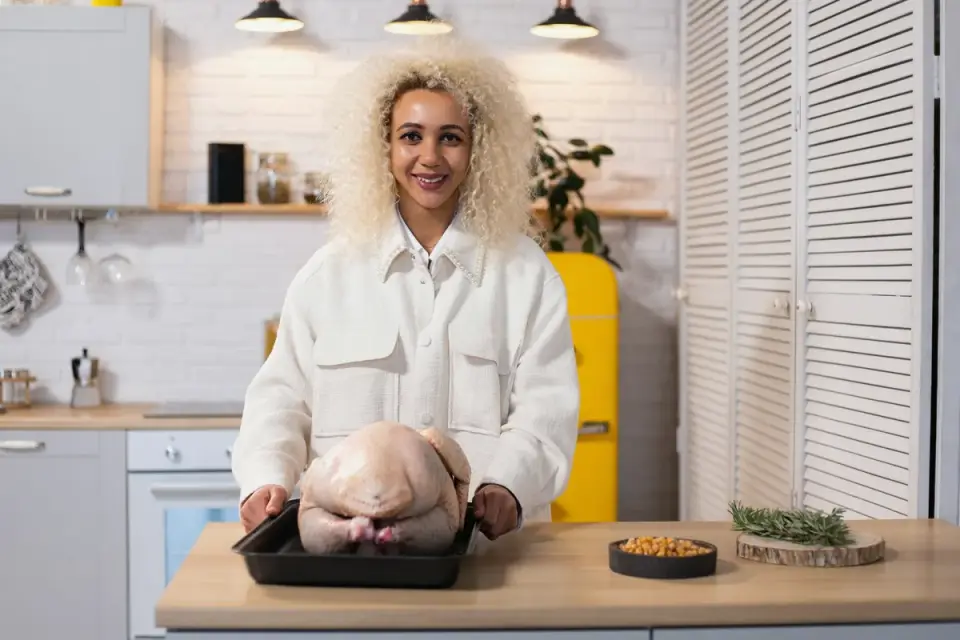
Plain, fully cooked, boneless, skinless turkey breast or thigh meat is a lean, digestible protein, and most healthy dogs handle it without incident. That’s the version AKC and other veterinary sources describe as reasonable to share in moderation. The confusion starts because almost nobody’s actual Thanksgiving turkey looks like that — it’s basted, salted, sometimes stuffed with butter under the skin, and served alongside gravy that’s often thickened with onion and garlic stock.
I want to be direct about this rather than soften it: the meat is rarely the problem. The seasoning, the skin, and the bones are three separate risks wearing one costume, and treating them as a single question is how dogs end up at the emergency clinic on a holiday weekend.
Puppies and their first plain bites
Picture a ten-week-old puppy sitting under the table during a family dinner, nose working overtime, while a well-meaning kid slips down a piece of turkey skin. A single bite of well-cooked, unseasoned white meat is a low-stakes way to introduce a new protein to a young dog whose gut is still calibrating to solid food. Skin is a different story at any age, but it matters more here — a puppy’s smaller frame means the same tablespoon of fat represents a much bigger percentage of the day’s intake than it would for an adult Labrador. I’d rather a puppy’s first turkey experience be a plain, cool, shredded bite handed deliberately than a scavenged piece of skin off someone’s plate.
Adult dogs and the actual math of a holiday plate
For a healthy adult dog, a few ounces of plain turkey breast is a reasonable treat, not a dietary event. The math changes with what rides along. Turkey skin concentrates the bird’s fat, and that fat — not the lean meat — is the ingredient most tied to acute pancreatitis in dogs who raid the counter or get fed table scraps all afternoon. VCA Animal Hospitals notes that pancreatitis often has no single obvious trigger, but a sudden, unfamiliar load of dietary fat is one of the patterns vets see cluster around holidays. Gravy, drippings, and butter-basted skin are exactly that kind of load, delivered all at once to a gut that isn’t expecting it.
Bones deserve their own line item and I won’t bury it in a caveat. Cooked bones splinter along the grain in a way raw bones generally don’t, and PetMD and other clinical sources are consistent on this: shard-sized fragments are a genuine choking and GI-perforation risk, not a theoretical one. If a dog on your watch pulls a bone off a carcass, that’s a call-your-vet moment, not a wait-and-see one.
Seasoning is the quieter risk. Onion and garlic, common in stuffing, gravy, and pan drippings, are toxic to dogs at high enough doses, and sage in large amounts can irritate the GI tract. If you’d like the fuller breakdown on garlic specifically, I’d point you to our piece on whether garlic is safe for dogs in small amounts — the dose curve there matters more than most people assume.
When the gut talks back afterward
Suppose a dog gets into more turkey skin and gravy than anyone intended, and by the next morning there’s loose stool and a little reluctance to eat. That’s the point where I’d ground the response in what the evidence actually supports rather than reaching for the nearest supplement. A single fatty meal usually resolves with a bland, low-fat diet over a day or two. It’s a different, more chronic situation when the pancreas itself stops producing enough digestive enzyme, a condition called exocrine pancreatic insufficiency, and JAVMA is specific about that distinct disease process: EPI is treated by pancreatic enzyme replacement therapy, nutritional management (low-residue diets with moderate fat content), and supplementation of cobalamin. That’s a diagnosed condition, not a label for a rough day after Thanksgiving, and it’s worth naming so the two don’t get blurred.
Probiotic support after a GI upset is common advice, and it’s reasonable advice, but I stay honest about its limits. A recent trial reported in Frontiers in Veterinary Science found that diversity metrics did not distinguish non-responders from responders — in other words, not every dog’s gut answers to the same probiotic the same way, and a supplement is a supportive tool, not a guaranteed fix. If you’re managing a senior dog’s gut through a bigger dietary change, our guide on switching a senior dog to a new food gradually covers the pacing that tends to keep things calm. And if fiber-forward add-ins are part of the recovery plan, it’s worth knowing where too much fiber becomes its own problem rather than assuming more is automatically better.
Where I land
Plain turkey earns a spot on the reasonable-treats list. The bird that shows up on most tables in November does not, and the difference is entirely in the skin, the bones, and the seasoning rack — not in the muscle meat itself. Serve it plain, serve it in small amounts, and keep the carcass, the gravy boat, and the stuffing bowl somewhere a determined nose can’t reach.
Frequently asked questions
Can puppies eat turkey?
A small amount of plain, fully cooked, boneless turkey is generally fine for puppies past weaning, but their smaller GI tracts have less room for error with new foods, so I'd start with a teaspoon-sized taste rather than a plateful.
What if my dog already ate turkey skin or a bone fragment?
Watch for vomiting, lethargy, a hunched posture, or straining to defecate over the next 24–48 hours, and call your veterinarian promptly if you saw or suspect a swallowed bone fragment rather than waiting for symptoms.
Sources
- Can Dogs Eat Turkey? Holiday Safety Tips for Pet Owners — AKC
- Nutrition and Pancreatic Disease in Dogs — VCA Animal Hospitals
- Can Dogs Eat Turkey? — PetMD
- Exocrine Pancreatic Insufficiency Management Review — JAVMA
- Probiotic Response Variability in Dogs — Frontiers in Veterinary Science