Do Cooling Mats Actually Work for Dogs?
Cooling mats work, but only as one layer in a heat plan — never as the reason a dog is safe outside.

On this page
Before you buy one, check these four things:
- Mechanism: gel mats cool by contact (conductive), evaporative mats cool as water leaves the fabric — know which one you’re getting.
- Duration: most gel mats stay cool for roughly 3–4 hours of use, then need 15–20 minutes off a dog’s weight to “recharge.”
- Fit for the dog: brachycephalic breeds, seniors, and dogs over roughly 50 kg carry the highest heat-related illness risk and benefit most from layered cooling, not a mat alone.
- What it can’t do: a mat doesn’t lower room temperature, replace water access, or protect a dog left in a hot car or yard with no shade.
A foster-litter Chow Chow mix I saw for a wellness check one July was flopped across the exam room floor, not the mat his owner had brought along “just in case.” That’s usually how it goes. Cooling mats get bought in a hurry, in the same week the forecast turns, and then a lot of owners assume the product itself is doing more work than it can.
What a Mat Is Actually Cooling
Most of what’s sold as a “cooling mat” for dogs falls into two categories, and the distinction matters more than the marketing on the package suggests. Gel mats use a pressure-activated gel — usually a form of polyacrylamide or carboxymethyl cellulose — that softens and absorbs heat directly from a dog’s body where skin or fur contacts the surface. It’s a conductive process, not an ambient one; the mat isn’t chilling the room, it’s pulling heat out of the dog lying on it. Evaporative mats work differently: they’re built from water-retentive material, and as moisture evaporates off the surface, that phase change draws heat from both the mat and the dog resting on it.
Some mats stack both mechanisms. In practice, gel mats tend to feel cool almost immediately and stay that way for a few hours before needing a rest period off the dog’s weight to reset, while evaporative mats need re-wetting and depend more on airflow to keep evaporation going.
Where the Risk Actually Lives
The reason this category exists at all is that dogs regulate heat far less efficiently than people do — they don’t sweat across their skin, and panting only gets them so far once ambient heat and humidity climb. A VetCompass study published in Scientific Reports tracking UK dogs under primary veterinary care found an event fatality rate of just over 14% among dogs that developed heat-related illness, with risk concentrated in specific, identifiable dogs rather than spread evenly across the population.
A companion VetCompass analysis in PMC on risk factors for severe and fatal heat-related illness found that brachycephalic skull shape, bodyweight above the breed-and-sex mean, age over two years, and bodyweight over 50 kg each independently raised risk. That’s not a vague “hot weather is dangerous” finding — it’s a fairly specific list of which dogs need the most layered protection, and it’s the same list I use when I’m deciding how hard to push a family on cooling gear versus AC and schedule changes.
What I Tell Owners About Layering It In
I’ve had this conversation dozens of times with owners of English Bulldogs and older Labs carrying extra weight, and the pattern is consistent: the mat becomes the plan, when it should be one piece of the plan. One owner I worked with had a 9-year-old, 78-pound Lab mix who’d started struggling on afternoon walks in July — slower to get up from rest, heavier panting on the porch even in shade, reluctant to jump into the car. She’d bought a gel mat for the living room and assumed that solved it. It helped him rest more comfortably indoors, but it did nothing for the walk itself. What actually changed his afternoons was moving walks to early morning, cutting distance during the hottest stretch of summer, and keeping fresh water down in two rooms instead of one. The mat stayed in the plan — it just moved from “the fix” to “the part that handles indoor recovery.”
That’s the distinction I’d want every owner to walk away with: a cooling mat can meaningfully improve comfort for a dog resting indoors, especially one with a heavy coat or a flat face doing the least-efficient panting of any breed group. It is not a substitute for shade, timing, water, or air conditioning outdoors, and it will not protect a dog left in a parked car or an unshaded yard.
For breeds carrying a heavy double coat, cooling gear is often just one part of a broader setup — our guide to cooling options for a thick-coated breed walks through the airflow and hydration pieces that belong alongside a mat.
Recognizing When It’s Gone Past Discomfort
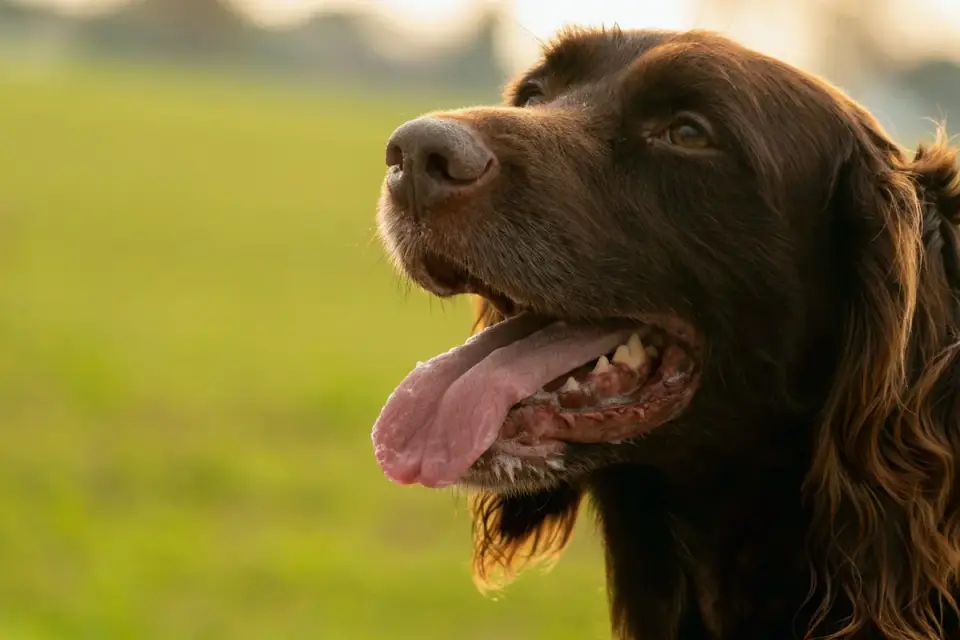
Heatstroke doesn’t always announce itself gradually. According to Cornell University College of Veterinary Medicine: Cornell University’s Riney Canine Health Center, heatstroke is a true medical emergency, and early signs — heavy panting that doesn’t resolve with rest, drooling, weakness, vomiting, or collapse — warrant getting a dog to a cooler environment and to a veterinarian immediately, not waiting to see if a mat or shade brings things down on its own. The American Veterinary Medical Association is direct about which dogs need the closest watching: short-muzzled breeds, older dogs, and overweight dogs carry meaningfully higher risk, which lines up with what the VetCompass data showed.
If a dog’s panting doesn’t ease within a few minutes in shade with water available, or if gums look bright red or pale, that’s past the point where a cooling mat — or any home tool — is the right response.
Where I Land
A cooling mat earns its place in a dog’s summer setup, but it earns it as a comfort layer for rest and recovery, not as risk management for the dog most likely to overheat. I’d rather see an owner spend the same money on a programmable fan and a second water bowl than buy a mat and skip the schedule change that actually keeps a brachycephalic or senior dog off pavement at 2 p.m. The counterargument — that a well-made mat measurably lowers a resting dog’s body temperature and that’s worth something on its own — is fair, and it’s true. It just isn’t the same claim as “this mat keeps my dog safe,” and that’s the line I keep drawing with owners who are shopping under a heat advisory rather than reading the fine print.
Set up right, a mat sits in a shaded, well-ventilated spot, gets paired with easy access to water, and gets treated as one tool among several — not the whole plan for a dog whose body already works harder than most to stay cool.
For related context, read Mats and Trays for a Messy Eater’s Feeding Station: What Actually Works.
Frequently asked questions
Do cooling mats actually lower a dog's body temperature?
Gel and evaporative mats do draw heat away from a dog's body through direct contact or evaporation, which can make a resting dog measurably more comfortable. They don't cool the surrounding air or room, so they work best alongside shade, water, and airflow rather than as a standalone fix.
How long does a gel cooling mat actually stay cool?
Most gel mats stay cool for roughly 3 to 4 hours of active use, then need about 15–20 minutes off a dog's weight to recharge before they'll cool again.
Which dogs benefit most from a cooling mat?
Brachycephalic breeds, senior dogs, and dogs above a healthy weight for their breed carry the highest documented risk for heat-related illness, based on VetCompass data, and tend to get the most day-to-day comfort benefit from added cooling gear indoors.
Sources
- Incidence and risk factors for heat-related illness (heatstroke) in UK dogs under primary veterinary care in 2016 — Scientific Reports
- Risk Factors for Severe and Fatal Heat-Related Illness in UK Dogs—A VetCompass Study — PMC
- Heatstroke: A Medical Emergency — Cornell University College of Veterinary Medicine
- Warm Weather Pet Safety — American Veterinary Medical Association