Head Halter or Front-Clip Harness: Which Suits a Dog Better?
A DVM internist compares head halters and front-clip harnesses on the actual evidence — pulling force, injury risk, and which dogs each tool fits — and names one default.
Eighteen pounds of retriever puppy hitting the end of a leash at a dead sprint taught me more about walking equipment than any product page ever has.
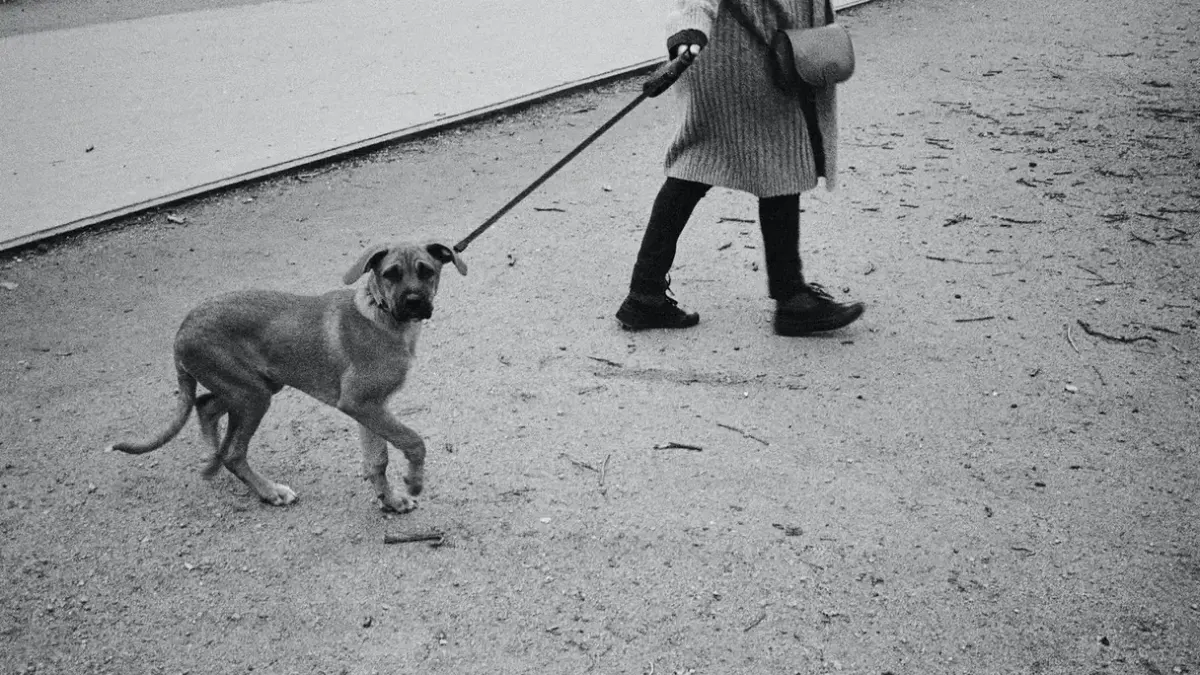
Start with the dog in front of you, not the gear aisle. A 40-pound adolescent lab mix who lunges at squirrels needs something different than a 9-pound senior chihuahua with a collapsing trachea, and most of the confusion owners bring into my exam room comes from picking equipment for the problem — pulling — instead of for the dog wearing it.
Fit the front-clip harness first for almost every dog that walks in the door. It’s the tool I reach for by default, and here’s the reasoning before the counterargument, because there is a real one.
A front-clip harness redirects a pulling dog sideways rather than letting the dog drive forward into the pressure. That mechanical difference matters more than it sounds. A PeerJ comparison of four types of leash walking equipment found statistically significant differences in pulling force across a martingale collar, a front-connection harness, and two prong-collar styles — the front-clip harness measurably changed the pulling impulse compared to the martingale baseline, without the welfare tradeoffs of aversive equipment. That’s the kind of evidence I want before I recommend a tool a client will use every day for years.
The other piece of the case for harnesses over collars isn’t about pulling at all — it’s about pressure on structures I actually scan for on ultrasound. A Wiley Veterinary Medicine and Science study on intraocular pressure measured what happens to eye pressure and respiration when brachycephalic and dolichocephalic dogs wore a collar versus a harness during exercise. Exercising in a collar raised intraocular pressure in both head shapes; exercising in a harness did not. For a dog with any eye disease risk — glaucoma history, a breed prone to it — that’s not a marginal detail, it’s the deciding one.

I had a client bring in a two-year-old husky mix, 52 pounds, who’d been front-clip-harnessed for three weeks with no real change in his pulling on the trail. He wasn’t scared of the harness. He’d simply learned to lean his shoulder into the strap and shrug the sideways pressure off, the same way he’d have shrugged off a collar. That’s the honest failure mode of front-clip equipment: it works beautifully on dogs who respond to redirection, and it does close to nothing on a dog who’s built a habit of driving through pressure with his whole body. That’s the dog I start talking about a head halter with — not because the harness was a bad tool, but because it had already told us what it could and couldn’t do.
A head halter earns its place when the front-clip harness has had a fair three-week trial and the pulling hasn’t budged, or when a dog is large, strong, and reactive enough that redirection at the chest isn’t enough control. It works by turning the head, and where the head goes, the body generally follows — which is exactly why it needs to be introduced slowly. Most conditioning protocols run 8 to 10 short sessions before a dog wears one comfortably on a real walk, and skipping that step is where I see owners get frustrated and quit.
The injury conversation around head halters gets more heat than light, so I’ll be specific about where the actual concern sits. If a dog hits the end of the leash at speed while head-haltered, the correction transmits through the upper cervical spine instead of the chest — that’s a real biomechanical difference from a harness, and it’s why head halters are meant to guide, never to absorb a hard jerk. A board-certified veterinary orthopedic specialist has flagged the upper cervical spine specifically as the stressed region in that scenario, according to reporting summarized by CattleDog Publishing. At the same time, that same source notes investigators looking into whiplash-type injury claims from the market-leading head halter have never been able to confirm a documented case — so the risk is real in mechanism, low in observed frequency, and almost entirely technique-dependent. Never clip a head halter to a retractable leash, never tether one to a fixed object, and never use it for a hard correction. Use a standard four-to-six-foot leash and let the tool do its job gently.
There’s a scenario that changes the calculus entirely, and it’s the one I bring up before anyone leaves my exam room with a head halter prescription: brachycephalic breeds. A flat-faced dog’s muzzle shape often doesn’t hold a head halter securely, and that same anatomy is already working against normal breathing and eye pressure regulation. I saw this play out with a 6-year-old French bulldog, 24 pounds, whose owner had switched him into a head halter after he’d started pulling toward other dogs on their block. Within about ten days she’d noticed him pawing at his face on nearly every walk and audibly working harder to breathe once the halter was on — not a dramatic emergency, just a dog whose airway anatomy made a tool that’s fine for a retriever a poor fit for him. We moved him to a well-fitted front-clip harness with front and back leash attachment points and layered in redirection training instead, and the facial pawing stopped within the week.
So where do I actually land? Default to the front-clip harness. It’s evidence-backed for reducing pull without the collar’s pressure risk to the eyes, and it asks almost nothing of the dog in terms of conditioning time. Move to a head halter only after a genuine trial has failed, only with the slow introduction protocol, and never on a brachycephalic dog unless a veterinary behaviorist has fitted it personally. The counterargument — that head halters give faster, stronger control for a genuinely dangerous puller — is real and I don’t dismiss it. But “faster control” and “right first tool for this dog” aren’t the same question, and most dogs never need to find out which one they’d have been.
None of this lives in isolation from the rest of a dog’s daily management. A dog who’s uncomfortable or anxious on leash often shows it in other places too, which is part of why I ask owners about sleep, appetite, and general calm alongside walking behavior — see our piece on Benadryl versus natural calming supplements if leash reactivity is tangled up with broader anxiety. And joint comfort matters here as much as equipment choice: a dog who’s stiff or sore will fight any leash tool differently than one who’s simply excited, which is why I also point owners toward our guide on arthritis versus normal aging stiffness before we blame the gear for a gait problem that’s actually medical.
Buy the equipment that actually fits your dog’s specific anatomy and behavior, not the one with the most persuasive packaging photo. If you’re sourcing either tool online, our breakdown of Amazon Marketplace versus brand-direct websites for dog supplements covers the same sourcing-verification logic that applies to walking gear — check who’s actually behind the listing before you trust the sizing chart. Whichever tool you land on, plan for a short adjustment period, watch for pawing, coughing, or reluctance to move, and don’t be afraid to switch tools if the one you picked first isn’t the one your particular dog needed.
Frequently asked questions
Is a head halter cruel or painful for a dog?
Not when it's fitted and introduced correctly. The mechanism is directional pressure on the muzzle and head, not pain — but it needs a gradual conditioning period, and misuse (hard jerks, retractable leashes, tethering) is where injury risk actually comes from.
Can a front-clip harness stop pulling completely on its own?
It reduces pulling force for most dogs by removing the ability to drive forward into pressure, but it's not a training substitute. Dogs that lean their shoulder into the strap may need added redirection work or, after a fair trial, a head halter.
Are head halters safe for flat-faced breeds like French bulldogs or pugs?
Generally no, or only under close veterinary behaviorist guidance. Brachycephalic anatomy often can't hold a head halter securely and already carries airway and eye-pressure vulnerabilities that a well-fitted harness avoids.
Sources
- Comparing efficacy in reducing pulling and welfare impacts of four types of leash walking equipment — PeerJ
- Effect of a Collar and Harness on Intraocular Pressure and Respiration Rate of Brachycephalic and Dolichocephalic Dogs — Veterinary Medicine and Science (Wiley)
- Are Head Collars on Dogs Dangerous or Safe? It's All About Technique! — CattleDog Publishing