How Barometric Pressure Drops Affect a Dog's Joint Pain
A vet explains what happens inside an arthritic dog's joint when barometric pressure drops before a storm, what the research actually shows, and how to build a weather-ready mobility plan.
Storm-driven barometric pressure drops can affect a dog's arthritic joints hours before thunder or rain ever arrive.

On this page
- What Barometric Pressure Actually Is, and Why a Joint Notices It
- Before the Front Arrives: Early Signs Worth Logging
- During the Pressure Drop: What’s Actually Changing in the Joint
- After the Storm Passes: What Recovery Looks Like
- Building a Weather-Ready Joint Support Plan
- What This Means for a Dog Like Ranger
Ranger, a fourteen-year-old shepherd mix, had a habit his owner could set a clock by: every time a front was rolling in, he’d pace the hallway around dinner time, refuse the stairs he normally took two at a time, and settle into a stiff, hunched-up version of his usual sprawl. The forecast hadn’t even mentioned rain yet. By the time the first drops hit the window, Ranger was already down for the night, unwilling to move off his bed.
His owner assumed it was coincidence until it happened four storms in a row. It wasn’t coincidence. It’s one of the most consistently reported patterns in dogs with osteoarthritis, and it starts with something you can’t see, hear, or feel yourself: a drop in barometric pressure.
What Barometric Pressure Actually Is, and Why a Joint Notices It
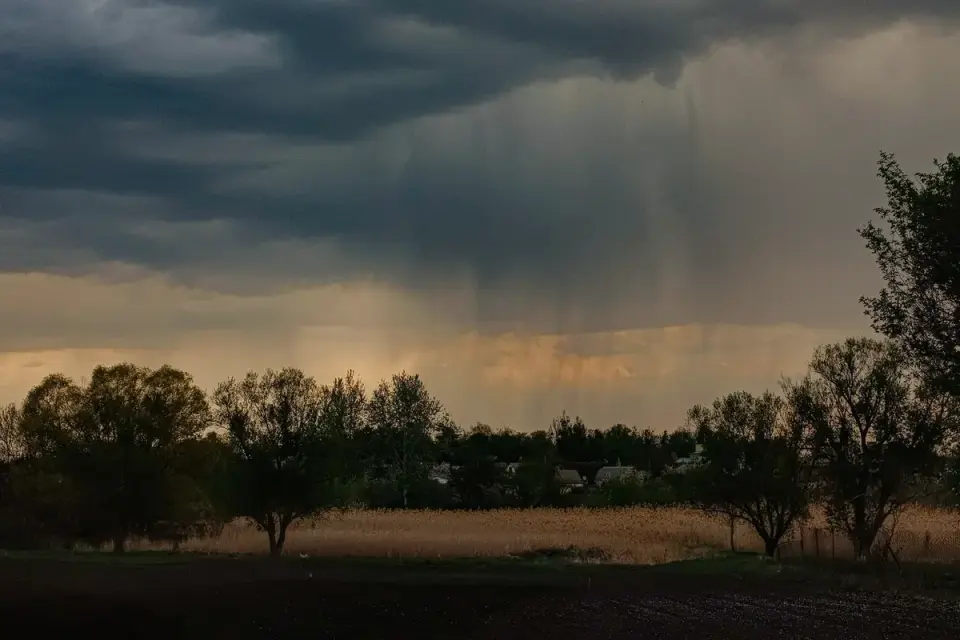
Barometric pressure is just the weight of the air pushing down on everything, including your dog’s joints. It isn’t constant. Ahead of a storm system, that pressure typically falls, sometimes over many hours, sometimes fast.
The mechanism vets suspect
Inside a healthy joint, capsule tissue and synovial fluid sit in a rough equilibrium with the air pressure around them. In an arthritic joint, that capsule is already inflamed, thickened, and full of sensitized nerve endings. When outside pressure drops, the theory goes, tissue and fluid inside the joint expand slightly because there’s less external force holding them in check. That small expansion tugs on a capsule that’s already irritated, and a dog that could tolerate normal pressure suddenly can’t tolerate the change.
What the research says, and doesn’t
Here’s the honest version, not the tidy one: the mechanism above is plausible and widely cited by vets, but confirmed evidence in dogs is thinner than owner anecdotes suggest. As Vet Help Direct notes, scientists have run a number of studies trying to pin down a definitive weather-pain link, and the results so far are inconclusive — one of the more robust efforts, using activity monitors and owner pain scores, found only a tiny dip in activity on colder, darker days with no significant change in reported pain scores. That doesn’t mean Ranger’s owner is imagining things. It means the pattern is real for many individual dogs even though it hasn’t been nailed down at the population level.
Before the Front Arrives: Early Signs Worth Logging
Most owners notice the same handful of tells before the rain starts. Reluctance to take stairs or jump into the car. Slower to rise after lying down. A shorter, choppier gait on the usual walk. None of these are dramatic on their own — that’s exactly why a simple log matters more than memory. Write down the day, the behavior, and whether a storm followed within 24 hours. Three or four matching entries is a pattern worth telling your vet about, not a coincidence to shrug off.
During the Pressure Drop: What’s Actually Changing in the Joint
As pressure keeps falling, dogs with more advanced osteoarthritis (a disease that, per the Merck Veterinary Manual, is one of the most commonly diagnosed joint conditions in general veterinary practice) tend to show the clearest response. This is also the window where cold, damp air compounds the effect: joint fluid moves less freely in cold temperatures, and stiff tissue combined with a pressure-driven capsule tug is a rougher combination than either factor alone. It’s why the worst days are often cold, wet, and pressure-dropping all at once rather than any single variable in isolation.
After the Storm Passes: What Recovery Looks Like
Most dogs bounce back within a day or two once pressure stabilizes. If your dog is still notably stiff 48 hours after a front has fully passed, that’s a signal the underlying joint disease has progressed past what weather alone explains, and it deserves an exam rather than another wait-and-see cycle.
Building a Weather-Ready Joint Support Plan
The honest starting point: no supplement is going to blunt a pressure drop the way it happens in real time. What consistent joint support does is lower the baseline inflammation and cartilage stress a dog is carrying into that pressure change, so the swing hurts less when it comes.
Ingredients with real evidence behind them
Glucosamine and chondroitin remain the most studied joint-support ingredients for dogs. Research on chondroitin has shown it supports healthy synovial fluid homeostasis, according to a study in Frontiers in Veterinary Science, and separate in vitro work on glucosamine HCl found it can help prevent experimentally induced cartilage degradation, per the Journal of Veterinary Medical Science. Green-lipped mussel extract has its own evidence base too — a Nutrients study found mussel-derived compounds alleviated paw swelling in animal models and reduced markers tied to inflammation, including TNF-α and IL-17. None of these are cures, and none work overnight; they’re structure-and-function support that needs weeks of consistent dosing to matter, not a rescue remedy for the night before a storm. For a deeper look at how a related joint ingredient stacks up against the marketing around it, see Does Hyaluronic Acid Actually Work for Dog Joints? What the Research Shows.
What to ask before buying a joint supplement
Flip the bag over before you trust the front label. Does it name actual milligram doses per serving, or just list ingredients with no amounts? Is there a study behind the specific ingredient form, not just the ingredient category in general? And is the company willing to show you a certificate of analysis if you ask? A supplement that can’t answer those three questions plainly isn’t one worth building a weather routine around.
Storms can also spike anxiety in dogs already dealing with pain, and a dog who’s stressed tends to hold tension in ways that make sore joints feel worse. If your dog’s storm response looks more like panic than stiffness, it’s worth reading about calming options separately, including Chamomile vs L-Tryptophan for Calming Dogs: Which Actually Works?
What This Means for a Dog Like Ranger
Here’s how I’d counsel an owner sitting across from me with a dog like Ranger: expect the pattern to keep showing up, because it’s mechanically plausible and it’s what you’re already seeing. Don’t expect a single ingredient to erase it. Build a baseline — daily joint support, weight management, low-impact movement on the good days — so that when pressure drops, your dog has more reserve to draw on rather than starting the storm already running on empty. Track the pattern with your vet over a season or two, and let that log guide whether it’s time to talk about additional pain management rather than managing it purely with supplements. Weather isn’t something we can control, but how prepared a joint is when the front rolls in mostly still is.
Frequently asked questions
Can dogs really sense a storm coming through joint pain?
Many owners report it, and vets take the pattern seriously, but it's likely a mix of falling barometric pressure, dropping temperature, and rising humidity acting together rather than pressure alone predicting the future.
How much pressure drop does it take to affect a dog's joints?
There's no confirmed threshold in dogs. Human studies suggest even modest drops of a few millibars over several hours can correlate with reported pain increases in sensitive joints, and vets assume dogs are not immune to a similar mechanism.
Should I change my dog's joint supplement before storm season?
Don't wait for weather to start supporting joints. Ingredients like glucosamine and chondroitin work over weeks, not hours, so consistent daily use matters more than timing around a forecast.
Is limping only during bad weather still something to mention to my vet?
Yes. Weather-correlated limping is still a sign of underlying joint disease and deserves an exam, not just a wait-and-see approach until the sun comes back out.
Sources
- Does arthritis in dogs and cats get worse in bad weather? — Vet Help Direct
- Osteoarthritis in Dogs and Cats — Merck Veterinary Manual
- Chondroitin sulfate and synovial fluid homeostasis in joint and mobility research — Frontiers in Veterinary Science
- Glucosamine HCl and cartilage degradation in vitro — Journal of Veterinary Medical Science
- Green-lipped mussel extract and inflammatory markers in joint disease models — Nutrients