How to Set Up Non-Slip Flooring for a Dog With Stiff Joints
A rehab-minded guide to non-slip flooring for stiff dogs — traction science, runner layouts, and what to prioritize first.
Set non-slip flooring where your stiff dog already slips, then build traction outward from there.
On this page
Set non-slip flooring where your stiff dog already slips, then build traction outward from there.
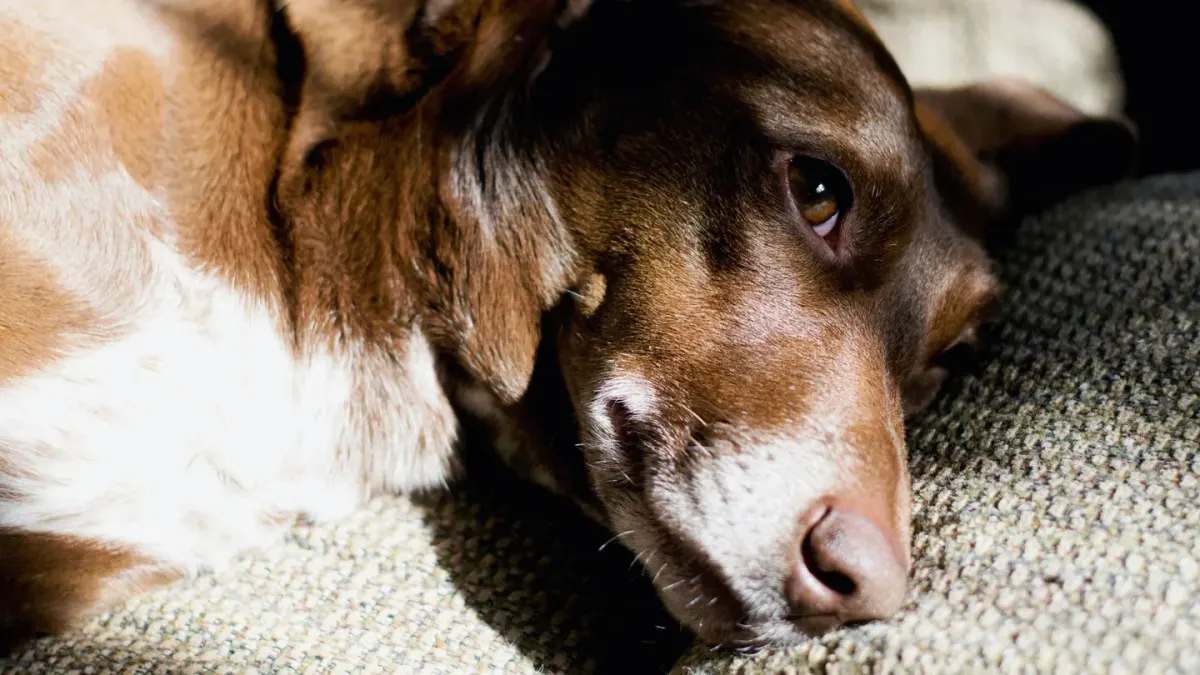
That scuff-scuff-pause at the kitchen doorway tells you almost everything. A 12-year-old, 68-pound Labrador mix starts every day curled on an orthopedic bed in the living room, then has to cross eight feet of polished tile to reach water and the back door. Twice in one morning her hind feet splay on the turn, toenails skitter, and she freezes with her weight shifted forward onto sore elbows. Her owner counts the hesitations for a week and lands on 11 balked crossings out of 14 attempts, all in the same two spots. The decision gets concrete fast: cover that turn and the water-bowl runway first, not the whole house at once.
Why a stiff dog slips before he feels weak
Stiffness changes friction demand before it changes strength. Healthy synovial fluid thins with movement and thickens at rest, cartilage compresses and rebounds, and muscles fire quickly to correct a slide. An arthritic joint moves through a smaller comfortable arc, proprioception lags by a fraction of a second, and the dog cannot gather his feet cleanly under his center of mass.
That is why VCA Hospitals describes arthritis in dogs as stiffness, reluctance to move, and difficulty rising, all of which show up first on slick turns, thresholds, and the push-off from a down position. Traction does not fix cartilage. It lowers the shear forces and panic-braking that irritate it.
Small point worth flipping the bag over for: good footing buys confident steps, and confident steps keep muscle.
Map the slip zones before you buy anything
Walk the dog’s actual day, leash in hand, and mark where feet slide, splay, or stall. Most homes have the same four.
Entry and turn zones where tile meets wood or a rug edge curls. Food and water stations where splashes polish the floor. The launch pad around beds and couches where the dog pushes up from lying down. Stairs and the last three strides before the door where speed plus a turn unloads a hind leg.
Lay painter’s tape for two days and note every slip. Owners are often surprised that 80% of trouble lives in 20% of the floor.
The failed fix is almost always booties alone. A 9-year-old cattle dog mix with creaky hocks tried rubber-soled boots for 6 nights while the hardwood stayed bare, and the owner logged the results on the fridge. Nights one through three looked promising, then the boots twisted on damp paws, one went missing under the couch, and the dog started chewing the Velcro at 2 a.m. The deeper tradeoff was gait: the dog stepped higher and shorter to feel the boots, which tired his shoulders without solving the launch from his bed across six feet of bare oak. Traction has to live on the floor for an older dog, not on the foot that already hurts to lift.
What actually grips: build the layers in order
Think like rehab layering. Stable base first, then cushion, then washability.
Low-pile, rubber-backed runners beat everything for hallways. Look for low 0.25-inch pile so toenails do not catch, a full latex or thermoplastic rubber backing rather than little dots, and a width that lets all four feet stay on the runner through a turn. Overlap runners by four to six inches at seams and tape the joint underneath with rug tape.
Interlocking foam tiles or vinyl mats win around beds. They create a two- to three-foot traction apron where the dog can nose-down, rock back, and stand without sliding. Choose closed-cell EVA or heavy vinyl at least 0.5-inch thick, beveled edges to prevent tripping, and a textured top rated for wet paws.
Yoga mats and bath mats fill the gaps. Keep a washable mat under water bowls and a yoga mat beside the couch for assisted stands. Skip shag, sheepskin, and anything that bunches under load.
Merck Veterinary Manual notes that joint disorders in dogs benefit from supportive home care including non-slip surfaces and controlled activity, which matches what rehabilitation teams prioritize: traction plus short, frequent movement rather than traction alone.
Rethink the usual runner wall-to-wall advice
A renter with a senior beagle in a second-floor apartment cannot glue anything down, and the landlord vetoed adhesive treads on the stairs. Instead of one long hallway runner that slides on dusty hardwood, she laid three separate 12-foot washable runners with rug pads underneath, left a two-inch gap at the metal threshold so the door still swings, and placed a 4-by-6-foot low-pile rug as a landing pad at the bottom of the four entry steps. She added a motion-activated nightlight because the 10 p.m. potty trip caused most slips, and trimmed the fringe after the beagle caught a nail once. The bend here is simple: renters should anchor smaller zones with pads and tape rather than chasing perfect wall-to-wall coverage.
For stairs specifically, add stair-specific help. Carpet treads with real adhesive, a non-slip landing at top and bottom, baby gates when no one can spot, and good lighting. If the dog still bunny-hops, carries a hind leg, or pants to climb after traction is fixed, that is a veterinary conversation, not a flooring failure. Related reading on morning stiffness and joint nutrition can help frame what flooring can and cannot do: Glucosamine for a Dog Struggling With Stairs at Night: What the Evidence Actually Supports, How Barometric Pressure Drops Affect a Dog’s Joint Pain, and Dog Hip and Joint Supplement: What Actually Works, Ingredient by Ingredient.
Keep it clean, dry, and trimmed
Traction dies under dust, oil, and long nails. Vacuum runners twice weekly, wash mats on hot and check that backing still grips after 10 washes, mop hard floors with a residue-free cleaner, and wipe paws on rainy days. Trim nails so they touch just above the floor and trim inter-pad hair flush, since both turn a good rug into a skate.
Reassess every three to four weeks through winter and arthritis flare seasons. Move one runner, add one landing pad, and watch rising speed for a week. Glucosamine and chondroitin are among the most studied joint support ingredients for dogs, but no chew replaces the physics of a foot that can grip.
What would change this advice? Strong controlled data showing a particular wax, spray, or sock consistently beats anchored runners for older dogs on turns and rises. Until then, floor-first traction layered with steady weight, short walks, and veterinary rehab remains the plan that holds up.
Frequently asked questions
Where should non-slip flooring go first for a stiff dog?
Cover the launch zone around the bed, the path to food/water and the door, and any turn or threshold where slips already happen. Expand outward once those high-traffic spots stay secure.
Are rugs or foam tiles better for arthritic dogs?
Low-pile rubber-backed runners suit hallways and turns, while thick foam tiles or vinyl mats work best as a standing apron around beds and couches. Use both in their best spots rather than one everywhere.
Do I still need a vet visit if traction helps?
Yes if limping, crying out, leg-carrying, or worsening stiffness continues. Flooring lowers slip risk but does not diagnose or treat arthritis, muscle loss, or neurologic issues.
Sources
- Arthritis in Dogs — VCA Hospitals