How to Calm a Dog During Thunderstorms: An Integrative Vet's Layered Approach
Medically reviewed by Margo Roman, DVM, CVA, COT, CPT, FAAO — For general education — not a substitute for veterinary care.
Calming a thunder-phobic dog rarely comes down to one trick — it comes down to layering several small, evidence-aware ones together.
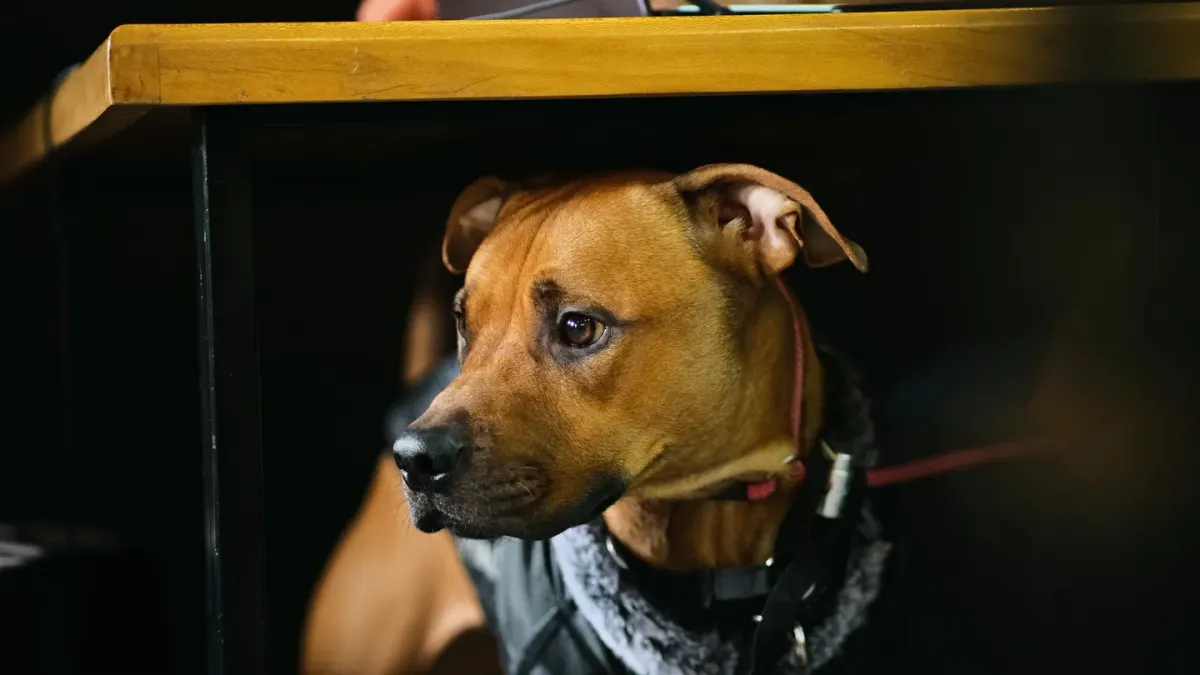
On this page
Start with what to do, not with theory: close the blinds, turn on a fan or television for white noise, and bring your dog to the smallest, most enclosed room you can manage before the first thunderclap, not after. Everything else in this guide builds on that first move.
Imagine a dog named Otis, a fourteen-pound terrier mix with a storm radar better than any weather app. Twenty minutes before the sky changes, Otis starts pacing the hallway, ears back, tail tucked so tight it disappears. His owner has tried the obvious things — a stern “it’s fine” voice, letting him ride it out in the yard, even ignoring him on the theory that attention would spoil him. None of it touched the shaking. What actually changed things was less about any single fix and more about stacking several small ones: a closet turned into a den, a snug wrap, and a chew with real ingredients behind it. That layering, not any one intervention, is the part owners underestimate.
What thunderstorm fear actually looks like in the body
Storm phobia isn’t drama. It’s a sympathetic nervous system response — the same fight-or-flight cascade you’d see from a genuine threat — triggered by thunder, static electricity, barometric pressure drops, and even the smell of rain that arrives before the sound does. That’s why some dogs start pacing before you’ve heard a thing. Panting, drooling, pacing, hiding, destructive chewing, and attempts to escape the yard or crate are all the same underlying signal: a dog whose nervous system has decided this is an emergency, whether or not the storm ever actually threatens the house.
Build the safe space before the sky does
A true safe space is small, enclosed, and away from windows — a closet, an interior bathroom, or a covered crate the dog already likes. Add a piece of unwashed clothing that smells like you, run a fan or white-noise machine to blunt the thunder, and let your dog choose whether to use it. Don’t lock the door; phobic dogs often want the option to move, and forcing confinement can add a second layer of stress on top of the storm itself. This single step does more for most dogs than any product on a shelf.
What actually goes on the tongue, and what it’s built to do
Owners reach for calming chews first, and I understand why — but I’d rather you know what you’re actually giving before the next storm rolls in.
Chamomile has centuries of traditional use behind it for relaxation, but the dog-specific research is thin. A review in Biomedicines is candid about this gap, noting that “for the remaining species, evidence is derived mainly from preclinical studies or traditional use.” That’s not a reason to dismiss chamomile — it’s a reason to treat it as a mild, supportive ingredient rather than a fix.
KSM-66 ashwagandha carries somewhat stronger human data. A systematic review in Cureus “analyzed multiple RCTs and concluded that ashwagandha has a moderate positive impact on stress reduction and cognitive performance.” That’s human evidence, not canine, so I hold the same enthusiasm loosely when I talk about it for dogs.
L-theanine is the one owners ask about most, largely because it shows up in green tea marketing everywhere. The evidence is mixed even in people: a review in Molecular Psychiatry found benefit in most anxiety measures “except for one study on psychotic anxiety (SMD = 0.54; 400 mg/day for 8 weeks),” a human dose that has no established canine equivalent. If a label doesn’t name a dose at all, that’s worth noticing.
For a closer look at how two of the most common calming ingredients actually compare on the label, our chamomile vs. L-tryptophan breakdown walks through the guaranteed analysis side by side.
Bodywork and pressure: the layer most owners skip
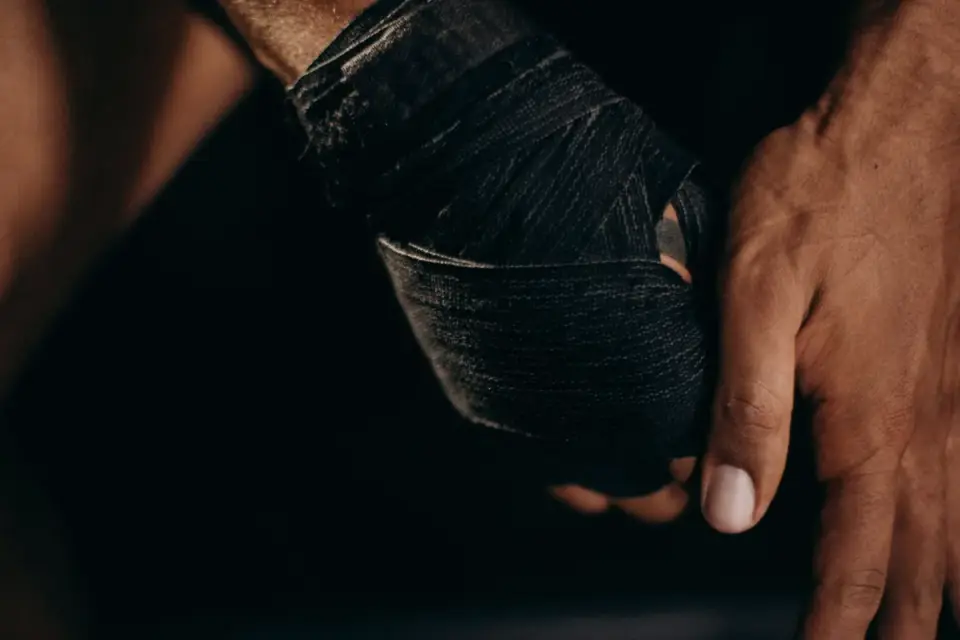
This is where I part ways with owners who treat supplements as the whole plan. A snug, evenly-pressured wrap — the same principle behind swaddling an infant — calms a meaningful share of dogs through sustained, gentle pressure on the torso. Slow, rhythmic stroking along the spine, paired with your own steady breathing, does something similar through touch and co-regulation rather than chemistry. I layer these modalities together deliberately: a calm room, a wrap, quiet touch, and only then a supplement, because storm phobia is rarely solved by any single lever pulled in isolation. Dogs whose evening anxiety extends well beyond storms may be dealing with a broader settling problem worth reading about separately in why your dog won’t settle in the evening.
When a chew isn’t enough
Consider a dog whose storm reaction has escalated over several seasons — what started as pacing has become clawing at doors, drooling through the coat, and, on one occasion, a bolt through a torn screen. That trajectory is common, and it’s exactly where I stop recommending owners try one more over-the-counter product and start recommending a veterinary visit instead. Prescription options exist specifically for noise phobia, they’re evaluated by weight and health history, and they work well alongside the environmental and touch-based layers above rather than replacing them. Severity, not stubbornness, is what should move a case from the supplement aisle to the exam room.
The routine I’d actually build
Given a genuinely storm-phobic dog, here’s the order I’d work in: set up the safe space and white noise as soon as a storm is forecast, put on the pressure wrap before the first distant rumble, add calm touch once your dog settles into the space, and treat a chamomile or L-theanine chew as a mild supporting layer — not a rescue plan you reach for mid-panic. If none of that moves the needle over a season of storms, that’s your cue to talk to your veterinarian about prescription support. Dogs who do best with thunderstorms usually aren’t the ones on the single best product. They’re the ones whose owners stopped looking for one.
Frequently asked questions
Can chamomile or L-theanine actually stop a dog's thunderstorm panic?
They may help take the edge off mild anxiety as part of a layered plan, but neither ingredient has strong dog-specific trial evidence, and neither is a substitute for management or, in severe cases, a veterinarian-prescribed anxiolytic.
How long before a storm should I start a calming routine?
Start well before the first rumble — ideally as soon as a storm is in the forecast — because most calming tools, from a snug wrap to a supplement, work better as prevention than as rescue.
Is it true that comforting a scared dog makes the fear worse?
No. Calm, steady attention does not reinforce fear the way training cues do; withholding comfort from a genuinely frightened dog only adds isolation to an already stressful moment.
When does thunderstorm fear need more than home management?
If your dog is destructive, tries to escape, drools heavily, or shakes uncontrollably during storms, that's a conversation for your veterinarian about prescription options, not a bigger dose of a chew.
Sources
- Chamomile and Anxiety: A Review of the Evidence — Biomedicines
- KSM-66 Ashwagandha for Stress: A Systematic Review — Cureus
- L-Theanine and Anxiety: A Review — Molecular Psychiatry