Play Growl or Warning Growl? How to Actually Tell the Difference
Medically reviewed by Jessica Ennis, DVM, CVA — For general education — not a substitute for veterinary care.
Tell a play growl from a warning growl by watching the body first; the sound alone will fool you more often than you'd think.
On this page
The first time I met Bodhi, a two-year-old Australian Shepherd mix, his owner opened with, “He growls when we play, but I don’t know if I should be worried.” Bodhi had been rehomed twice before landing with this family, and every session of tug or wrestling with their older Lab ended the same way — a low rumble from Bodhi, a frozen moment from the owner, and a quick separation “just in case.” By the time they got to me, they’d stopped letting the dogs play at all. I watched them for maybe ninety seconds in the exam room — loose hips, a play bow, a mouth that stayed soft and open — and I could already tell them the growling wasn’t the problem. The separation anxiety it was creating between two dogs who genuinely liked each other, that was.
I tell owners the same thing I told Bodhi’s family: the sound of a growl tells you almost nothing on its own. What tells you something is the fifteen seconds around it — the body it’s coming out of, what happens right after it, and whether the dog offers you an obvious reset. That’s the expectation I set before we ever get into pitch or duration, because owners who go in looking for the “right” sound usually end up chasing the wrong signal.
What a play growl actually sounds like
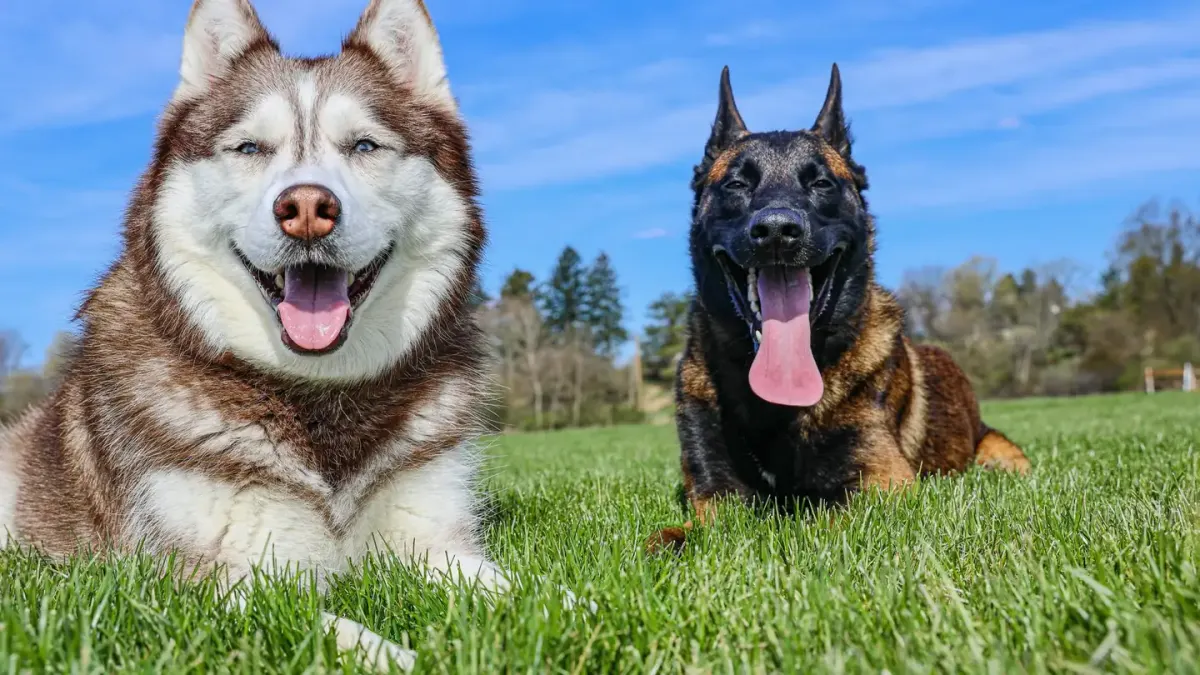
Play growls tend to run higher-pitched and choppier than the real thing — short bursts instead of one sustained note, layered in with panting, play bows, and exaggerated, bouncy movement. According to ASPCApro, growling during rough-and-tumble play is a normal part of canine communication as long as both dogs stay loose and relaxed throughout the interaction. A dog who growls mid-wrestle, then immediately re-engages with a play bow, is telling you the growl was punctuation, not a threat.
A warning growl, by contrast, tends to sit lower and hold longer. It doesn’t dissolve into a bounce. It often comes with stillness — a dog who has stopped moving, not one who’s mid-motion.
Reading the body before the sound
I’ve had owners describe a growl to me over the phone in incredible detail — pitch, volume, how many times it repeated — and still get the read backward, because they never mentioned what the dog’s body was doing. That’s the part that actually carries the information.
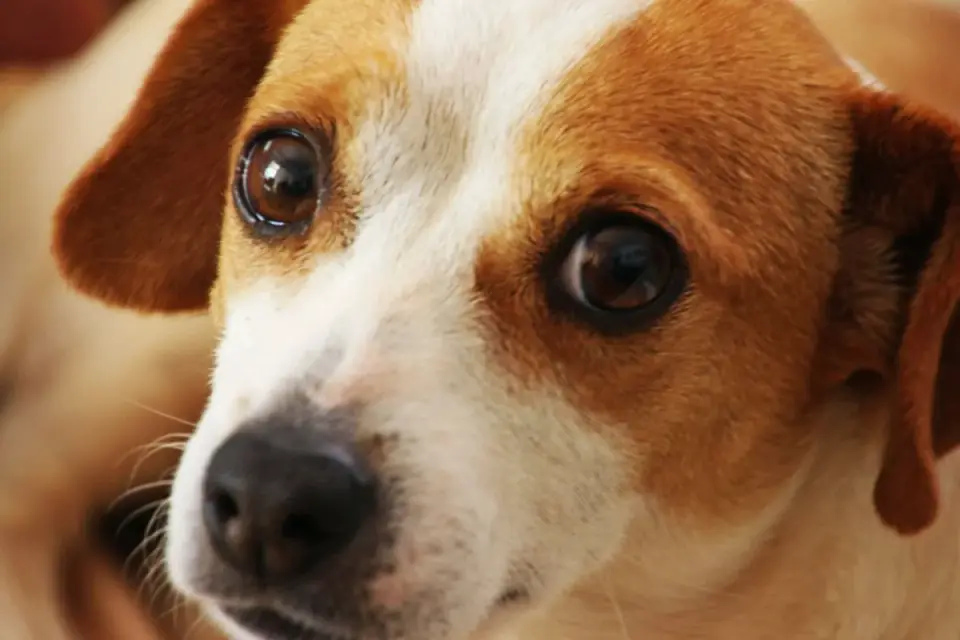
The American Veterinary Society of Animal Behavior describes canine communication as a layered system of facial expressions and body postures that has to be read together, not sound-by-sound or signal-by-signal. In practice, that means checking for the same three or four things every time: Is the body loose or rigid? Is the weight centered or leaning forward onto the front legs? Is the mouth soft, or is it a short, wrinkled muzzle held tight? Does the dog offer a play bow, a self-interruption, a shake-off — anything that says “still fine here” — or does it just hold?
A dog mid-play who growls, freezes for a beat, and then bounces back into motion is almost always fine. A dog who growls once, goes still, and stares is the one I want owners to separate the players for.
When “he’s just playing” doesn’t add up
I get pushback on this fairly often, usually from owners of two dogs who’ve played the same way for years: “the sound hasn’t changed, so why would the meaning?” That’s a fair challenge, and pitch does matter as a first-pass filter — it’s just not sufficient on its own. Dogs adjust the intensity of a real warning to match the situation, and a young, easily-startled dog can produce a growl that sounds almost identical to play while meaning something very different. That’s why I still tell people: use the sound to flag it, then confirm with the body. Sound alone, without the postural context, is the piece that gets misread most often — which is also why so many “sudden” bites get described afterward as coming with no warning, when there usually was one.
If your dog growls when you reach out to pet him rather than during dog-to-dog play, the read is a little different — we cover that specific pattern, including pain and overstimulation as causes, in Why Does My Dog Growl When I Pet Him?
Fear, pain, and the growls that don’t fit the script
Not every warning growl is about a toy or a wrestling match. Two of the most common growl triggers I see in practice aren’t behavioral at all in origin. The first is pain — an older dog with early arthritis can growl when a housemate barrels into a sore hip during play, and it reads as “aggression” when it’s really a flinch. If your dog’s growling has shown up alongside slower stairs or reluctance to jump on the couch, it’s worth ruling that out first; we go through how to separate pain-driven changes from ordinary aging in Arthritis vs. Normal Aging Stiffness in Dogs. The second is generalized anxiety — a dog who startles at loud, unpredictable noises (the pattern we walk through in My Dog Panics at the Sound of the Garbage Truck) often runs a lower threshold for every kind of arousal, including play, so a normal wrestle can tip into a real warning faster than it would in a calmer dog.
For dogs like that, some owners ask me about calming support alongside training and management — not as a fix for the growling itself, but as a way to lower the baseline stress a dog is carrying into every interaction. The evidence here is real but modest, and I frame it that way with clients. A review in Biomedicines notes that for most species, evidence on chamomile’s anxiety-related effects is derived mainly from preclinical studies or traditional use — promising, not proven. A systematic review in Cureus analyzing multiple randomized controlled trials found that ashwagandha has a moderate positive impact on stress reduction and cognitive performance. And a review in Molecular Psychiatry found L-theanine effective across most trials it examined, except for one study on psychotic anxiety (SMD = 0.54; 400 mg/day for 8 weeks) — a human dataset, worth noting when the same ingredient shows up in dog products. None of that replaces reading the dog in front of you, and I’d never tell an owner to reach for a supplement before they’ve ruled out pain.
New dogs, unfamiliar growls
Rescue dogs deserve a separate note here, because I see this misread constantly in the first weeks after adoption. A dog who’s three days into a new home hasn’t shown you his real personality yet, and a growl during that window can mean something different than it will in month three. If you’re navigating that adjustment period, the general timeline we walk through in What Is the 3-3-3 Rule for Rescue Dogs? is a useful frame for not over-reacting to — or under-reacting to — early growling.
I had a case a few years back with a shelter-adopted Beagle mix named Daisy, five years old, adopted on a Tuesday and already growling at the resident cat by Thursday. The owner was ready to return her. What I actually saw watching Daisy across the room was a dog holding dead still on the stairs, weight forward, eyes locked — not a dog inviting anything. That wasn’t a personality flaw to correct with time; it was a clear signal being sent early, and it needed management, not patience. Six weeks of structured separation and slow reintroduction later, that same dog was sleeping four feet from the cat. The growl had been accurate the whole time. The owner just hadn’t had a reason to trust it yet.
Where I land
Here’s the expectation I want every owner to leave with: the growl is data, not a verdict. It’s your dog telling you something, and your job is to read the full sentence — body first, sound second, context always. A growl that comes wrapped in loose movement, a play bow, and an easy reset is play. A growl that comes with stillness, a forward lean, and a hard stare is a warning, and it deserves a pause, not a correction. Get that distinction right and you’ll spend a lot less time second-guessing two dogs who are actually having a great time — and a lot less time missing the one who genuinely isn’t.
Frequently asked questions
Can two dogs growl at each other during play and both be totally fine?
Yes. Growling is a normal part of rough play as long as both dogs stay loose, keep offering play bows or self-interruptions, and re-engage easily after the sound. Watch the body, not the volume.
Should I separate my dogs the first time I hear a growl?
Not automatically. Pause and watch for five or ten seconds first. If either dog goes stiff, stares, or stops moving, separate them calmly. If both stay loose and keep playing, you can usually let it continue.
Sources
- Canine Body Language — ASPCApro
- Understanding Canine Facial Expressions and Body Postures — American Veterinary Society of Animal Behavior
- Chamomile and Anxiety: An Evidence Review — Biomedicines
- Ashwagandha as an Adaptogenic Herb: A Comprehensive Review of Immunological and Neurological Effects — Cureus
- L-Theanine and Anxiety: A Systematic Review — Molecular Psychiatry