Why Your Old Dog Startles at Sounds He Used to Sleep Through
A senior dog who suddenly flinches at everyday sounds is flagging a change in pain, hearing, or cognition. Here is how to work through it, in order.
When a graying dog flinches at a sound he slept through for years, treat that flinch as new clinical information.

On this page
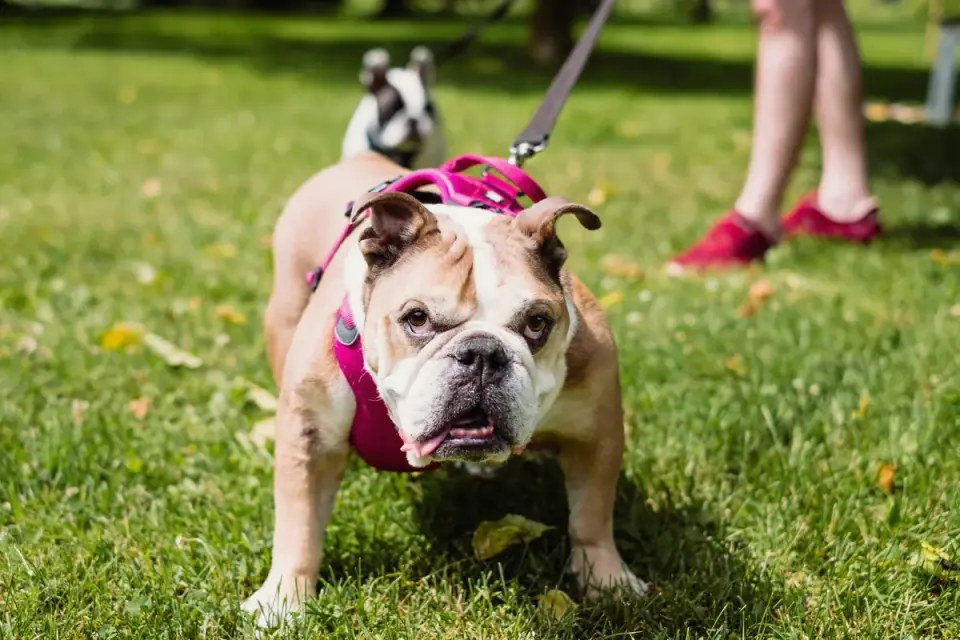
Start with a veterinary visit, not a guess. A senior dog who suddenly flinches at the kettle, the doorbell, or your footsteps in the hall is telling you something shifted inside his body over the past year, and the shift is rarely just “getting old.” Three findings sit behind most of these cases: pain he cannot show you any other way, hearing that has quietly narrowed, and early changes in how his aging brain files sound. Work through them in that order, and manage his environment while you do.
Rule out pain before you blame the ears
Book a hands-on orthopedic and pain exam first. It feels backward to check the hips when the problem sounds like the ears, but a 2018 study at the University of Lincoln compared dogs referred for noise sensitivity with and without underlying musculoskeletal pain and found a telling pattern: the pain group developed their fear of noises on average nearly four years later in life, around six and a half years old, versus under three in the pain-free dogs. The authors’ working explanation is mechanical. A normal startle makes a dog tense his muscles, and in a body with sore hips or a stiff spine, that tensing hurts, so the sound and the pain become linked. For a dog whose startling is genuinely new in his senior years, that pattern is worth taking seriously. Ask your veterinarian to palpate the neck, back, hips, and stifles, to watch him rise and turn on both sides, and to consider a short trial of pain relief. Easing the underlying discomfort may help support his comfort enough that everyday sounds stop carrying a threat.
Get his hearing measured, then change how you reach him
Have his hearing tested rather than assumed. Age-related hearing loss, or presbycusis, typically begins around eight to ten years of age, and per the Merck Veterinary Manual the middle and high frequencies drop out first, with the loss often appearing sudden even though it has been building for some time. Here is the part owners miss: a partially deaf dog often startles more, not less. He no longer hears you cross the room or the low rumble that used to precede a bang, so ordinary sounds and hands arrive with no warning. A brainstem auditory evoked response (BAER) test at a referral or teaching hospital can measure what he still hears. While you arrange it, change your own habits. Approach from the front where he can see you, stamp the floor so he feels your footfall through it, and wake him with a hand near his nose rather than a touch on the flank.
Screen the aging brain, because hearing and cognition travel together
Ask to screen for canine cognitive dysfunction (CCD) at the same appointment. Hearing and cognition decline in step in older dogs. In a 2022 study of 39 senior dogs, those with the poorest hearing were nearly four times more likely to show moderate or severe cognitive dysfunction, and they performed worse on attention and impulse-control tasks. Cognitive decline is common and climbs steeply with age, too: the Dog Aging Project reported the odds of CCD rising roughly 52 percent with each additional year of life. A dog whose brain is changing may read a familiar sound as novel or threatening, react out of proportion, and then struggle to settle afterward. A structured questionnaire, which your veterinarian may run as DISHAA or CADES, turns a vague sense that “he seems off” into something you can track across visits.
Reshape the sound environment while you investigate
Make his world predictable while the workup happens. Hold a steady daily rhythm for meals, walks, and sleep, because routine may help support a calmer baseline in a dog whose senses have grown less reliable. Give him one quiet retreat, a bed away from the door with a fan or soft white noise to blunt sudden peaks, and let him choose it rather than shutting him in. Resist the urge to flood him with the trigger to “get him used to it,” since forced exposure tends to sensitize an anxious senior instead of settling him. When thunderstorms or fireworks are the flashpoint, plan with your veterinarian ahead of the season, so situational calming options are ready well before the panic rather than during it.
When to call sooner
Move faster if the startling comes bundled with circling, head pressing, disorientation, sudden trouble seeing, a head tilt, or a true seizure. Those signs point toward problems that need prompt diagnostics rather than watchful waiting. Call the same day if he seems in acute pain or stops eating.
The bottom line
A new startle in an old dog is a symptom, not a change of personality, and the most useful move you can make is to have pain, hearing, and cognition checked together, then keep his days quiet and predictable while your veterinarian sorts out which one is driving it.
Frequently asked questions
Is my dog startling because he is going deaf, or because he can suddenly hear too much?
Usually the former, which surprises owners. A dog losing the middle and high frequencies no longer hears you cross the room or the quiet cues that used to precede a loud sound, so ordinary noises and touches land without warning and feel bigger. A BAER hearing test measures what he can still hear and tells you whether to build your management around a partially deaf dog.
Could this just be anxiety, or is it medical?
In a senior dog, treat new sound sensitivity as medical until a veterinarian has looked. A small 2018 study found that dogs whose noise fears began later in life were far more likely to have underlying musculoskeletal pain, and hearing and cognitive changes both raise the odds too. Anxiety may be part of the picture, but it is rarely the whole story at this age.
Can diet or supplements help a noise-sensitive senior?
They are a support layer, not a diagnosis. Once your veterinarian has identified what is driving the startling, targeted nutrition and evidence-based supplements may help support comfort and a steadier baseline as part of a broader plan. Ask your vet what fits your specific dog rather than starting anything on your own, and never let a supplement delay the workup.
Sources
- Noise Sensitivities in Dogs: An Exploration of Signs in Dogs with and without Musculoskeletal Pain Using Qualitative Content Analysis — Lopes Fagundes AL, Hewison L, McPeake KJ, Zulch H, Mills DS. Frontiers in Veterinary Science, 2018;5:17 (DOI: 10.3389/fvets.2018.00017)
- Relationship between hearing, cognitive function, and quality of life in aging companion dogs — Fefer G, Khan MZ, Panek WK, et al. Journal of Veterinary Internal Medicine, 2022;36(5):1708-1718 (DOI: 10.1111/jvim.16510)
- Evaluation of cognitive function in the Dog Aging Project: associations with baseline canine characteristics — Yarborough S, Fitzpatrick A, Schwartz SM, et al. Scientific Reports, 2022;12:13316 (DOI: 10.1038/s41598-022-15837-9)
- Deafness in Animals (presbycusis / age-related hearing loss) — Merck Veterinary Manual