Why Some Dogs Are Stiff First Thing in the Morning
Morning stiffness in dogs explained — what overnight rest does to joints, when it's normal aging, and when to call your vet.
That first-thing stiffness usually fades as joints warm up, and the pattern tells you what to do next.

On this page
The kitchen tile is cold, the coffee is still brewing, and your dog is doing that slow-motion rise — front end up, pause, back legs unfolding like they missed the memo. An 11-year-old, 72-pound Golden mix I see in composite cases like this will stand for a beat, take two short steps, then walk it off by the time the back door opens. Three weeks in a row, same routine: stiff for the first minute, normal by breakfast. That walk-it-off arc is the detail I pay attention to, because morning stiffness has its own logic.
It helps to know what the night actually does to a joint.
Overnight, joints go quiet — and thick
Cartilage has no direct blood supply. It relies on movement to pump synovial fluid around, delivering nutrients and clearing waste. After six to eight hours on a dog bed, that circulation slows, fluid viscosity rises, and the tissues around older joints — capsule, ligaments, tired muscles — cool and shorten slightly.
Then the dog stands, loads those tissues, and everything complains at once. Once movement resumes, fluid redistributes and the gait smooths out. That is why so many owners report the same timeline: rough for 30 seconds to five minutes, then largely normal.
Research on joint-support ingredients often points at this same fluid system. Chondroitin, for example, “supports healthy synovial fluid homeostasis” in recent veterinary literature described by Frontiers in Veterinary Science, which is a careful way of saying it may help support the normal fluid balance that makes those first steps easier.
That pattern matters.
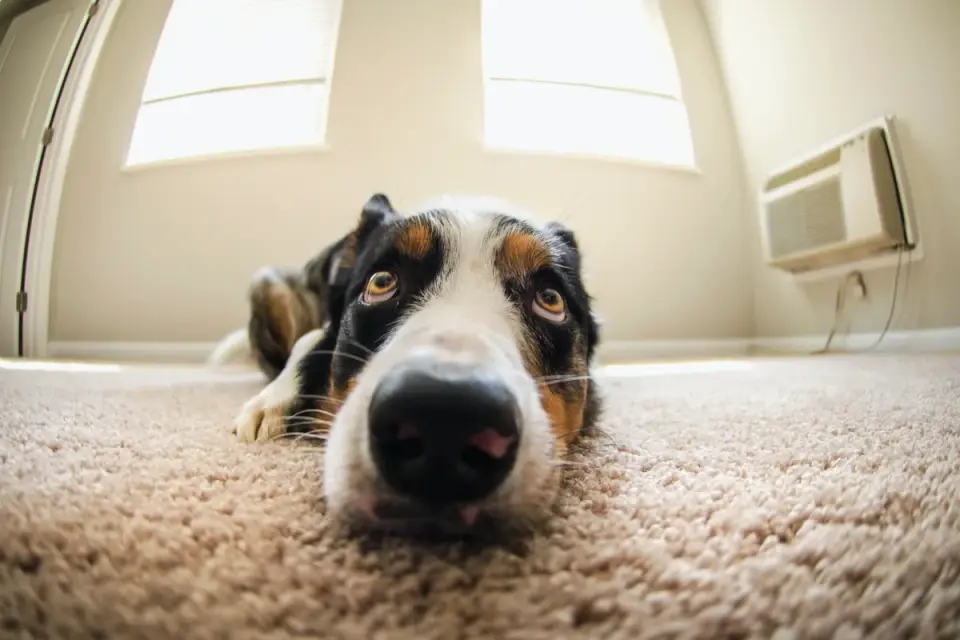
My pattern-first read: a cold, slow morning joint
From a TCVM whole-patient view, I organize this whole toolkit around one pattern: cold-damp stiffness that eases with warmth and gentle movement. The dog is worse in the morning, worse on cold floors, better after a short leash walk or a warm spot by the vent. Appetite and spirit are normal. The tongue tends pale, the gait is slow to start but willing.
Framing it that way keeps the plan small and consistent: warmth, graded movement, comfortable footing, healthy weight, and tools that may help support balance and healthy function — rather than a new remedy every week. Food therapy leans warming and easy to digest. Tui-na–style gentle range-of-motion, acupuncture points for low back and hind-limb circulation, and Western or Chinese herbs fit inside the same pattern instead of pulling in different directions.
The middle case shows why that discipline helps. A 7-year-old, 54-pound pit-type dog was doing great on evening fetch but creaky every morning, and the owner kept swapping powders — one joint chew for two weeks, then a different oil, then nothing. By day 10 off everything, the mornings were actually worse, not because any single product failed but because nothing stayed long enough to judge. When we picked one pattern and held it — warm bedding off the draft, a five-minute morning sniff walk before breakfast, rugs over the slick hallway — the first-minute stiffness shortened even before supplements entered the conversation.
Glucosamine and its usual companions sit inside that supportive layer. Laboratory work summarized by the Journal of Veterinary Medical Science found glucosamine HCl could “prevent experimentally induced cartilage degradation in vitro,” which is early-stage evidence, not proof of morning pain relief. Green-lipped mussel work is similarly preliminary: one comparative study reported that “BMO, GMO, and KO all alleviated paw swelling in rats and reduced serum levels of rheumatoid factor (RF), anti-cyclic citrullinated peptide (anti-CCP) antibody, and pro-inflammatory cytokines such as TNF-α and IL-17,” as reported by Nutrients. Interesting biology. Not a cure.
For deeper label reading, our guides to Fish Oil vs. Glucosamine for Dog Joint Health: What Each One Actually Does and Dog Hip and Joint Supplement: What Actually Works, Ingredient by Ingredient break down doses and roles without the front-of-bag hype.
The honest counter: when it is not just age
Here is the strongest counterargument to my pattern: morning stiffness that does not warm up, or stiffness paired with other signs, may not fit simple aging at all.
Call your veterinarian promptly if the limp lasts past 10–15 minutes, shifts legs, follows a specific injury or tick exposure, or comes with swelling, heat, yelping, reluctance to rise at all, loss of appetite, fever, or sudden hind-end weakness. Young, fast-growing large breeds with morning pain, or any dog whose stiffness is getting measurably worse week over week, deserves an exam, gait assessment, and often radiographs — not a supplement trial.
The edge case I want owners to hold is the too-good walker. A 13-year-old, 41-pound spaniel mix looked classic — slow at 6 a.m., fine by 6 — until the owner noticed by week four that the dog was skipping the last two steps at night and hesitating on the car ramp. Morning stiffness had been the visible tip; the real change was fading hind-end strength and toenail scuffing that only showed on longer days. That shifted the plan from comfort care alone to a neurologic and orthopedic workup, plus traction, assistance, and a different exercise prescription.
Related reading on nighttime clues and hyaluronic acid evidence can help round out the picture: Glucosamine for a Dog Struggling With Stairs at Night: What the Evidence Actually Supports and Does Hyaluronic Acid Actually Work for Dog Joints? What the Research Shows.
What I would actually do for the slow starter
Keep mornings boring and warm. Same wake time, rug path to the door, brief leashed movement before food, then a real walk later once the joints are loose. Keep weight lean — ribs felt, waist seen from above — because every extra pound loads that first step. Note the timeline in your phone: minutes to normal, better or worse on cold days, any new limping through the day.
And defend one small, steady toolkit organized around that cold-damp, warms-with-movement pattern, adjusted only with your veterinarian. Supplements and herbs may help support comfort and mobility for some dogs, never cure arthritis, and movement plus footing often earn more than anything in a jar.
That Golden mix from the kitchen? Still slow for a minute. Still beating you to the door.
Frequently asked questions
Why is my dog stiff when he first gets up in the morning but fine later?
Overnight rest slows synovial fluid circulation and lets muscles and connective tissue cool and shorten. Movement restores fluid flow, so many dogs walk it off within minutes. Stiffness that lasts, worsens, or includes limping, swelling, or pain needs a vet exam.
Should a stiff senior dog rest more in the morning?
Usually the opposite — short, gentle movement helps. Try a low-key leash walk or potty break before breakfast, warm bedding, and rugs on slick floors. Save longer exercise for after the dog has loosened up.
Do joint supplements help morning stiffness?
Some ingredients like glucosamine, chondroitin, and green-lipped mussel have early or supportive evidence for joint structure and fluid balance, but they do not cure arthritis. Think of them as tools that may help support mobility alongside weight control, footing, and vet-guided care.
Sources
- Synovial homeostasis chondroitin study — Frontiers in Veterinary Science
- Glucosamine cartilage in vitro review — Journal of Veterinary Medical Science
- Mussel oil paw swelling rat study — Nutrients