Brain Games for Border Collies and Herding Breeds
A tired border collie leg means little if the mind underneath it is still pacing the fence line.
On this page
- What a herding brain is actually asking for
- Puppyhood: building the habit of thinking, not just doing
- Adolescence: where scent work earns its place
- Adult working years: give the herding instinct a job, not just a workaround
- When the evening still doesn’t settle
- The senior herding dog: comfort takes the lead
- Where I land
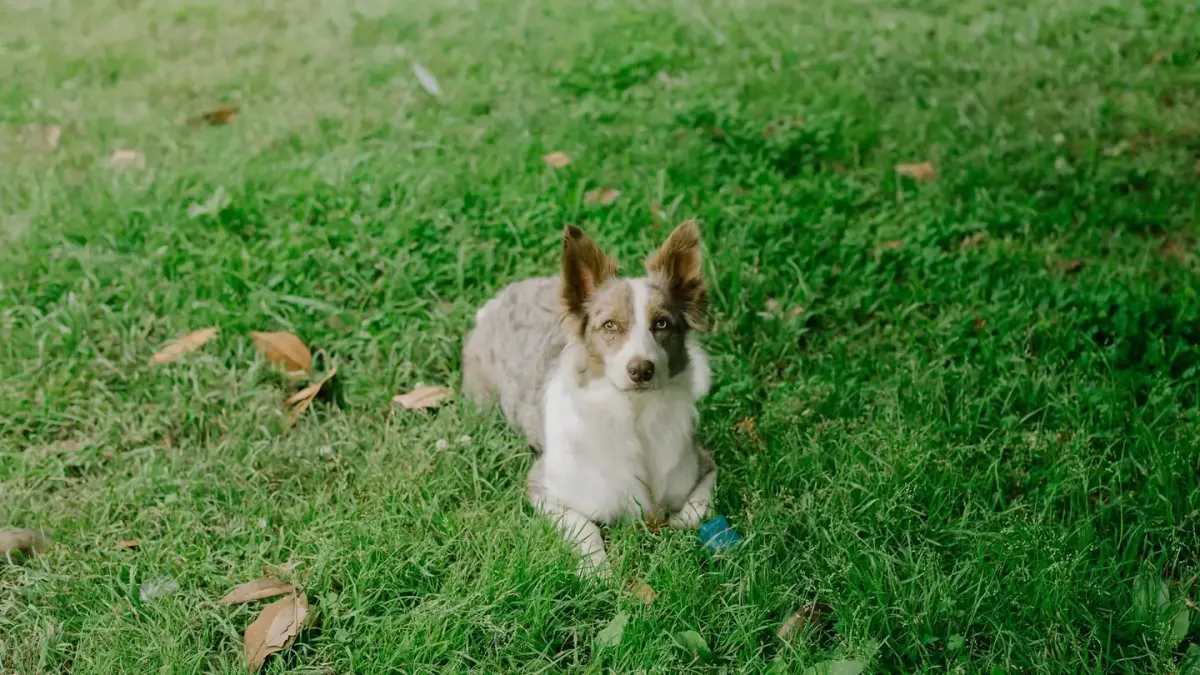
The first border collie I ever treated for “behavior” wasn’t aggressive, and she wasn’t anxious in any way I could put a label on that first visit. She was three, spayed, healthy on paper, and her owners had driven forty minutes because she’d started shredding the baseboards along one specific wall of the living room — always that wall, always in the late afternoon. They’d tried a bigger yard. They’d tried a second daily run. Nothing changed until we talked about what she actually did with her brain between walks, which was, as far as anyone could tell, almost nothing. That’s usually where the real conversation with a herding-breed owner starts, not with the legs but with the mind, and it’s where I want to start here too.
What a herding brain is actually asking for
Border collies and their working cousins — Australian shepherds, kelpies, cattle dogs — were bred across generations to read movement, make split-second decisions, and hold intense focus on a task for long stretches. That’s not a temperament quirk; it’s the job description. When the job disappears and nothing replaces it, the dog doesn’t get calmer. According to PetMD, border collies require significant physical exercise and mental stimulation to prevent boredom-related behaviors, and owners who underestimate that need often end up managing the fallout — chewing, herding the kids, obsessive shadow-chasing — as if it were a training failure rather than an unmet need.
I don’t think it’s a training failure. I think it’s a mismatch between what the dog was built to do and what a suburban afternoon actually offers.
Puppyhood: building the habit of thinking, not just doing
In the first few months, the goal isn’t complicated puzzles — it’s teaching a young herding pup that using its brain is rewarding and normal, the same way we’d teach a puppy that a crate is safe before we ever expect it to nap through the night. Short sessions of two or three minutes, a few times a day, work better than one long session that ends in frustration. Simple shaping games, a muffin tin with tennis balls over treats, learning to target a hand or a spot on the floor — these build the habit early, before adolescence brings a longer attention span and a lot more opinions about how that attention gets spent.
Adolescence: where scent work earns its place
By six months to two years, most herding-breed owners are managing a dog with real physical stamina and an even bigger appetite for problem-solving, and this is where I get the most specific about what I recommend. My strongest recommendation for this stage is structured scent work over generic toy rotation, because it asks for something toys can’t reliably provide: a search strategy, not just persistence. A 2019 study on nosework, “ScienceDirect: Let me sniff! Nosework induces positive judgment bias in pet dogs,” found that dogs given structured scent-search sessions showed a more optimistic judgment bias afterward than dogs given equivalent leash-walking time — a measurable shift toward calmer, more positive affect, not just tired legs. That’s the piece I think gets missed. A long run can exhaust a herding dog’s body while leaving the part of the brain that wants a job completely unaddressed.
I’ll name the honest counterargument, because it’s a fair one: plenty of good trainers will tell you that physical exercise is the real lever for a hard-to-manage herding dog, and that mental games are a nice extra once the energy is under control. I don’t fully disagree — a border collie with no outlet for movement at all isn’t going to settle no matter how clever the puzzle is. But in my exam room, the dogs whose owners had already maxed out physical exercise and were still seeing destructive or obsessive behavior were almost always the ones missing structured thinking work, not miles. Legs and brain aren’t substitutes for each other. They’re two different debts, and paying down only one still leaves the other collecting interest.
Adult working years: give the herding instinct a job, not just a workaround
Full-grown herding dogs often do best with activities that mimic the actual structure of herding — a sequence, a target, a decision point — rather than a single repetitive toy. Treibball, where the dog “herds” large exercise balls into a goal, taps that same read-and-respond pattern without livestock. Food-dispensing puzzles that change shape or difficulty week to week hold interest longer than a single static toy ever will; our guide to Food-Dispensing Toys vs. Treat Balls walks through which style actually matches a dog’s problem-solving pace rather than just slowing down a meal. A snuffle mat is a gentler entry point for the same instinct — searching, sorting, deciding — on days when a full scent-search session isn’t practical.
When the evening still doesn’t settle
Owners of herding breeds often tell me the mental work seems to help during the day but the dog still can’t wind down once the house goes quiet, and that’s a different problem worth naming separately rather than solving with more puzzles. If daily mental stimulation is genuinely in place and the dog is still pacing, panting, or pestering the family at 8 p.m., it’s worth reading through Why Your Dog Won’t Settle in the Evening before assuming the answer is simply more games.
The senior herding dog: comfort takes the lead
This is the stage where my thinking shifts the most, and it’s the stage I spend the most time on with families. An older border collie with early arthritis or slowing cognition doesn’t need harder puzzles — she needs the same category of engagement scaled down to what her body and her patience can tolerate that day. I’ve sat with owners of eleven- and twelve-year-old herding dogs who felt guilty for “letting” their dog get bored, when really the dog’s joints simply couldn’t manage the scent-search route they used to run in six minutes flat. In those cases I’m not asking the dog to keep up with what she used to do. I’m asking what still fits: a shorter, slower nose-work session in the yard instead of the field, a snuffle mat at floor height instead of a jump-and-fetch game, training reps that use words and gentle hand signals instead of speed. The goal stops being cognitive challenge for its own sake and becomes comfort with a little purpose folded in — engagement that respects a slower, achier body rather than working around it. For dogs whose joints are the limiting factor rather than the mind, comparing options like the piece on Dog Treadmill vs. Outdoor Walking can help a family choose lower-impact ways to keep a senior herding dog moving enough to stay engaged without pushing past what the joints can absorb.
Where I land
A border collie or any working-bred herding dog genuinely needs daily structured thinking work, not as an occasional treat but as a standing part of the day, on the same tier as food and a walk. I land firmly on scent work and rotating, changing puzzles over any single toy, because the evidence and the dogs I’ve watched both point the same direction: novelty and search-and-decide tasks do something a repetitive chew or a longer walk doesn’t. But I hold that recommendation loosely as the dog ages. The right amount of mental work for a four-year-old sheepdog in full working condition is not the right amount for the same dog at twelve with a stiffer hip and a shorter fuse for frustration. My practical next step for most owners: pick one structured thinking activity — scent search, a rotating puzzle feeder, or short shaping sessions — and build it into the same time slot every day, then let its length and difficulty flex with the dog’s age and joints rather than staying fixed forever. That’s less about winning the day’s boredom and more about giving a working mind somewhere honest to go, for as long as the dog is comfortable going there.
Frequently asked questions
How much mental stimulation does a border collie need each day?
Most herding-breed guidance points to roughly 30–45 minutes of structured mental work daily, often split into shorter sessions rather than one long block, alongside — not instead of — physical exercise.
Are puzzle toys enough, or does a border collie need scent work specifically?
Puzzle toys help, but structured scent work asks for a search strategy and decision-making that a static toy can't replicate, which is why it's worth adding rather than treating puzzles as the whole answer.
My border collie is a senior with arthritis — should I stop the brain games?
No, but scale them down: shorter sessions, lower-impact setups like a snuffle mat instead of a running search, and training reps that don't demand speed or jumping.