Reactive Dog vs. Aggressive Dog: What's Actually Different
Medically reviewed by Jessica Ennis, DVM, CVA — For general education — not a substitute for veterinary care.
Reactivity is an overreaction to a trigger; aggression is intent to do harm — and mixing the two up changes your whole plan.
On this page
Start here: watch what happens the moment the trigger disappears. A reactive dog that’s barking and lunging at another dog across the street will usually settle within a minute or two once that dog is out of sight — panting hard, maybe still glancing over its shoulder, but no longer escalating. A dog with a true aggression problem doesn’t reliably do that. It stays fixed on the person or animal, it may keep advancing even as they retreat, and the intent reads as “I want to make contact,” not “I want you to go away.” That distinction — overreaction versus intent to harm — is the whole ballgame, and it’s the first thing I sort out with an owner before we talk about training or supplements.
What I’m actually looking for in the exam room
I had a Belgian Malinois in last spring, Diesel, two and a half years old, sixty-eight pounds, who’d been labeled “aggressive” by a trainer after he lunged at a jogger on a greenway trail. His owner was ready to talk about rehoming him. But when I asked what happened in the fifteen seconds before the lunge, she said the jogger had come up fast from behind on a narrow bridge, and Diesel had been sniffing the railing with his back to the trail. He never made contact. He barked, lunged to the end of the leash, and then flattened his ears and backed toward her. That’s a startle-and-bark pattern, not a bite attempt — classic reactivity triggered by a fast approach from a blind angle. We built a plan around distance and visibility on that bridge instead of writing him off as dangerous. Eighteen months later he still reacts occasionally to sudden joggers, but the intensity has come down and he recovers in under a minute.
Reactivity: an overreaction, not a decision to hurt
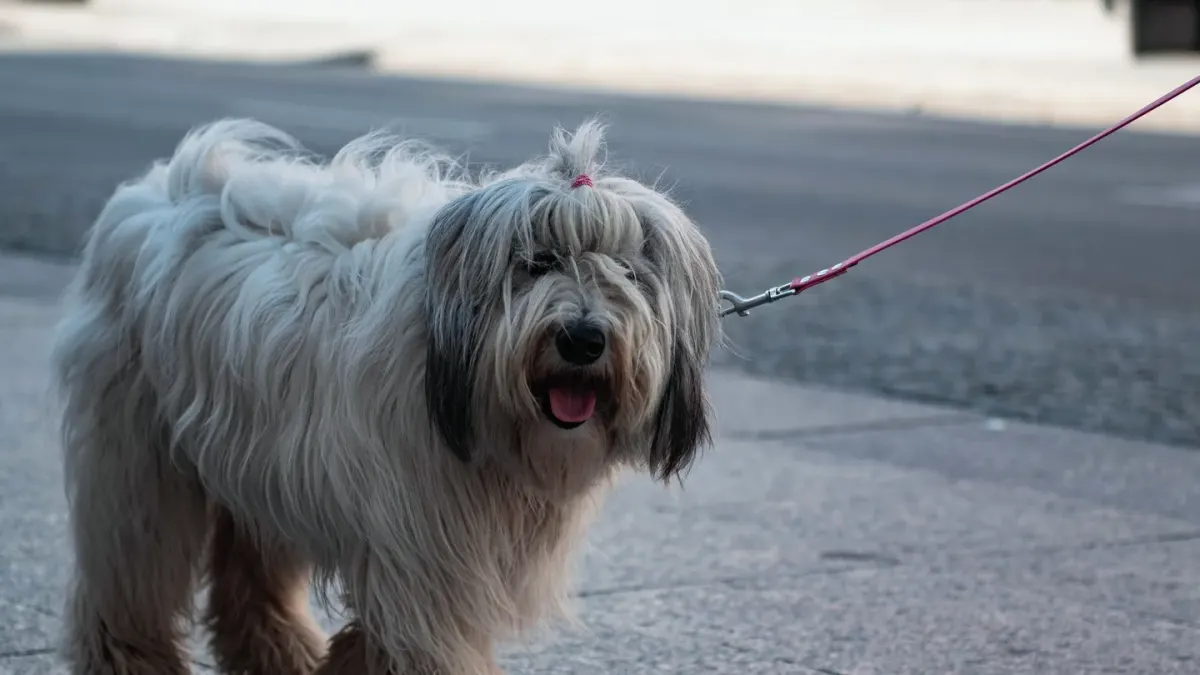
Reactive dogs overreact to something specific — another dog, a skateboard, a stranger reaching toward their head — with barking, lunging, spinning, or whale-eye. The trigger is usually identifiable and often consistent across incidents: always dogs on leash, always men in hats, always the garbage truck. If your dog’s version of this looks like frozen panic at a specific sound, our guide on garbage truck panic walks through that exact pattern. Reactive dogs also tend to recover quickly once the trigger is removed, and many of them are genuinely friendly or neutral in low-arousal settings — the reaction is about proximity and surprise, not a settled judgment that this particular thing needs to be hurt.
Aggression: intent, escalation, and a different risk calculus
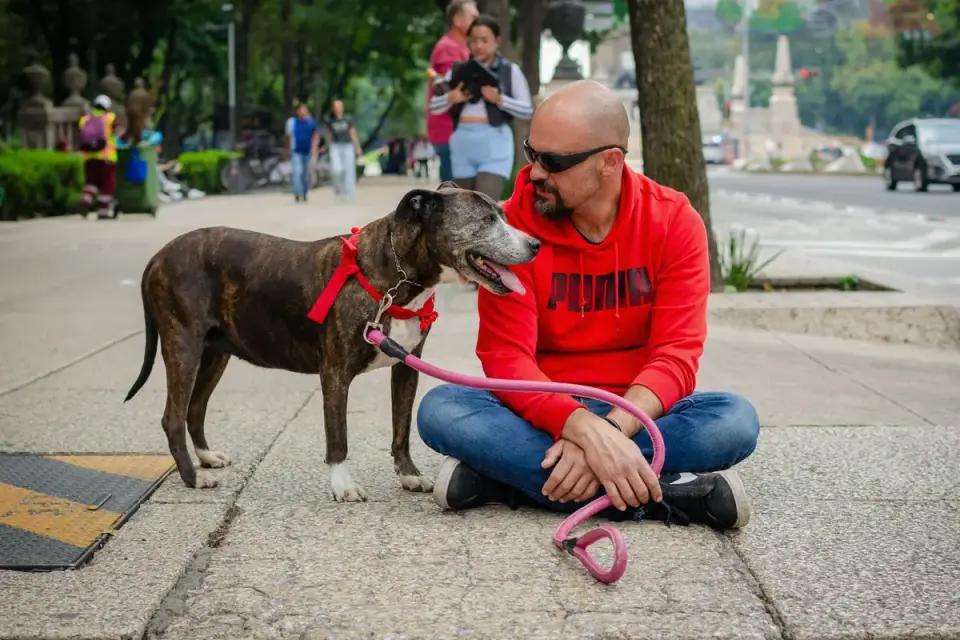
Aggression is the term I reserve for behavior that’s goal-directed toward causing harm — a fixed stare followed by a deliberate bite, resource guarding that escalates to snapping even when the person backs off, or a dog that continues pursuing after the trigger has left. Aggression doesn’t always come with a lot of noise; some of the more serious cases I’ve seen are quiet dogs who go still, then bite with almost no warning bark at all. If your dog growls when you reach to pet it, that’s actually a communication signal worth reading carefully before you assume the worst — our piece on growling when petted breaks down why punishing that growl usually backfires and makes the next warning disappear. The point isn’t that growling equals aggression; it’s that removing the warning signs without addressing the underlying discomfort is how reactive-looking dogs get pushed toward truly aggressive ones.
Here’s a short one, because it matters: a dog can be both reactive and aggressive at different times, and neither label is a life sentence.
Why the label changes the plan
If I diagnose reactivity, we’re usually working on threshold distance, counterconditioning, and management — teaching the dog that the trigger predicts good things from far enough away that it can still think. If I diagnose aggression with bite risk, the plan gets more conservative fast: a muzzle for public spaces, a referral to a veterinary behaviorist, and honest conversations about liability. Dogs that shadow their owner everywhere and panic when separated sometimes get mislabeled as “aggressive” toward visitors when the real driver is anxiety about the owner leaving the room — if that sounds familiar, the independence-building steps in our velcro dog guide are usually the more accurate starting point than a bite-inhibition protocol.
Where calming support realistically fits
Nutraceuticals and calming aids are not a substitute for a behavior plan, but they can lower baseline arousal enough that training actually sticks — think of it as turning the dial down a notch, not solving the problem. Chamomile and valerian root “have been used in traditional herbal care to support relaxation,” per Boops Pets’ vet-reviewed claim list, though a recent review notes that “for the remaining species, evidence is derived mainly from preclinical studies or traditional use,” per a review indexed at Biomedicines: DOI.3390/biomedicines14051019. Ashwagandha shows up in some calming formulas too; a systematic review “analyzed multiple RCTs and concluded that ashwagandha has a moderate positive impact on stress reduction and cognitive performance,” according to a review published in Cureus — that evidence base is in humans, so treat it as supportive context, not a canine dosing guarantee. L-theanine, described in the Boops Pets claim list as “an amino acid found in tea that has been studied for its calming properties,” has human trial data too: one review found benefit “except for one study on psychotic anxiety (SMD = 0.54; 400 mg/day for 8 weeks),” per a review in Molecular Psychiatry. None of that replaces a trainer or a behaviorist for a dog with real bite history.
The dog I still think about
There was a rescue mix, Peaches, maybe four years old, who came in muzzled because the shelter had flagged two bite incidents. Her owner was terrified of her and, honestly, so was I walking into that room. But watching her in the exam, she wasn’t hunting for a reason to bite — she went stiff and started a slow growl the instant my hand crossed toward her hindquarters, which turned out to be sitting on an undiagnosed anal gland problem. Once we treated the physical source of pain, the “aggression” mostly disappeared, and what was left underneath looked more like ordinary leash reactivity around unfamiliar dogs. I bring this case up constantly because it’s the clearest example I have of why the medical workup has to come before the behavioral label sticks. A dog in pain will look far more aggressive than a dog that’s simply overwhelmed, and the two get treated in completely different ways.
Where I land
If I had to give one instruction to an owner unsure which word applies to their dog, it’s this: rule out pain and medical causes first, then track what the dog does after the trigger is gone. Fast recovery, consistent triggers, and no history of contact point toward reactivity, which responds well to distance-based training and, sometimes, calming support layered underneath it. Continued pursuit, minimal warning, or an actual bite history means you need a veterinary behaviorist involved before you do anything else — that’s not a label to guess at from home.
Frequently asked questions
Can a reactive dog become aggressive over time?
Yes, especially if the underlying stress isn't addressed and the dog's warning signals — growling, stiffening, whale-eye — get punished away instead of listened to. That can push a dog toward escalating faster with less warning.
Is a growling dog automatically aggressive?
No. A growl is communication, not a diagnosis. It usually means the dog is uncomfortable and asking for space, which is very different from a dog that's already decided to bite.
Should I muzzle a reactive dog?
Muzzle training can be a reasonable safety layer for either reactive or aggressive dogs in public, but it's a management tool, not a treatment — it doesn't replace a behavior plan or, where warranted, a veterinary behaviorist referral.
Sources
- Chamomile and Anxiety Review — Biomedicines
- KSM-66 Ashwagandha Systematic Review — Cureus
- L-Theanine and Anxiety Review — Molecular Psychiatry