How to Stop Your Dog From Eating Poop: A Vet's Framework for Getting to Root Cause
Medically reviewed by Jessica Ennis, DVM, CVA — For general education — not a substitute for veterinary care.
If your dog is eating poop, the fix depends on whether it's a medical issue, poor digestion, a behavioral loop, or a stress response—and the timeline for each one is completely different.
On this page
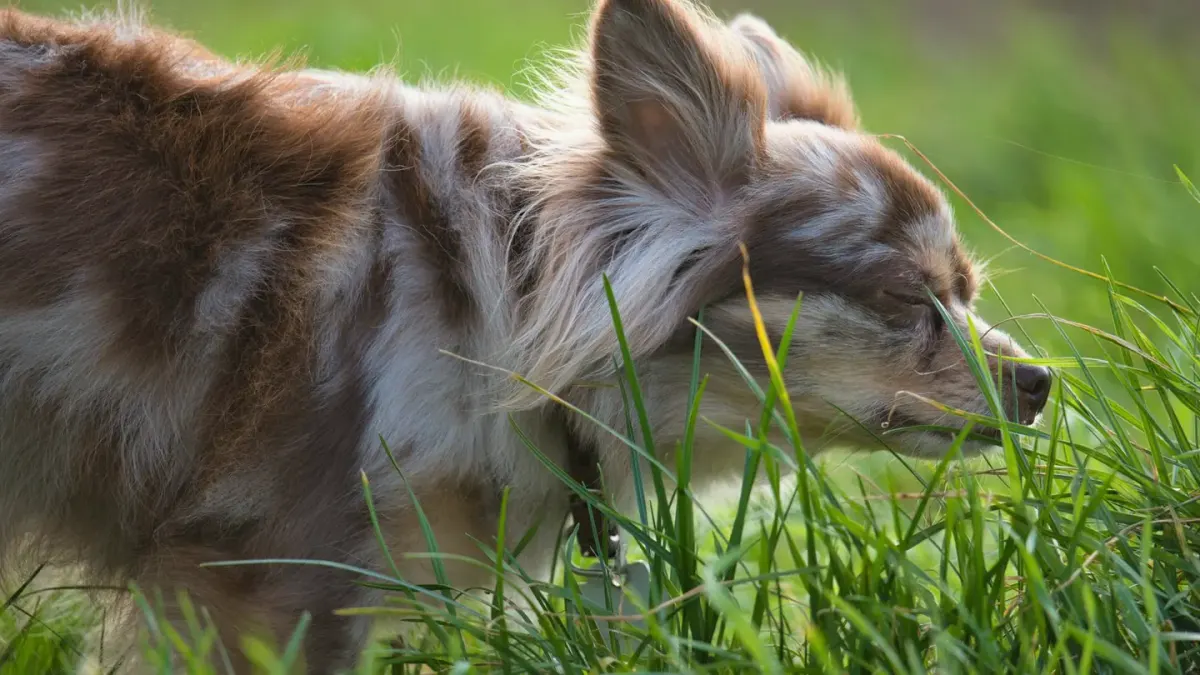
When owners first tell me their dog eats poop, I watch their faces tense. It feels aberrant, unsanitary, even a sign of something deeply wrong. But coprophagia—the formal name for this behavior—is common, and it’s almost always fixable once you understand what’s driving it. In my practice, I’ve found that the owners who get the fastest results are the ones who stop trying to solve it all at once. They rule out medical causes first, then look at diet and digestion, then at anxiety or stress, and finally at the behavioral loop itself. Most of the dogs I’ve seen improve dramatically once their owners follow that sequence, rather than chasing every possible reason at once.
What poop eating actually is
Coprophagia looks like a single behavior, but it almost never is. Your dog isn’t eating feces because of a moral failing or boredom alone—there’s a reason. The behavior can stem from hunger, from poor digestion, from anxiety, from exploring the environment, or from learned behavior around other animals. Understanding which category your dog falls into changes everything about how you respond.
The term covers a spectrum. Some dogs eat only their own feces; others eat only the feces of other animals, usually cats. Some dogs eat stool predictably, right after it hits the ground; others seem to graze. The pattern matters because it often points directly to the cause.
Start with your veterinarian
Your first conversation should always be with your vet. Before you change the diet, add supplements, or hire a trainer, you need to rule out the medical reasons a dog might eat poop.
Intestinal parasites are the most common culprit. A dog with a heavy parasite load isn’t absorbing nutrition properly, which creates a genuine appetite gap. Your dog’s body is saying “I’m hungry,” even if the bowl is full. A simple fecal exam will tell you whether parasites are involved. If they are, treatment is straightforward.
Malabsorption syndromes—conditions where the intestine can’t efficiently extract nutrients from food—can drive the same behavior. Exocrine pancreatic insufficiency (EPI), certain food allergies, and inflammatory bowel conditions all fall here. These require dietary adjustment or medication, and they’re often missed because owners assume the dog “should be fine” on whatever food they’re feeding.
Poor-quality protein or a food that doesn’t suit your dog’s digestive system can also trigger coprophagia. A dog whose food moves through the gut too quickly, or whose diet is low in digestible protein, may experience a real nutritional drive to eat stool.
I remember one appointment with Marcus, a five-year-old Labrador whose owner, Rachel, had tried everything. “We’ve been to three trainers,” she told me, frustrated. “He gets it right for a week, then backslides.” I asked the obvious question: what does a typical poop look like? Soft, inconsistent. When I looked at his food bag, it was a grocery-store brand with low-quality proteins and corn as the primary carbohydrate. Marcus wasn’t misbehaving; his gut was dysbiotic, and his body was telling him it needed more nutrition. We switched him to a higher-protein diet with added digestive enzymes, and within three weeks Rachel stopped seeing the behavior entirely.
Anxiety and stress: the overlooked driver
Most training-focused conversations miss this entirely: stress and anxiety are legitimate triggers for coprophagia in dogs. A dog under chronic stress or anxiety may eat feces as a self-soothing behavior, especially if the stool has been sitting for a while and has begun to break down.
The gut-brain axis—the two-way communication between the intestines and the nervous system—is real in dogs just as it is in humans. When a dog is anxious or stressed, the gut can become permeable, digestion can stall, and appetite dysregulation can develop. In some cases, addressing the anxiety directly helps resolve the coprophagia.
Research published in Biomedicines indicates that chamomile has been used in traditional herbal care to support relaxation, though the evidence is derived mainly from preclinical studies. A systematic review published in Cureus found that KSM-66 Ashwagandha has a moderate positive impact on stress reduction and cognitive performance. Research in Nature has examined L-theanine, an amino acid found in tea, for its role in supporting calm, with one study examining a dose of 400 mg per day over 8 weeks.
In my practice, I don’t reach for calming ingredients as a standalone fix for coprophagia. Instead, I think of them as part of a broader anxiety-management plan, especially for dogs whose stress is documented and whose medical workup is clean. A dog who is anxious about being alone, who startles easily, or who shows other behavioral signs of stress may benefit from structured support that includes environmental adjustment, training, and targeted supplementation.
One dog I worked with, a rescue terrier named Scout, was eating her own feces compulsively. Her owner, Devon, had adopted her six months prior and had done the medical workup—clean bill of health, no parasites, good diet. But Scout was also the kind of dog who panicked when Devon left the house, and she was reactive to loud noises. We addressed the anxiety directly: a structured training plan that built independence (similar to the work described in our independence training guide), a consistent routine, and a targeted calming ingredient added to her diet. Over the next two months, as Scout’s anxiety decreased, the coprophagia resolved almost entirely.
The behavioral side: environment and habit
Once you’ve ruled out medical and nutritional causes, and you’ve addressed anxiety if it’s present, you can focus on the behavior itself.
Some dogs eat poop because of learned behavior—they’ve seen another animal do it, or they’ve done it once and found it interesting, and now it’s part of their routine. Breaking the loop means management first: pick up after your dog immediately, supervise closely in yards with other animals, and redirect whenever you see the behavior starting.
Some dogs eat poop because they get a reaction. If your dog has learned that pooping and then eating it will get you to react—chase, yell, grab the poop—that reaction is reinforcing. Your job is to stay neutral, pick up calmly, and redirect to something rewarding instead.
Environmental enrichment matters. A dog who is under-exercised or not getting appropriate mental stimulation may turn to poop eating as part of exploratory behavior. Daily walks aren’t always enough; your dog may need training sessions, puzzle toys, or other structured engagement.
What the timeline actually looks like
This is where expectation becomes critical. Coprophagia doesn’t resolve overnight in most cases, and the timeline depends entirely on the cause.
If parasites or malabsorption are the culprit, you may see improvement within days to weeks once the medical issue is treated. If diet is the issue, expect 2 to 4 weeks of adjustment as the gut normalizes and the dog stops experiencing real nutritional hunger. Anxiety-related coprophagia can take 6 to 12 weeks to resolve because the anxiety itself needs time to settle, especially if you’re using behavioral modification and supportive ingredients without pharmaceutical intervention.
Behavioral loops—where your dog has built a habit around the behavior—may take the longest. You’re not waiting for the behavior to disappear; you’re actively preventing opportunities and building alternative habits.
A forward path
Getting your dog to stop eating poop starts with resisting the urge to solve it all at once. Your veterinarian’s medical workup is the foundation. A diet audit often comes next. If anxiety or stress is present, addressing it directly—through training, routine, and targeted support—can shift the entire picture.
Most dogs who are taken through this sequence systematically improve dramatically. The owners I see get the fastest results are willing to be methodical: they follow the evidence, they don’t skip steps, and they adjust their expectations based on what’s actually driving the behavior. Addressing gut health through appropriate nutrition—including the right protein quality and digestibility—is often part of the solution, and exploring the best probiotic for your dog can help if dysbiosis is present. Your dog’s behavior is telling you something real. The job now is to listen to it clearly.
Sources
- Chamomile and Anxiety Support — Biomedicines
- KSM-66 Ashwagandha and Stress Reduction — Cureus
- L-Theanine and Anxiety Support — Nature