Why Does My Dog Struggle To Fall Asleep At Night
A rehab-minded vet explains nighttime restlessness in dogs — pain, anxiety, routine — and how gentle evening movement helps maintain comfort.
When your dog can't settle at night, the body is usually telling you something the daytime routine missed.
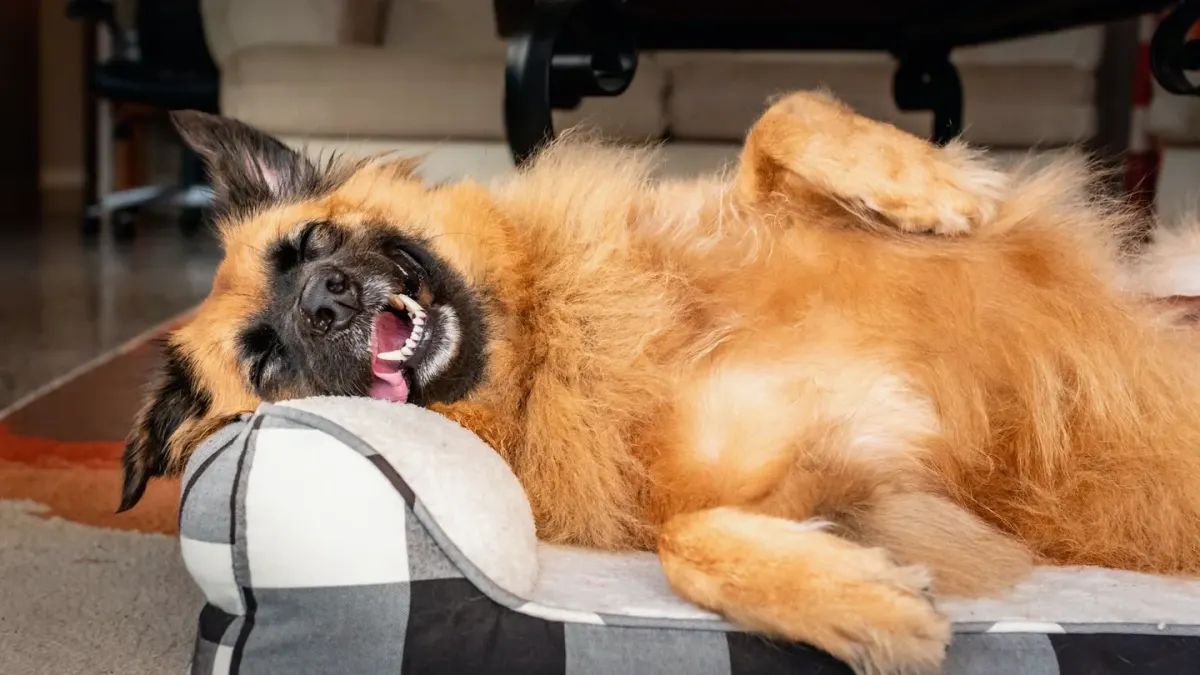
It’s 1 a.m. and you’re awake again because he is. An 11-year-old shepherd mix, 68 pounds, circles his bed three times, sighs hard, drops, then pops back up to pace to the water bowl and back. No barking. No emergency. Just a dog who cannot seem to turn off. His owner told me she’d tried a later dinner, a darker bedroom, even sleeping on the couch with him for three weeks in January. Nothing held.
That pattern is familiar from rehab work. Dogs who struggle to fall asleep at night rarely have one reason. They have layers — a stiff body, a wired mind, a day that didn’t empty the tank in the right way.
My bias is clear: I prioritize gentle evening movement that helps maintain comfort and mobility, over reaching first for a sedating chew or supplement. Movement sounds counterintuitive at bedtime. Yet for many aging or anxious dogs, a short, sniffy walk does more for sleep onset than anything you put in the bowl.
Why Settling Is Hard When Joints Are Talking
Pain doesn’t always limp. At night it whispers.
Dogs with early arthritis, neck tightness, or post-exercise soreness often look fine at 6 p.m. Then the house cools, activity stops, and stiffness settles in. You see circling without lying down, shifting from side to side, groaning on the exhale, or seeking hard floors instead of a soft bed. A 9-year-old beagle, 28 pounds, I followed through a mobility check kept abandoning her bolster bed by day 10 of her log — not because she disliked it, but because climbing over the bolster hurt her shoulders.
Gentle movement helps maintain joint range and muscle warmth before that long still stretch. Think 10 to 15 minutes of slow leash walking on flat ground, lots of sniff stops, no fetch, no stairs. Follow with a warm resting spot and a brief hands-on check along the back and hips for flinching.
Against that sits the strongest counterargument: if a dog is sore, shouldn’t we insist on strict rest at night? Rest matters for acute injury. For chronic stiffness, though, complete stillness all evening often makes the first hour of bed rest harder. I still land on movement, kept easy and short, because comfort supports sleep onset better than guarding does.

When The Mind Won’t Power Down
A Brain Still Running The Day
Some dogs are physically tired but mentally buzzing. Young herding breeds, newly adopted dogs, dogs who napped all day while you worked — they hit 10 p.m. with unspent alertness. Signs skew toward vocalizing, light-sleep startling, following you room to room, or fixating on hallway noises.
Here the fix is rhythm, not exhaustion. Same out time, same wind-down cue, same bed place. Dim lights an hour before bed. A chew or lick mat, then lights out. Predictability lowers vigilance.
What Calming Ingredients Actually Offer
This is where label reading gets honest. Many nighttime chews lean on chamomile, valerian, L-theanine, or ashwagandha. Enthusiasm should track evidence.
For chamomile beyond humans, a Biomedicines Review notes the limit plainly: “For the remaining species, evidence is derived mainly from preclinical studies or traditional use.” That doesn’t dismiss traditional use for relaxation support, but it keeps expectations realistic.
Ashwagandha has a broader human signal. A Cureus Systematic Review found that “A systematic review analyzed multiple RCTs and concluded that ashwagandha has a moderate positive impact on stress reduction and cognitive performance.” Useful context, not a canine sleep promise.
L-theanine is similarly narrow in hard data. A Molecular Psychiatry Review emphasizes how thin the anxiety literature is: “except for one study on psychotic anxiety (SMD = 0.54; 400 mg/day for 8 weeks)” — a human dose finding, not a dog bedtime dose.
If you use a chew, judge it the Dog Calming Chews: What’s Actually in the Bag, and What It’s Doing way: named ingredients, real doses, honest sourcing. Then build the routine around it, as outlined in Dog Anxiety Supplements: A Vet’s Checklist Before You Buy the Chew.
She tried the opposite first. The owner of a 4-year-old border collie mix, 42 pounds, told me they’d skipped the evening walk for two weeks to “help him get sleepy,” replacing it with a high-dose calming chew at 8 p.m. and crate cover at 9. By day 12 his log showed more panting, not less — up, panting at the crate door until nearly midnight, then restless foot-shifting once he finally dropped. The tradeoff was clear in hindsight: the chew took the edge off his evenings without emptying anything, and the missing sniff walk left both his legs and his nose unsatisfied. We re-added movement and kept expectations realistic about what a supplement could do alone.
That failed shortcut is common.
The Edge Cases That Change The Plan
Not every sleepless dog needs more walking. Senior cognitive change flips the script. A 14-year-old terrier mix, 19 pounds, started waking at 2 a.m. over three weeks in March, standing in corners, staring, then whining to go out only to stand on the porch. More evening exercise left her more foot-sore the next morning, with no change in night waking. For her, the lever wasn’t movement volume but daytime light exposure, a vet check for blood pressure and pain, strict potty timing, and a low, warm bed near the owner’s scent.
Medical rule-outs belong early. Increased thirst and urination, panting through the night, new snoring or apnea-like pauses, itching that spikes after lights-out — those earn an exam before any routine tweak. So do sudden behavior shifts in a senior dog.
Support the body without drugging the night.
My practical sequence stays consistent: vet screen for pain or medical causes, then a short sniff walk to help maintain evening comfort, then a calm, repeatable wind-down in the same spot. Supplements can sit alongside that routine, chosen on panel strength and kept in perspective. For storm-sensitive dogs, layer the same logic found in How to Calm a Dog During Thunderstorms: An Integrative Vet’s Layered Approach.
Start tonight with ten slow minutes around the block.
Frequently asked questions
Should I exercise my dog right before bed to tire him out?
No hard play late. A short, slow sniff walk helps maintain comfort without spiking adrenaline. Save fetch and wrestling for daytime.
Do calming chews make dogs sleep through the night?
They are built to support relaxation, not to force sleep. Evidence in dogs is limited, so use them as one layer with routine, bedding, and a vet check for pain.
When is night restlessness a vet visit?
Book promptly for new panting, pacing with whining, increased thirst/urination, breathing pauses, itching that worsens at night, or sudden confusion in a senior dog.
Sources
- Biomedicines Review on Chamomile Evidence — Biomedicines Review
- Ashwagandha Stress and Cognition Review — Cureus Systematic Review
- L-Theanine and Anxiety Evidence Review — Molecular Psychiatry Review