Exercise Ideas for Small Breed Dogs, From First Steps to the Senior Years
A veterinary nutritionist's lifecycle guide to exercise ideas for small breed dogs, protecting knees, windpipes, and growth plates from puppyhood through the senior years.
The best exercise ideas for a small breed dog respect short legs, delicate knees, and a soft windpipe.
On this page
The best exercise ideas for a small breed dog respect short legs, delicate knees, and a soft windpipe. Behind that is a mechanical fact: a big, athletic drive riding on a very short, lightly built frame. A Yorkie’s stride is a fraction of a retriever’s, the knees sit close to the midline, and the trachea can be narrow enough that a leash tug at the throat matters. So the aim is rarely more movement. It is the right kind, matched to the joints in front of you and the age of the dog doing the work.
Why little legs change the math
Start with the knee. The patella rides in a shallow groove at the end of the femur, and in many toy and small breeds that groove is underbuilt, which lets the kneecap slip toward the inside of the leg, the condition veterinarians call medial patellar luxation. Repetitive jumping, sharp pivots, and hard landings load that unstable joint exactly where it is weakest. The airway is the second constraint. Collapsing trachea is common in toy and small breeds such as Yorkshire Terriers, Pomeranians, and Toy Poodles, and pressure from a neck collar can aggravate a windpipe that is already soft. For daily walks, that argues for one simple swap: a back-clip harness rather than a neck collar, so the leash loads the chest instead of the throat.
Puppyhood: coordination first, impact last
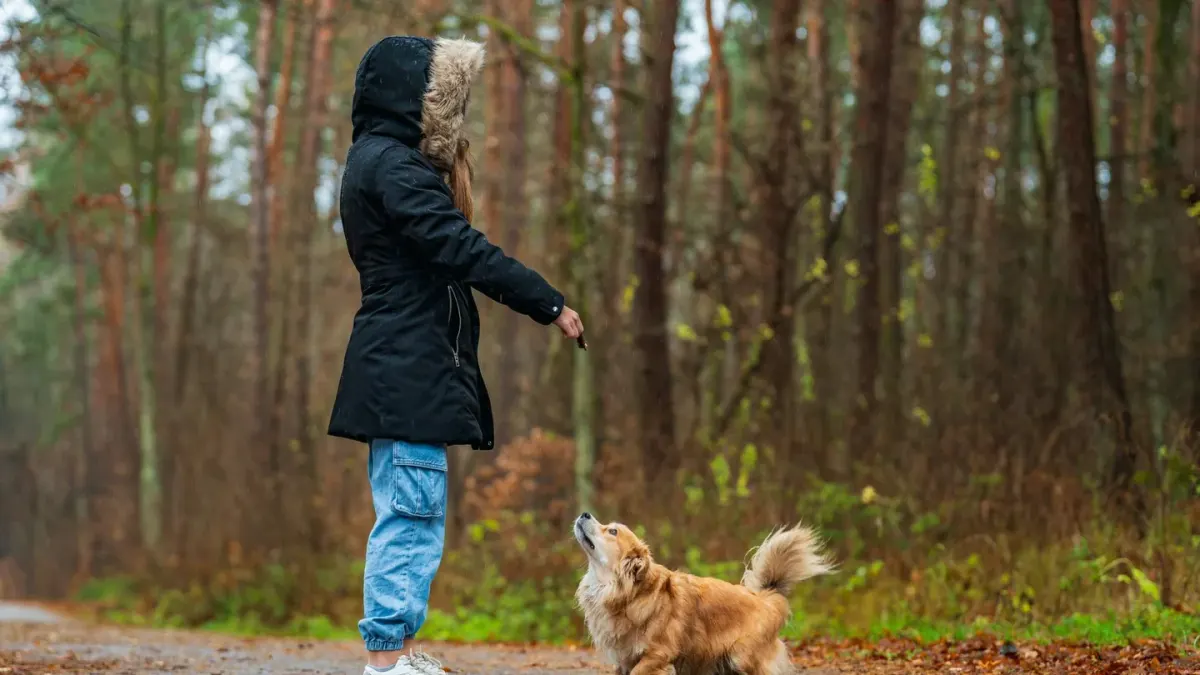
Growth plates are soft zones of dividing cartilage near the ends of the long bones, and in toy and miniature breeds they can finish closing around six to eight months, earlier than in large dogs but still real cartilage while they are open. Repeated high-impact loading during that window, long runs on pavement or leaps off the couch, can injure a plate and skew how the bone grows. A widely used rule of thumb from the Kennel Club keeps the dose sane: about five minutes of structured exercise, twice a day, for each month of age. Good puppy ideas fit under that ceiling. Short leash walks on grass, gentle recall games, flat-ground play, a food puzzle to tire the brain, and teaching a controlled step onto a low cushion instead of a jump off the sofa all build coordination without hammering the joints.
Adulthood: everyday ideas that fit a small dog
A healthy adult small dog needs variety more than distance, and the mind needs a workout as much as the legs. A few options that respect the frame:
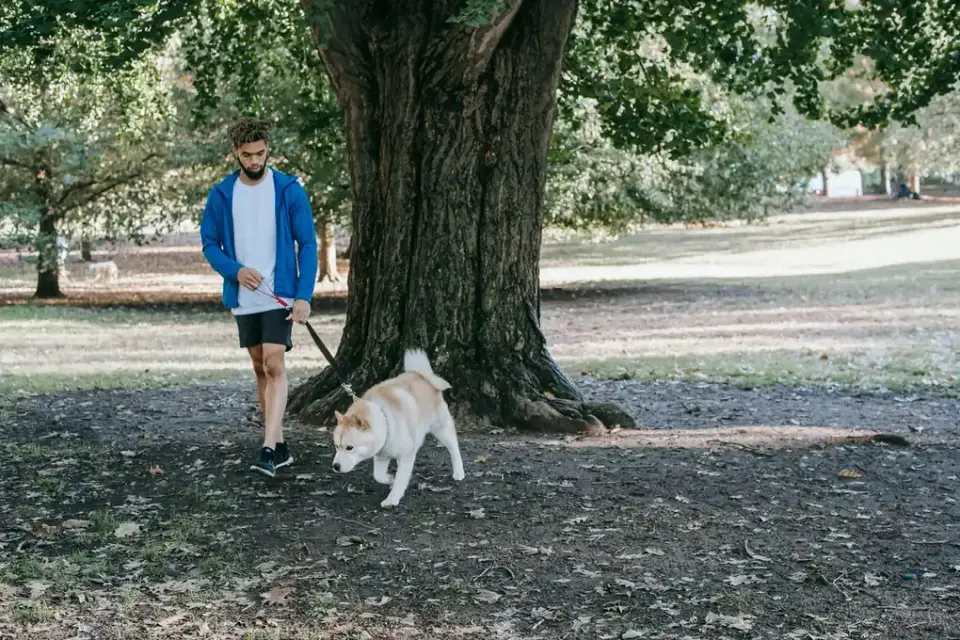
- Two or three short sniff walks a day, on a harness, letting the nose set the pace.
- A flirt pole or brief fetch on grass or carpet rather than tile, to spare the knees on turns and stops.
- Snuffle mats, scatter-fed kibble, and food puzzles that turn a meal into foraging work.
- Low trick training and ground-level agility, with tunnels and cavaletti poles laid flat and no high jumps.
- Rainy-day find-it games and hallway recall, which burn mental energy without a single stair.
Body weight is the quiet variable underneath all of it. Every extra ounce loads those shallow-grooved knees on every step, so keeping a small dog lean is itself a form of joint protection.
The senior years: keep moving, lower the impact
Older small dogs often carry some osteoarthritis, especially where a luxating patella or years of furniture jumping have worn the cartilage. The goal shifts to preserving range of motion and hindlimb muscle without provoking a flare. Frequent short walks beat one long march. Gentle, low-grade hill walking, a staple of canine rehabilitation, rebuilds rear-leg strength, and sit-to-stand repetitions on a flat surface work the same muscles at home. Warm-water swimming or formal hydrotherapy lets a stiff dog move under buoyant, low-impact load. Warm up first, keep sessions short, and treat new limping as a reason to rest and call the veterinarian, not to push through.
Where supplements fit, and where they don’t
Weigh what a supplement can realistically do for a small dog’s diet, mobility, and recovery, and the honest verdict is support, not a substitute for the work above. Glucosamine and chondroitin are among the most-studied joint-support ingredients in dogs; a 2025 veterinary review of disease-modifying osteoarthritis compounds notes that glucosamine can “prevent experimentally induced cartilage degradation in vitro.” Marine mussel preparations sit in a similar space. A 2026 study of mussel and krill oils found they “alleviated paw swelling in rats and reduced serum levels of rheumatoid factor (RF), anti-cyclic citrullinated peptide (anti-CCP) antibody, and pro-inflammatory cytokines such as TNF-α and IL-17.” Read that carefully, though. Much of the evidence is in vitro or in rodent models, the effects are modest, and none of it offsets a jumping-heavy routine, a neck collar on a soft trachea, or a few extra pounds. A joint supplement may help support comfort at the margins. The exercise plan and the scale still do the structural work.
So before another chew goes in the bowl, the more useful question may be this: does your small dog’s week already deliver the low-impact movement, the sniffing, and the lean body weight those short legs were built to carry?
Frequently asked questions
How much exercise does a small breed dog need each day?
It depends on age and health. A common veterinary rule of thumb for puppies is about five minutes of structured exercise, twice a day, for each month of age. Most healthy adult small dogs do well with two or three short walks plus daily mental enrichment, and you should let your dog's stamina and any joint signs set the total rather than a fixed number.
Is a harness or a collar better for a small breed dog?
For leash walking, a back-clip harness is generally the safer choice. Toy and small breeds are prone to collapsing trachea, and a harness moves the pulling force off the windpipe and onto the chest. A flat collar is still fine for holding ID tags.
Are stairs and furniture jumps bad for small dogs?
Repeated jumping down from height and hard landings load the knees, where many small breeds already have a shallow patellar groove. Teaching a ramp or a low step and limiting furniture leaps is worthwhile, especially for growing puppies and for older dogs with arthritis.
Sources
- How Much Exercise Does a Dog Need Every Day? — American Kennel Club
- How Much Exercise Does a Puppy Need? Mental and Physical Exercises — American Kennel Club
- Tracheal collapse — Cornell University College of Veterinary Medicine, Riney Canine Health Center
- Patellar Luxation in Dogs and Cats — MSD Veterinary Manual
- A review of the clinical efficacy and adverse effects of disease modifying osteoarthritic drugs (DMOADs) in dogs with special focus on glucosamine and pentosan polysulfate; do they work? — Journal of Veterinary Medical Science
- Therapeutic Effect and Underlying Mechanism of Blue Mussel (Mytilus galloprovincialis) Oil on Adjuvant-Induced Rheumatoid Arthritis in Rats — Nutrients (MDPI)