Mistakes People Make Exercising a Senior Dog
A veterinary nutritionist explains the most common mistakes exercising an old dog — too much weekend activity, hard surfaces, skipped warm-ups — and how to keep aging joints moving safely.
The biggest mistakes exercising an old dog are not laziness, but too much enthusiasm on stiff, aging joints.
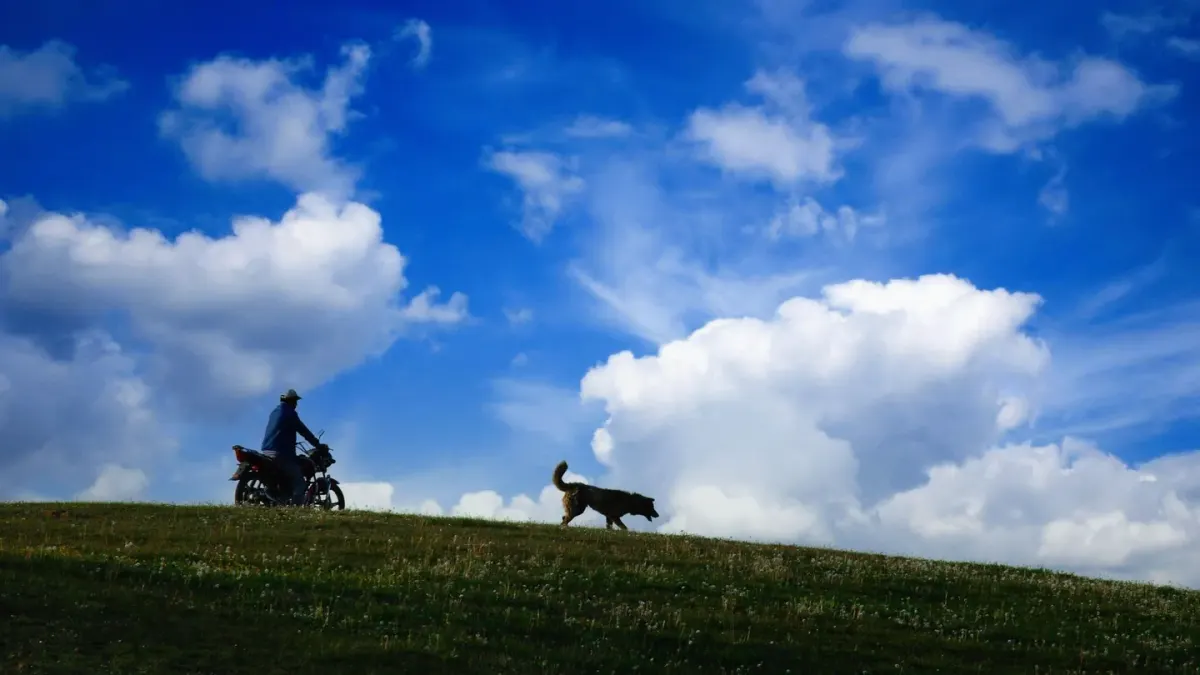
Saturday morning at the park, a man unclipped the leash and watched his 11-year-old, 68-pound Labrador surge after a tennis ball like she was four again. For three throws she flew, ears back, all heart. On the fourth she pulled up short, sat down hard, and licked at her right carpus while her owner laughed it off as stubbornness. By that evening she was slow to rise off her bed, shifting her weight forward to spare her hips, and he was wondering whether he had pushed her from joyful exercise into joint soreness in under ten minutes.
That moment captures the central decision with an older dog: how to protect the desire to move without letting a single enthusiastic outing overwhelm tissues that recover more slowly now. From a nutrition and sports-medicine perspective, I weigh what food, conditioning, and joint-support ingredients can realistically do for diet, mobility, and recovery — and exercise dosing matters more than any powder or chew.
The weekend warrior trap catches old dogs first
The most common mistake I see is not daily overexercise, it is under-exercise all week followed by one big outing. A senior dog that strolls to the mailbox Monday through Friday then hikes two miles on Saturday gets a spike in mechanical load with no base to absorb it.
Short, frequent bouts win. Two 10- to 15-minute leash walks with sniff breaks do more for muscle tone and joint lubrication than one heroic loop, a pattern we break down further in How Long Should a Dog’s Walk Be?. Keep the pace conversational, let the dog set pauses, and save distance-building principles for another day — guidance detailed in How Far Can a Dog Walk or Hike in a Day?.
Nutrition fits here in a supporting role. Glucosamine and chondroitin are among the most studied joint support ingredients for dogs, but no supplement compensates for a training error that loads an unconditioned joint. Where the evidence does give us footing, chondroitin “supports healthy synovial fluid homeostasis” as reported in Frontiers in Veterinary Science, which is about maintaining a healthy joint environment for that regular movement, not erasing soreness from overdoing it.
Skipping the warm-up and reading eagerness as fitness
Old dogs often look better in minute five than minute one. Owners mistake that warm-up effect for limitless energy and keep going.
I worked through this tradeoff with a composite case I think about often: a 13-year-old, 22-pound terrier mix who lived for fetch in a concrete courtyard. Three weeks in to a well-meaning plan of nightly fetch to “keep weight off,” she started bunny-hopping up the two front steps and lying down mid-game, panting while still staring at the ball. Her owner read that stare as readiness and threw again. What she needed was the opposite — five minutes of slow leash walking before play, shorter throws on grass, and a firm stop while she still wanted more. Her enthusiasm had stayed young while her cartilage, muscle mass, and recovery capacity had not.
Watch the dog, not the toy.
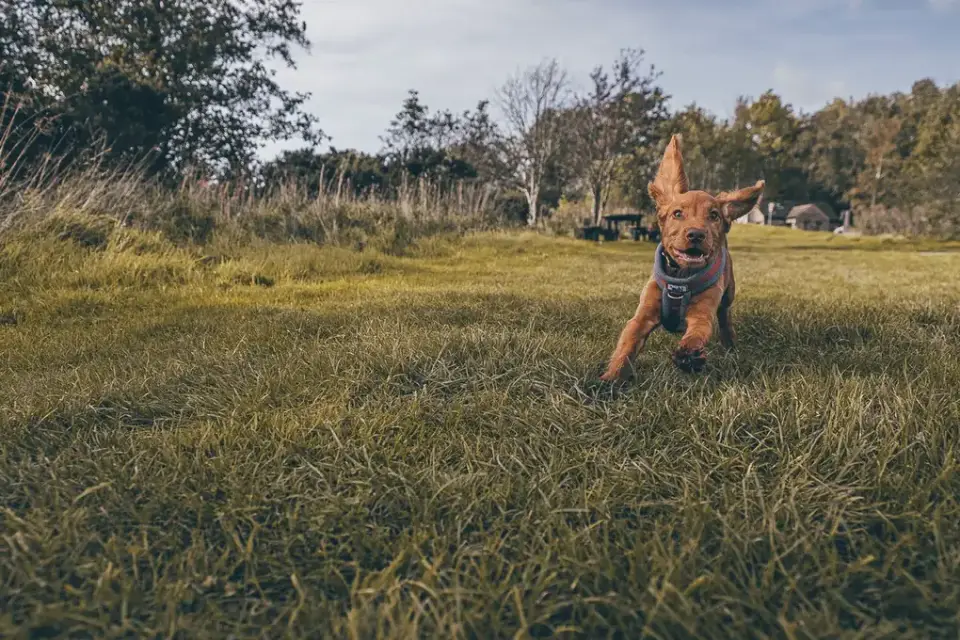
Stiffness the morning after, lagging behind on a familiar route, heavy panting that outlasts the walk, sitting out a turn they usually take — those are load signals. Laboratory work reminds us why gradual loading matters: glucosamine has been shown to “prevent experimentally induced cartilage degradation in vitro” in work published in the Journal of Veterinary Medical Science, which grounds an integrative claim in nutritional evidence without promising that any ingredient rebuilds a worn joint in a living senior dog.
Hard surfaces, hills, and cold starts do quiet damage
The third mistake is environmental. Sprinting, sharp turns, downhill charging, and slick floors concentrate force through elbows, carpi, and cruciate ligaments. Cold muscles on a frosty morning are even less forgiving.
Choose traction and forgiveness. Grass, packed dirt, or rubber track over asphalt. Gentle grades over steep ravines. Ramps over jumps into the car. For dogs with diagnosed arthritis, many owners weigh water exercise against pavement pounding, a comparison explored in Swimming vs Walking for an Arthritic Dog: Which One Actually Helps? and in the tradeoffs between leash control and free play in Off-Leash Play vs On-Leash Walks: Which Actually Exercises Your Dog?.
One edge case changes the calculus: the 9-year-old, 54-pound husky mix who actually moves better after ten minutes and begs for more, then pays for it 24 hours later with a stiff, short-strided gait by day 10 of a new jogging routine. Delayed soreness fools owners because the feedback arrives too late. With that pattern I keep the activity the dog loves but split it — a brief walk, a rest and sniff break, then a second brief walk — and track morning rise time as the real report card. Green-lipped mussel ingredients are sometimes part of that broader joint-nutrition conversation; in preclinical work, researchers found that “BMO, GMO, and KO all alleviated paw swelling in rats and reduced serum levels of rheumatoid factor (RF), anti-cyclic citrullinated peptide (anti-CCP) antibody, and pro-inflammatory cytokines such as TNF-α and IL-17” according to Nutrients, which may help support whole-patient health in theory but does not replace load management in practice.
That honest limit is where I land, even against the counterargument that a good joint formula should let a senior dog do what he used to do.
It cannot.
Frequently asked questions
How much exercise does a senior dog need each day?
Most seniors do best with short, frequent movement — often two brief leash walks with sniff breaks — adjusted to morning stiffness, lagging, or next-day soreness rather than a fixed mileage number.
Is it normal for an old dog to be stiff after a long walk?
Mild, brief warm-up stiffness can occur with age, but limping, skipping steps, or stiffness lasting into the next day signals the outing exceeded current conditioning and the plan should be shortened.
Should I stop playing fetch with my senior dog?
You do not have to stop play, but shorten throws, use forgiving surfaces like grass, add a 5-minute leash warm-up, and stop while your dog still wants more.
Sources
- Synovial fluid homeostasis study — Frontiers in Veterinary Science
- Cartilage degradation in vitro study — Journal of Veterinary Medical Science
- Mussel and krill oils in arthritic rats — Nutrients