How Much Exercise an Overweight Adult Dog Needs
A veterinary nutritionist explains starting minutes, progression, and joint-friendly exercise for overweight adult dogs.
An overweight adult dog needs measured daily movement that protects joints while creating a steady calorie deficit — not weekend heroics.
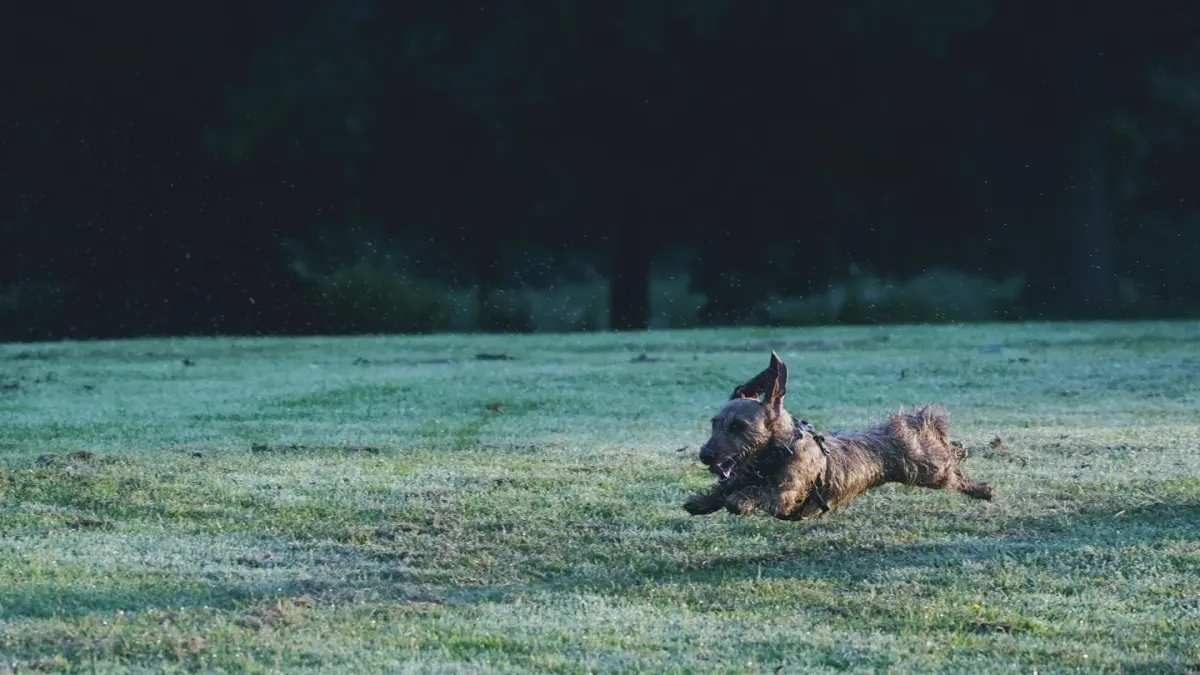
That extra weight is not just insulation — it changes how every step loads the joints, heart, and lungs. I see owners assume an overweight adult dog should simply walk longer to burn it off, when physiology says the opposite at first: reduce impact load, improve circulation and synovial flow, then add duration.
A seven-year-old neutered mixed-breed dog weighing 68 pounds came in with the classic pattern: heavy panting after one block, lagging behind, lying down on cool grass, owner worried about laziness versus pain. Ribs were hard to feel under fat cover, waist lost from above, nails a little long from low activity. We weighed the choice the owner was actually making — push for a 45-minute loop to force weight loss, or start with two 10-minute leash walks on flat ground plus five minutes of nose work in the yard. Three weeks in, that same dog was finishing the evening loop without sitting down, and the morning cough-pant had shortened from ten minutes to under two.
Why extra pounds change exercise math
Adipose tissue is metabolically active, and carrying it raises oxygen cost, heat production, and ground-reaction forces through elbows, hips, and cruciate ligaments. That is why an overweight dog fatigues early and heats up fast. Short, frequent bouts maintain cartilage nutrition through cyclic loading and support whole-patient mobility without the prolonged joint stress of one long march.
Evidence on joint support is narrow and ingredient-specific, which matters here. Chondroitin “supports healthy synovial fluid homeostasis” as reported in Frontiers in Veterinary Science, and glucosamine HCl was shown to “prevent experimentally induced cartilage degradation in vitro” in work published in the Journal of Veterinary Medical Science. Green-lipped mussel fractions were studied in a different model, where “BMO, GMO, and KO all alleviated paw swelling in rats and reduced serum levels of rheumatoid factor (RF), anti-cyclic citrullinated peptide (anti-CCP) antibody, and pro-inflammatory cytokines such as TNF-α and IL-17” according to Nutrients. I weigh those findings as supportive of diet and mobility structure, not as permission to exercise through lameness.
Start where most overweight adults succeed: 10–15 minutes, twice daily, on leash at a sniff-and-stroll pace.
What a safe starting week actually looks like
Forget a single mileage target. For an otherwise healthy overweight adult with no lameness, coughing, or collapse, I use time plus perceived effort. Warm up three to five minutes at a loose-leash amble, then hold a pace where the dog can still sniff and take treats, with panting that resolves within 10 minutes of stopping.
A practical week one is two 10-minute flat walks daily, plus 5–10 minutes of low-impact play or training — scatter feeding in grass, gentle tug with rules, or puzzle feeding that gets the dog standing and shifting weight. If the dog finishes bright, is not stiff that evening, and recovers breathing quickly, add about 10–20% total time per week, not per day. Many dogs reach 30–40 minutes total daily by week four to six, often split into two sessions. For context on pacing individual walks, see How Long Should a Dog’s Walk Be? and How Far Can a Dog Walk or Hike in a Day?.
A five-year-old 52-pound stocky dog tried the opposite last spring: almost no walks all week, then a 3.2-mile Sunday hike with hills because the owner wanted to “make up for it.” By day two the dog was short-striding on the left hind, reluctant on stairs, and skipped the morning walk entirely. We paused hills and fetch for ten days, returned to two 12-minute flat walks, then rebuilt with five-minute increments every third day. By day 18 the dog was doing 28 minutes total without next-day stiffness, which taught the owner the real tradeoff — consistency builds tendon and aerobic capacity, intensity without base just buys soreness.
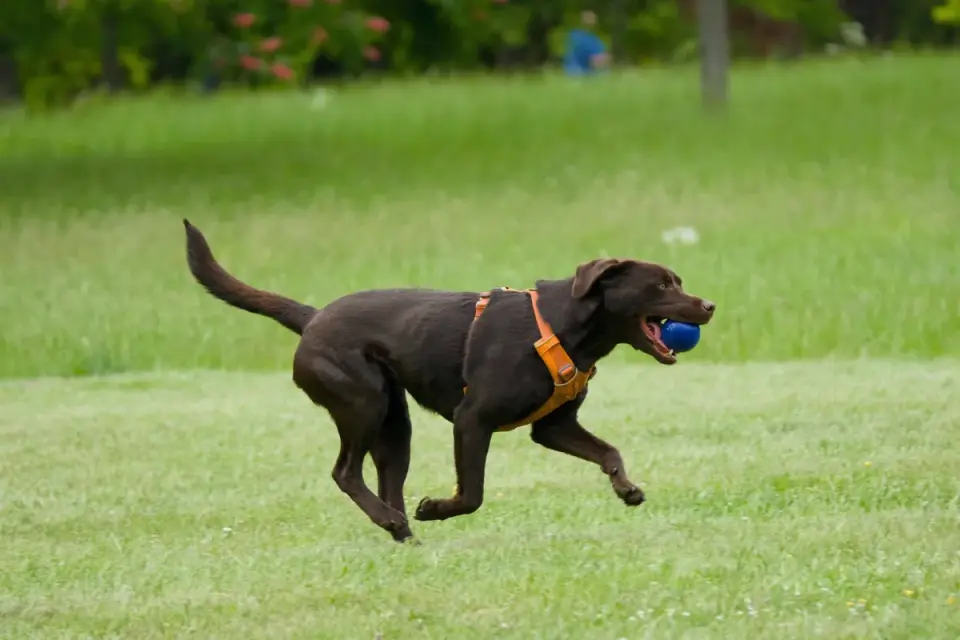
Build fitness without beating up joints
Once baseline tolerance is solid, variety does more than extra miles. My hierarchy is leash walks first, then sniff-heavy exploration, then controlled inclines or water when available. Off-Leash Play vs On-Leash Walks: Which Actually Exercises Your Dog? is useful here because off-leash sprint-and-stop can spike load in a heavy dog, while on-leash keeps effort even.
Swimming and underwater treadmill work are genuinely joint-sparing when introduced slowly, but open-water retrieves and cold water can still overtax an unfit dog. If arthritis is already diagnosed, read Swimming vs Walking for an Arthritic Dog: Which One Actually Helps? before swapping all walks for swims.
Stop and call your veterinarian if you see persistent lameness beyond 24 hours, heavy panting beyond 15 minutes at rest, pale or blue gums, coughing, collapse, or next-morning stiffness that was not there before.
My conviction is direct: food therapy sets the deficit, movement preserves muscle while that deficit does its work. Glucosamine and chondroitin are among the most discussed joint-support ingredients, but no powder offsets a too-fast ramp. The strongest counterargument I hear is that dogs need hard running to lose weight, as if sweat equals success.
An eight-year-old 74-pound broad-chested dog with loud breathing changed that calculus for one family. Heat above 78°F, a flat face, and a history of snoring meant even 15 minutes at midday left him drooling and restless for an hour. We moved walks to 6 a.m. and after sunset, cut midday to indoor nose games only, and used a chest harness instead of a neck collar. By week five his recovery pant after a 20-minute cool-morning walk fell from 14 minutes to six minutes, and the owner finally believed cool air was training equipment.
The AAHA Nutrition and Weight Management Guidelines frames the same principle: combine measured feeding, body-condition scoring, and regular activity reassessment rather than exercise alone.
Add minutes only when recovery stays clean.
Frequently asked questions
How many minutes per day should I start with for an overweight adult dog?
Many otherwise healthy overweight adults tolerate two 10-15 minute flat leash walks daily. Add about 10-20% total weekly time only if breathing recovers within 10 minutes and there is no lameness or next-day stiffness.
Is one long weekend walk enough for weight loss?
No. Short daily sessions build aerobic fitness and tendon tolerance better than one long effort, which often causes soreness and missed days afterward in heavy dogs.
Should I swim an overweight dog instead of walking?
Swimming can lower joint impact once technique and duration are built gradually, but it does not automatically replace walks. Keep sessions short, supervise closely, and avoid cold water, rough exits, or endless retrieving at first.
Sources
- Synovial homeostasis chondroitin study — Frontiers in Veterinary Science
- In vitro cartilage degradation study — Journal of Veterinary Medical Science
- Mussel oil inflammation rat model — Nutrients