Low-Impact Exercise for a Dog on Restricted Movement
A veterinary nutrition and rehab guide to safe low-impact exercise during crate rest or restricted activity, with leash walks, water work, and feeding for recovery.
Restricted movement preserves healing tissue, but without planned low-impact work, muscle and conditioning fade faster than most owners expect.
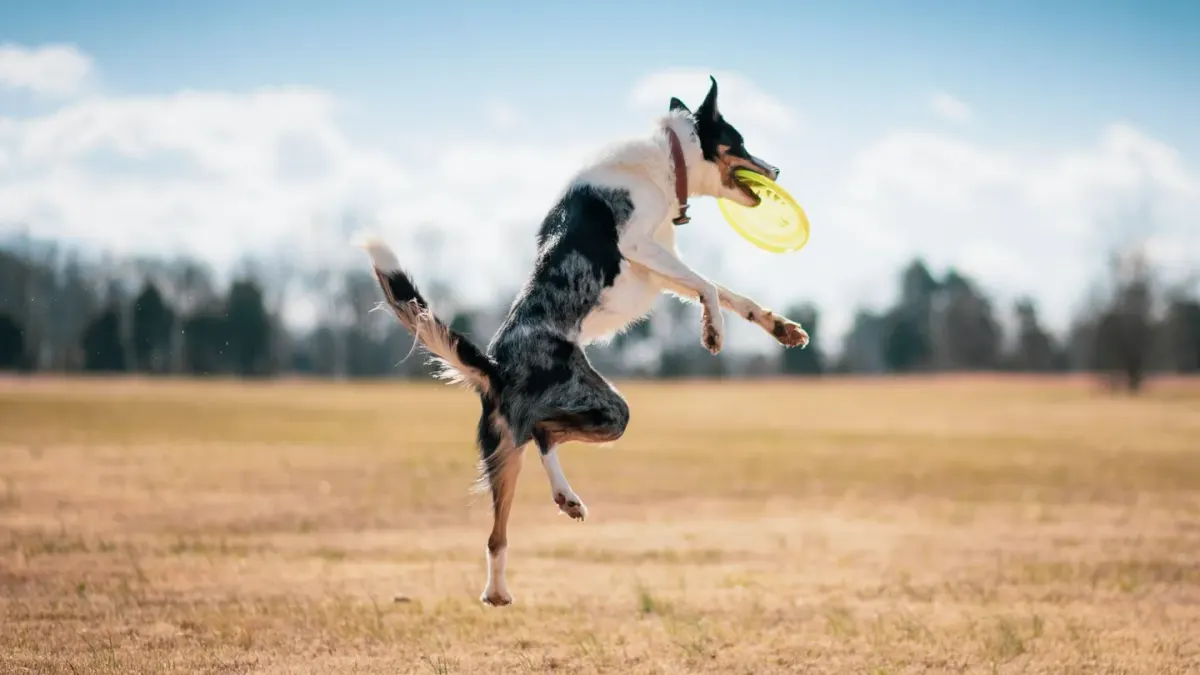
Restricted movement is not rest in the absolute sense — it is controlled mechanical loading. After surgery, ligament injury, or a severe arthritis flare, the veterinarian is trying to limit shear, torsion, and impact while still permitting circulation, synovial fluid turnover, and slow muscle recruitment. I weigh what a supplement can realistically do for diet, mobility, and recovery in that window, and movement itself remains the larger lever.
An 8-year-old, 62-pound Labrador mix left my exam room last spring with four weeks of leash-only restriction after a partial cruciate strain. By day 10, her owner reported the same pattern I hear constantly: less panting at night, stiffer first steps in the morning, and thigh muscle on the injured leg that already looked flatter. She was eating a complete adult diet at maintenance, and she wanted to know whether to cut food, add toppers, or buy a joint chew. We kept calories steady, added three five-minute sniff walks on flat grass per day, plus two-minute supported stands for weight shifting, and by three weeks in her sit-to-stand looked visibly more even. The decision was not exercise versus rest; it was which tiny doses of load would protect the repair.
Why muscle leaves faster than healing finishes
Disuse atrophy begins within days, particularly in postural extensors like the quadriceps and gluteals. Reduced joint motion also reduces synovial fluid circulation, which is how cartilage receives nutrients and clears metabolites. That is why prolonged, rigid cage confinement without a rehab plan often produces a dog that is healed on radiograph but weak, stiff, and proprioceptively clumsy.
Nutrition grounds an integrative plan here without overstating it. Glucosamine and chondroitin are among the most studied joint support ingredients for dogs, and controlled work in Frontiers in Veterinary Science describes chondroitin in terms that “supports healthy synovial fluid homeostasis.” That finding does not rebuild a ligament or replace loading, but it helps explain why I prioritize adequate protein, balanced minerals, and evidence-bounded joint nutrition alongside movement, not instead of it.
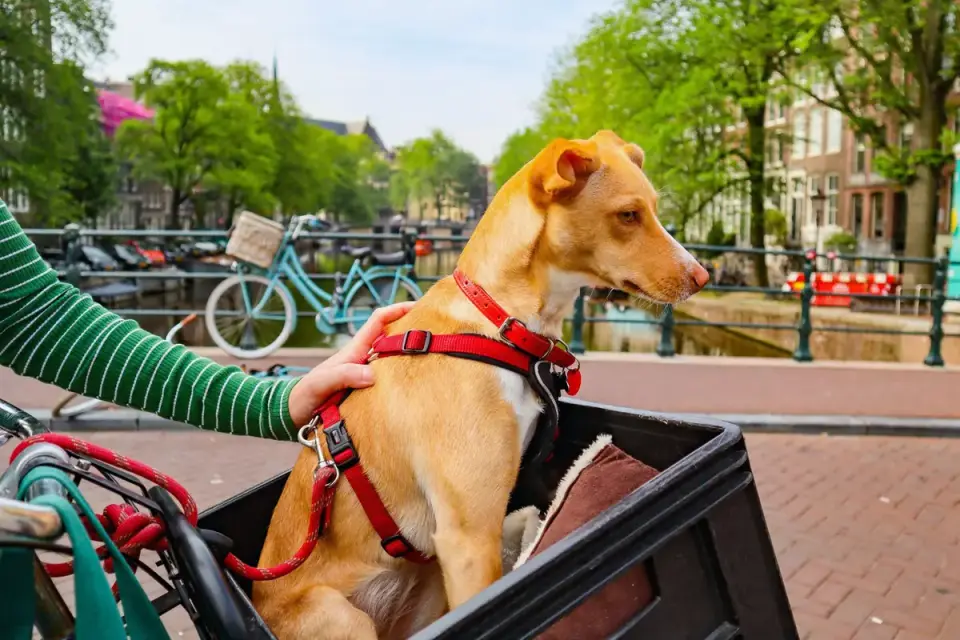
What counts as low-impact when the leash stays short
Low-impact means high control, low velocity, and no surprise forces. Think short, flat leash walks at a sniffing pace, slow weight-shifting exercises, cavaletti poles at ankle height once cleared, and, for appropriate cases, supported swimming or underwater treadmill with veterinary direction. Work in Nutrients found that “BMO, GMO, and KO all alleviated paw swelling in rats and reduced serum levels of rheumatoid factor (RF), anti-cyclic citrullinated peptide (anti-CCP) antibody, and pro-inflammatory cytokines such as TNF-α and IL-17.” That is rodent and in vitro-adjacent evidence, not proof a green-lipped mussel chew lets a restricted dog do more, and I do not use it that way.
A failed approach I see often involved a 4-year-old, 48-pound border collie two weeks after arthroscopy. The owner, meaning well, replaced fetch with 30 minutes of hallway tug to “tire him out.” By day 12 the dog was more lame, not less, because tug loads the neck, shoulders, and surgical limb unpredictably. We traded it for four six-minute leash loops on level sidewalk, nose-work games lying on a mat, and passive range-of-motion exactly as prescribed. Activity dropped in intensity and his lameness score settled within five days. The tradeoff is real: mental fatigue has to come from sniffing, chewing, and training stillness, not from a harder physical substitute.
Stop a session for non-weight-bearing lameness, sharp vocalizing, swelling that worsens within hours, panting that does not resolve in 10 minutes of rest, or dragging toes. Those signs mean call the veterinarian before repeating the exercise.
Water, walks, and surfaces — applied in that order
For dogs cleared for it, water work unloads body weight while allowing rhythmic gait. Our comparison of swimming vs walking for an arthritic dog walks through when buoyancy helps and when the ramp, chlorine, and excitement undo the benefit. On land, keep to the principles in how long a dog’s walk should be and how far a dog can walk or hike in a day, then shrink both by 70 to 80 percent during restriction.
Surfaces matter more than distance. Flat, high-traction grass or rubber matting beats slick hardwood, loose gravel, and hills. Keep the head low and the pace slow enough that the dog can sniff every few steps. Add incline, steps, or uneven trails only after explicit clearance.
Laboratory work summarized in the Journal of Veterinary Medical Science notes that glucosamine was shown to “prevent experimentally induced cartilage degradation in vitro.” I cite that mechanism to ground expectations: in vitro cartilage protection is biologically interesting, but it does not license longer walks during restriction. Dose matters on labels, evidence matters more, and neither overrides the surgeon’s activity limits.
A 13-year-old, 19-pound miniature poodle with advanced elbow arthritis taught me the edge case. She was allowed out of the crate but could not tolerate even 10-minute walks without next-day stiffness. Lying on a non-slip rug, she would do five cookie stretches to each hip, three-minute assisted stands with a belly sling, and twice-weekly warm-water walks at chest height after her rehab veterinarian approved them. At six weeks in, her owner logged that she rose from bed in under 10 seconds instead of nearly 30, with no change in pain medication. For that dog, less walking and more supported standing plus water was the correct exercise prescription.
Feed for the dog in front of you. Most restricted dogs need maintenance calories or 10 to 15 percent less if body condition is climbing, with protein held steady to defend lean mass. Weigh weekly. If ribs disappear under cover in 14 days, adjust food before you add minutes.
The strongest counterargument is that any structured exercise during restriction risks re-injury, so strict rest is safer. I respect that concern after fracture repair or unstable neurologic disease, where stillness is the treatment. For the majority of soft-tissue recoveries and arthritic dogs on activity limits, though, I still land on brief, boring, repeatable low-impact work, because circulation, joint nutrition, and muscle retention do not pause while we wait.
For related context, read Exercise Ideas for Small Breed Dogs, From First Steps to the Senior Years.
For related context, read Off-Leash Play vs On-Leash Walks: Which Actually Exercises Your Dog?.
Frequently asked questions
How much walking can a dog do on restricted movement?
Most protocols start with 3 to 5 short leash walks per day of 5 to 10 minutes on flat, high-traction ground for toileting and sniffing, then titrate only as your veterinarian directs. Stop for increased lameness, swelling, or fatigue that lasts beyond brief rest.
Is swimming allowed during restriction?
Only with explicit veterinary clearance. Supported swimming or underwater treadmill may help support mobility once incisions are healed and the joint is stable, but ramps, excitement, and unsupervised play can overload healing tissue.
Should I cut food while my dog is less active?
Weigh weekly and adjust modestly. Many dogs need slightly fewer calories during restriction, but keep protein adequate to defend muscle and avoid rapid weight loss unless your veterinarian prescribes it.
Sources
- Chondroitin and synovial fluid homeostasis study — Frontiers in Veterinary Science
- Glucosamine cartilage in vitro review — Journal of Veterinary Medical Science
- Marine oils and paw swelling in rats — Nutrients