How Far Can a Dog Walk or Hike in a Day?
A veterinary nutritionist and sports-medicine specialist breaks down what actually caps a dog's hiking distance — conditioning, joints, breed shape, age, and heat — and how to build mileage safely.
There's no single mileage answer to how far a dog can hike in one day — conditioning and joints decide it.

On this page
Every hiking dog owner eventually asks some version of the same question after a long weekend trail: could my dog have gone farther, or did we already push too hard? There’s no single mileage answer to how far a dog can hike in one day — conditioning and joints decide it far more than breed reputation does.
What Actually Limits a Dog’s Distance
A dog’s hiking ceiling is set by three overlapping systems: cardiovascular fitness, muscular endurance, and connective-tissue tolerance. Cardio and muscle adapt fairly quickly with repeated, moderate exposure — a few weeks of longer walks measurably improves a dog’s aerobic capacity. Joints and paw pads adapt more slowly. Cartilage, tendons, and the tough keratin layer on paw pads all need graded loading over time, which is why a dog that seems eager at mile eight can still come home with a subtle limp two days later. A dog that has never walked more than two miles shouldn’t attempt a ten-mile trail just because the terrain looks manageable.
Muscle fatigue shows up first as a slower pace and more frequent stops. Joint strain often shows up later, sometimes not until the dog is resting at home. That lag is exactly why sudden, unconditioned mileage jumps are riskier than they look on the trail.
Breed and Body Shape Set the Range
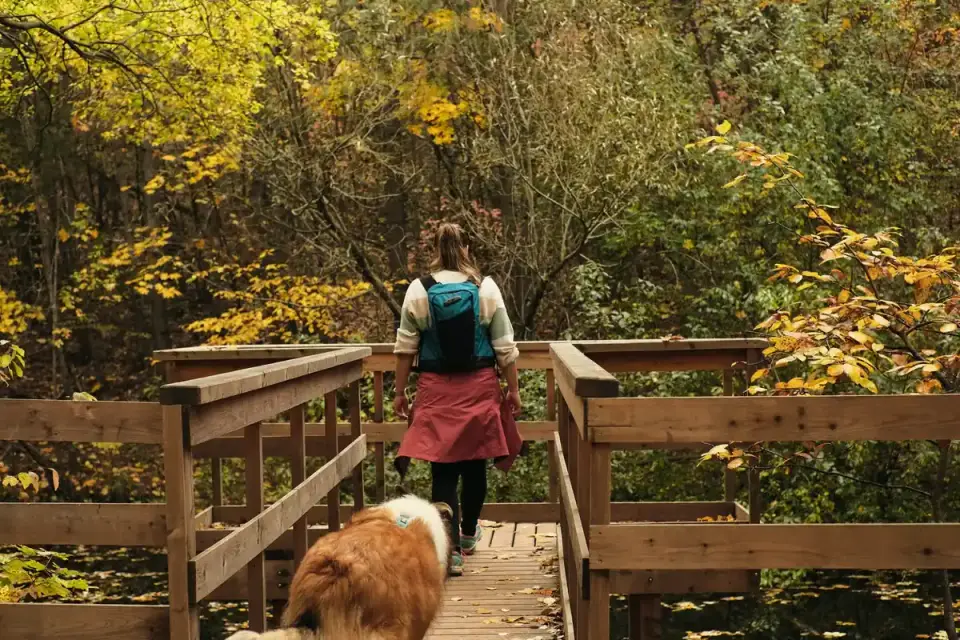
Body structure narrows the realistic distance before conditioning ever enters the picture. Short-legged and long-backed dogs work harder per mile than a leggy sporting breed covering the same ground, and our guide to exercise for small and toy breeds covers how that math changes stride-for-stride. Brachycephalic dogs — Pugs, Bulldogs, and similar flat-faced breeds — face a separate limit entirely: their airway anatomy restricts the volume of air they can move during sustained exertion, which caps endurance regardless of how fit they otherwise are. Athletic, deep-chested breeds bred for stamina, like Labradors, pointers, and working-line herding dogs, sit at the high end of the range and can reasonably build toward 10 to 15 miles once properly conditioned.
Age Changes the Equation Twice
Growth plates in large-breed puppies typically don’t finish closing until somewhere around a year to twenty months of age, and repetitive high-impact mileage before that window closes has been linked to abnormal joint loading. Puppy hikes should stay short and low-impact, building gradually rather than matching an adult dog’s pace. At the other end of life, senior dogs carrying early arthritis need the opposite adjustment: shorter distances, flatter terrain, and more frequent rest, since joint tissue that’s already inflamed tolerates repetitive impact poorly. Owners managing an older hiking companion may also find it useful to look at how longevity chews fit into a senior dog’s routine when appetite or chewing becomes a barrier to consistent supplementation.
Heat compresses the safe range for every dog, young or old, fit or not.
Heat, Pavement, and Hydration
Dogs cool primarily through panting, not sweating, which makes them far less heat-tolerant than the humans walking alongside them. On warm days, even well-conditioned dogs may need to cap a hike at three to six miles, well below their cool-weather capacity. Ground temperature matters independently of air temperature: the American Kennel Club notes that pavement can burn a dog’s paw pads in under a minute on a hot day, so trail surface and time of day belong in the same planning conversation as total mileage. Early morning or evening starts, shaded routes, and frequent water breaks all extend how far a dog can go safely before heat becomes the limiting factor rather than fitness.
Where Joint Nutrition Fits — and Where It Doesn’t
Once conditioning and terrain are accounted for, joint-support nutrition can play a supporting role for dogs that hike regularly. Glucosamine and chondroitin are among the most studied joint support ingredients for dogs. Chondroitin has been described as helping to support healthy synovial fluid homeostasis in Frontiers in Veterinary Science, while a review in the Journal of Veterinary Medical Science found that glucosamine hydrochloride may help prevent experimentally induced cartilage degradation in vitro. Green-lipped mussel contains omega-3 fatty acids and glycosaminoglycans that have been studied for joint support; in laboratory research published in Nutrients, mussel-derived compounds reduced paw swelling and lowered inflammatory markers in an animal model of joint disease. None of that substitutes for graded conditioning, but for a dog already hiking consistently, it’s a reasonable piece of a broader mobility plan — alongside, not instead of, weight management and a sensible training curve.
Building Distance the Right Way
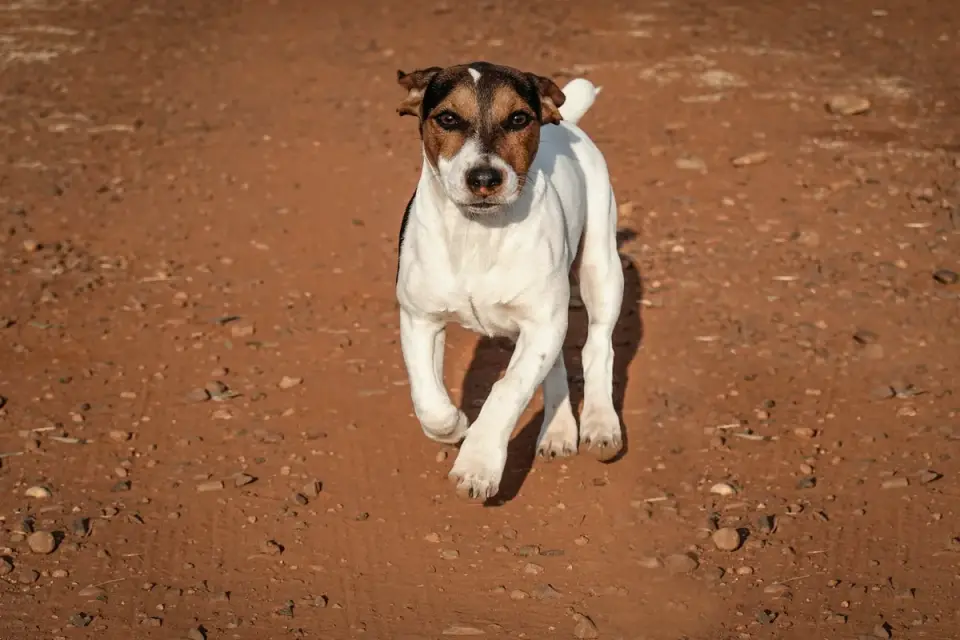
The safest way to extend a dog’s hiking range is the least exciting one: add roughly ten to twenty percent more distance every week or two, on similar terrain, and watch recovery the day after rather than just performance during the hike. A dog that’s stiff, reluctant to jump on the couch, or noticeably slower on the next day’s walk was pushed past its current capacity, even if the hike itself looked fine in the moment. Owners hiking with dogs prone to digestive sensitivity should also plan trail snacks carefully — sudden dietary changes on a long day can trigger GI upset that mimics fatigue, a distinction covered in more depth in our piece on fiber tolerance in dogs.
The Short Version
How far a dog can hike in a day isn’t a fixed number — it’s the product of conditioning, breed structure, age, joint health, and weather, stacked together. A fit, structurally sound adult dog in cool conditions can often manage double-digit mileage; a puppy, senior, brachycephalic, or unconditioned dog should be planned for a fraction of that. Build distance gradually, watch the next-day recovery more than the hike itself, and let the dog’s structure and fitness — not the trail map — set the ceiling.
Frequently asked questions
How many miles can an average dog hike in a day?
A healthy, moderately conditioned adult dog of average build usually manages 5 to 10 miles comfortably. Athletic, well-conditioned breeds can push toward 15 miles or more in mild weather, while toy and brachycephalic breeds are often better capped at 2 to 5 miles.
What's the biggest limiting factor on hiking distance?
Conditioning tends to matter more than raw breed athleticism. A fit, trail-hardened Beagle will often outlast an unconditioned Labrador, because cardiovascular fitness, muscle endurance, and paw toughness are built gradually, not inherited.
How do I know my dog has hit their limit mid-hike?
Watch for lagging behind, heavy or noisy panting that doesn't ease with rest, reluctance to keep moving, stiffness after standing from a break, or limping. Any of those is a signal to turn around, not push for another mile.
Can joint supplements help a dog hike farther?
Ingredients like glucosamine and chondroitin are among the most studied joint-support ingredients for dogs, and green-lipped mussel is a source of omega-3s and glycosaminoglycans researchers have examined for joint support. They're best framed as support for a dog's mobility program, not a substitute for proper conditioning.
Sources
- Chondroitin sulfate and synovial fluid homeostasis in joint health — Frontiers in Veterinary Science
- Glucosamine hydrochloride and cartilage degradation: a review — Journal of Veterinary Medical Science
- Green-lipped mussel extracts and inflammatory joint markers — Nutrients
- How to Protect Dog Paws From Hot Pavement, Sidewalks — American Kennel Club